
Janis Joplin
I purchased PEARL in 1971. When I heard drummer Clark Pierson’s opening kicks and Ms. Joplin sing, “You say that its over baby, you say that its over now” I gulped and was willingly dragged into the magic that was her voice. Today whenever I hear the opening cut to PEARL I begin the smile in anticipation of a listening experience of the first water. Of course the original recording was pressed on LP and once in a while I still listen to this vinyl version, but dammit, CDs are more convenient. I own the so-called Legacy Edition. CD or vinyl, be sure to turn your volume to 11.
11 was one notch above her contemporary rock rivals. That’s the way Joplin seems to have lived her life and that is the way she sang, even in the most tender moments of Cry Baby. I can’t think of another song with such a cry or in A Woman Left Lonely, or in the hot Half Moon. She did have a great band, thank heavens for Full Tilt Boogie: Clark Pierson, drums; Ken Pearson, organ; John Till, guitar and Richard Bell, piano. I challenge anyone to name a better rendition of Me and Bobby McGee. It doesn’t exist, It can’t exist. And listen to Get it While You Can. She did. Admittedly, it cost her dearly, but I’ll be forever thankful for her commitment to every note. Her ability to express what she felt. Sometimes I’ve tried, but I drew a line Janis Joplin did not. At least her testament to emotional honesty remains for others, singers or not.

Jacques Loussier
Today I would not think of myself as a big jazz fan. I once was. For the 1st fourteen years of my life I listened to the original Dixieland Jazz Band, Sydney Bechet, Lizzy Miles, Bessie Smith, and Louis Armstrong’s Hot 5 and 7. Armstrong’s recording of W.C. Handy’s music and the great recording Anbassador Satch were favourites. What a band. Trummy Young on trombone, Arvell Shaw on bass, Barney Bigard on clarinet, Billy Kyle on piano and Barrett (“the fastest drummer in the world”) Deems on drums .
I then became interested in music with less formal structure. After college I played 12 years in symphony orchestras and reveled in the sound. In the 60s I listened to the Beatles (how many did not?) and Ravi Shankar. But jazz didn’t come back into my life again with any kind of seriousness until I hooked up with clarinetist Phil Nimmons, purchased a new release of his amazing early big-band compositions and did some improvising with him while I was in Nexus.
And then on my most recent trip to Germany, a friend of mine played a Jacques Loussier (b.1934) Play Bach Trio recording, bassist Pierre Michelot, percussionist Christian Ganos. Formed in 1959, they were together for 15 years and sold more than 6,000,000 recordings of Jazz based on the music of Bach before disbanding in 1974. I felt old. I graduated from high school in 1957 and it took me 55 years to discover them.
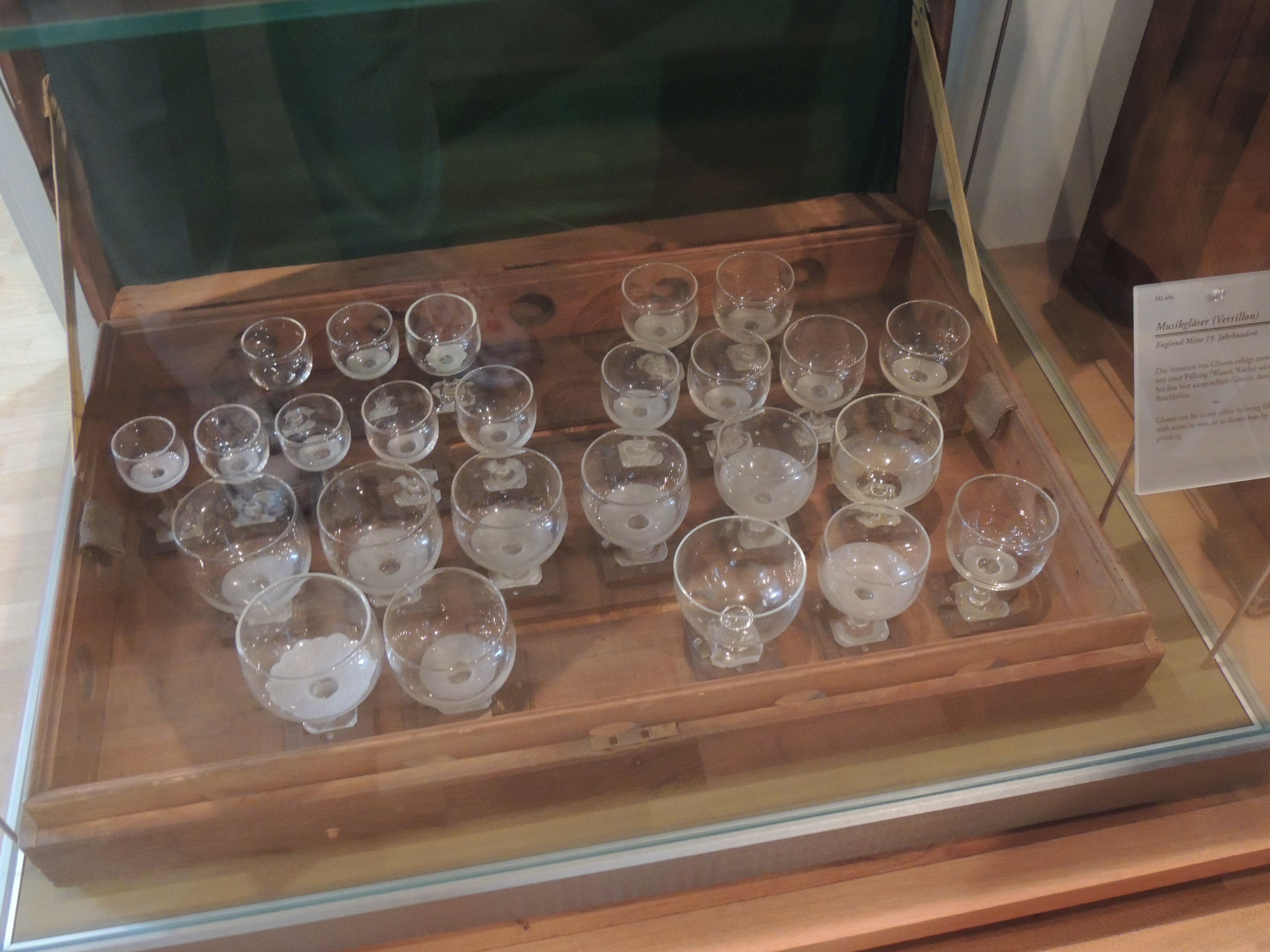
I’ve never liked arrangements of Bach’s music. Especially arrangements for marimba, glass harmonica, synthesizers, pop vocal groups, cats and dogs and, well, you get the idea. But Mr. Loussier is an artist of great sensitivity and taste, as well, he is in possession of a great technique, fluid and precise. Loussier, himself a composer, obviously understands Bach’s music. He does not use it as a vehicle for self-indulgence. His escapades never fail to convince me of his or Bach’s artistry.
During the last few weeks I have listened to this recording many times and it continues to delight. Bach was known as an improviser in the classical style. I think a concert of Bach and Loussier would have been a sell-out.





 Robin Engelman
Treaty of Paris, 1783
Plaque commemorating Treaty of Pari, 1783.
The Treaty of Paris was signed in the Hotel d’York, 56 rue Jacob. Serendipitously our Hotel du Danube was immediately adjacent to the building in which John Adams, John Jay and Benjamin Franklin negotiated and signed the treaty officially ending America’s War for Independence. Adams son, John Quincy, attended the signing. His duty was to daily secure the papers of the American contingent. Only 16 years old at the time, John Quincy, a graduate of Harvard University, fluent in his native tongue as well as Latin and French, was reading the classics and learning the subtleties of diplomacy which would soon make him America’s premier diplomat, serving as Ambassador Plenipotentiary to Russia, France and Britain.1.)
After morning café, my wife and I walked past this plaque and tried to imagine Franklin, Jay, and the Adamses in 18th century Paris.They were men of consequence who had dedicated themselves to guiding the development of their new country and securing its future.
After our arrival in Paris it became clear why hotel rooms had been so difficult to come by – it was Fashion Week, think Devil Wears Prada. Occasionally tall babes in expensive clothing would appear in our hotel lobby. Otherwise our boutique Hotel du Danube seemed disinterested in fashion and was paparazzi free. Quiet and conveniently situated, du Danube made most places on our itinerary a relatively short walk.
The Louvre was a bust for me. Its dim, endless hallways seemed filled with works of unattractive art, poorly displayed. However, the Louvre was our first excursion and my vexation was probably due in part to me being out of shape. My wife is a champion walker. How could I not soldier on? The Louvre’s one highlight was its pyramid. When first revealed to the French public, they were outraged. The Pyramid at the Louvre was an affront to French culture. But as one wag put it, “Parisians seem to hate what they come to love.”
The Pyramid
The Musée d’Orsay proved next day to be a masterpiece of planning for museum goers. I was snapping pictures when a polite uniformed lady told me photography was not allowed anywhere in the museum. Well, okay. I didn’t need photographs of the Impressionists which were on the 5th floor, but I may have disobeyed her by taking photographs in the dining room where we had a passable lunch in an opulent setting.
Then, a casual stroll past endlessly fascinating shops towards our hotel where once more, I lingered for a moment and try to visualize rue Jacob in 1783. I was a casual by-stander as a carriage made its way towards me, stopping in front of the Hotel d’York. Ben Franklin, John Adams and John Jay, followed by John Quincy Adams, alighted to sign the Treaty of Paris. I tried to imagine an 18th century equivalent to armoured stretch limos, black SUVs, Secret Servicemen with ear buds and shades and an international press corps. Nothing like that came to mind.
Dr. Franklin had to momentarily step aside to allow an arm in arm couple to pass whilst a few steps away a large dog relieved itself on the sidewalk.
Foot notes:
[1.] See Unger, Harlow: John Quincy Adams, Da Capo Press, 2012.
All the photographsith the exception of John Q. Adams, were taken by R.E. I am also posting a photo gallery of Parisian street scenes .
Musée d’Orsay
Lunch in the Musée d’Orsay
Sculptures entrance to Musée d’Orsay
John Quincy Adams, 1843 Daguerreotype
Posted by robinengelman on October 29, 2012 in Articles, Commentaries & Critiques, History, Unassigned
Tags: Louvre, Musee d'Orsay