During the eight days from 28 February to 7 March, 2015, more contemporary music in the good to great category was heard in Roy Thompson Hall than in any previous season. The benefactor behind this musical munificence was the Toronto Symphony’s New Creations Festival (NCF), a yearly celebration of new music written for symphony orchestra.
The guest conductor and curator of this year’s festival was English composer and Cambridge University teacher, George Benjamin (b.1960). Benjamin selected the most substantive compositions and shared conducting duties with the Toronto Symphony’s resident conductor Peter Oundjian. Three of the festival’s five major compositions were chosen to accommodate the presence of soprano Barbara Hannigan. Ms. Hannigan has become an influential voice in new music. She has premiered more than 80 works, all written for her exceptional musicality, technique, her extremely high tessatura and her ability to memorize challenging scores. She has appeared with the Berliner Philharmoniker on more occasions than any other soloist and had her first experience conducting when Sir Simon Rattle suggested she share the baton with him during performances of William Walton’s Facade in which Ms. Hannigan also sang.
Ms. Hannigan began her NCF labours of love with A Mind of Winter by George Benjamin. A Mind of Winter is no great test of Ms. Hannigan’s skills, but she sang from memory, as she did with all the works she performed. The work is a generally quiet, beautiful landscape allowing the soprano’s first note to appear through the orchestra’s haze like magic, beginning innaudibly and gradually swelling into an expressive blossom. She was in fine voice. It was also abundantly clear that Benjamin is a splendid composer and conductor.
The concert on 4 March opened with a premier of a Toronto Symphony Commission, Lieder und Arien by Chris Paul Harman (1970). I was not looking forward to this. Years ago, I can’t remember how many, I played a work by Chris during one of the early years of the Canadian Contemporary Music Workshop, conducted by its founder Gary Kulesha. Chris’ antique cymbal part was a mess of notes. It looked to be a cadenza for an avant garde violin concerto. I explained to Chris the problems his writing posed for a percussionist, but wasn’t sure he was listening. The memory of that experience and subsequent hearings of Harman’s music, was greatly ameliorated by Lieder und Arien which contained some very fine moments of orchestration. Though Lieder und Arien is an arrangement of music by Bach, it sounded original at times and I was relieved to have my first experience with Harman’s music put behind me.
George Benjamin’s Duet for Piano and orchestra (2008) was next. It sounded to me very much as Benjamin described it, a challenging exercise for combining a piano with orchestra in some real duet form other than the typical concerto. This one left no impression on me.
However, the second half of the concert was given over to one work, Hans Abrahamsen’s let me tell you for Soprano and Orchestra (2012-13). Fortunately, Mr. Abrahamsen was not available for an interview. Considering the size of his orchestra, Abrahamsen (b.1952) has created an intimate work, stunningly beautiful and complex. Written as a “dramatic monologue” with Barbara Hannigan “very much in mind”, let me tell you was commissioned and premiered by the Berliner Philharmoniker. The text for let me tell you is from Sir Paul Griffiths’ book of the same name and contains all the words spoken by Ophelia in William Shakespeare’s Hamlet. But Abrahamsen’s Ophelia “uses those words in different ways and, certainly, to express herself differently”.
I heard Sir Simon Rattle conduct the premiere performance of this work via the Berliner Philharmoniker Digital Concert Hall which is beamed into my television set in real time from Germany. Then as now, Barbara sang from memory and unobtrusively floated above the accompanying cushion of sound. Mr. Griffiths’ wife and Ms Hannigan deserve our thanks for planting the seed that became let me tell you. It is a moving work of art
The festival’s last concert was devoted entirely to George Benjamin’s opera, Written on Skin. I had heard its premier performance on YouTube, fully staged and conducted by the composer with Ms. Hannigan singing the primary role of Agnes. But You Tube reproductions are excretions. The NCF concert brought the truth of this work home. The mistreatments of characters, physical and mental, and the brutal rape scene were left to one’s imagination. The singing was terrific, but baritone Christopher Purves must be singled out. He was first to sing the role of Protector when Written on Skin was premiered at the Festival d’Aix-en-Provence. The libretto for Written on Skin was taken from a 13- century razo, literally reason or cause, prefacing a Troubadour’s poem.
Written on Skin never reverts to clichés, nor does it wander. Every twist and turn is new, maintaining one’s attention through the last note. It is, if you will, a perfectly compact work of genius. It reminded me of Dutilleux. Clusters of brilliant ever changing sounds, miniature compositions in their own right, weaving their way through the orchestra, each clear and precisely crafted. The orchestra players must have enjoyed themselves. The section players had material perfectly written for their instruments and they played them, especially the brass, winds and percussion, with sensitivity and assurance. The audience reception matched any I’ve heard in Roy Thompson Hall. I attended all the Concertgebouw Orchestra concerts and none of them received standing ovations as lengthy or filled with such palpable appreciation, as this one.
This year Toronto NCF audiences were blessed with music of rare quality and soloists of the first water. I could not, nor would I, attempt to choose between them. Let’s hope T.S.O. management can entice curators and soloists of similar expertise and quality to grace Toronto for future New Creations Festivals.
The question arises, why are such dramatic experiences relegated to three concerts in mid-winter? And why, given Oundjian’s violin heritage, are the T.S.O strings in such dismal shape? One wag seated near me opined, “Most of the violinists appear to be women and they play like exhausted housewives”. I hope they are not, but somebody needs to get them excited about something and that’s the conductor’s job.
As I blissfully made my way towards the exit, someone nearby said, “They’re having an after concert talk”. Sure enough the cast and conductor had returned and were seated in a semi-circle mid stage. I sped up my retreat and had almost reached the exit when I heard Oundjian say to Benjamin, “That was fabulous. George, how did you do that?”. OMG.
Notes:
Mr. Oundjian was born in Toronto of Armenian and English parents. He studied in England and before he began conducting full time, was for fourteen years principal violinist of the Tokyo string Quartet. He’s a good talker with a pleasing and uncondescending haut British accent still beloved of many Toronto art patrons. Now, if he’d just learn to stop talking. A request rumoured to be heard among Toronto Symphony players.
Barbara Hannigan studied vocal singing with Mary Morrison as an undergraduate at the Faculty of Music of the University of Toronto. During that period she performed with Nexus, singing ballads and sentimental songs from the early 20th-century. She studied in London, England and then moved to Amsterdam where she lives today. Though her “signature” piece is György Ligeti’s Mysterie of the Macabre, arranged by Elgar Howarth in 1979 from Ligeti’s Opera le Grand Macabre, written from 1974-97, she has always been devoted to contemporary music and has established herself in the forefront of 21st-century music performers.

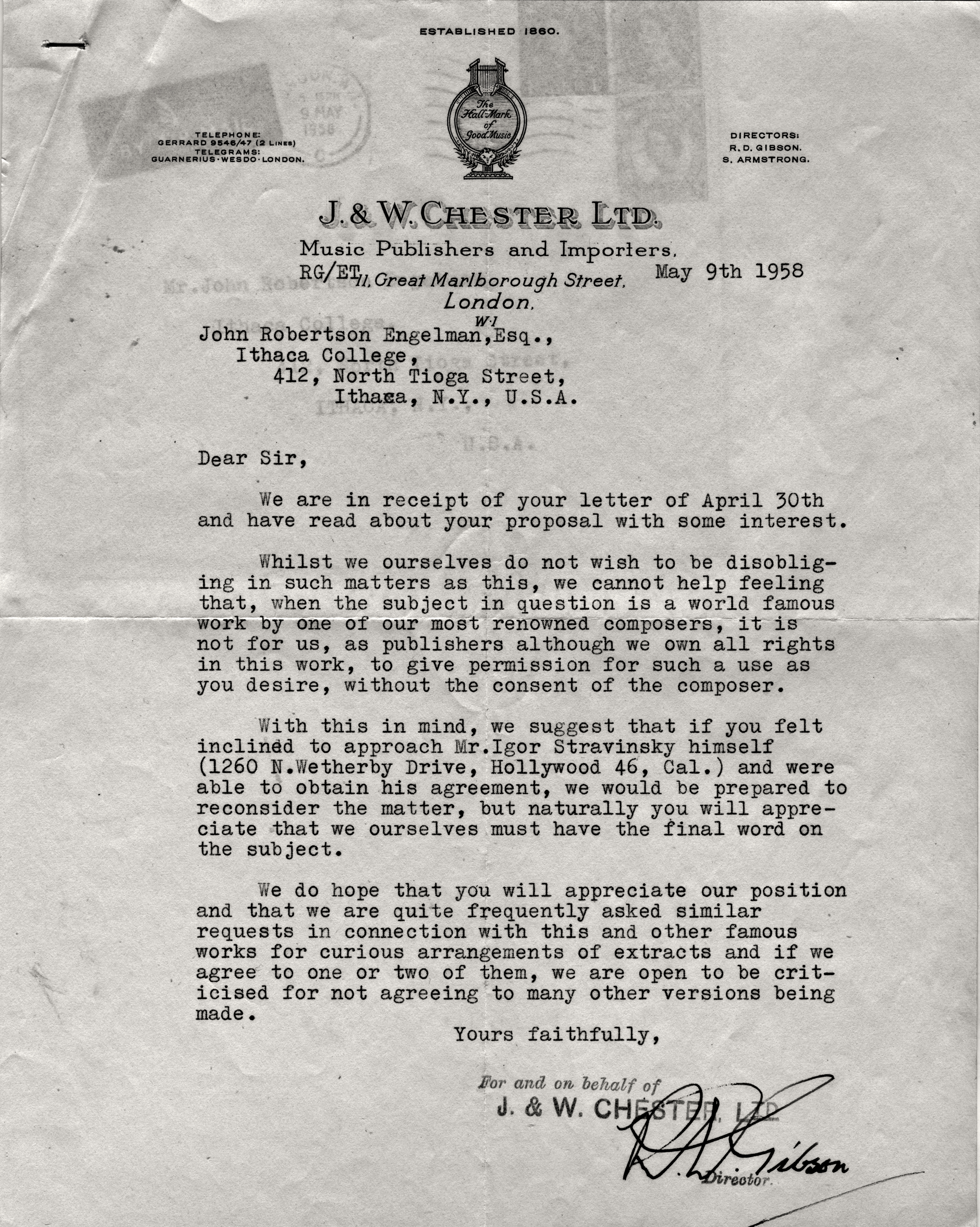


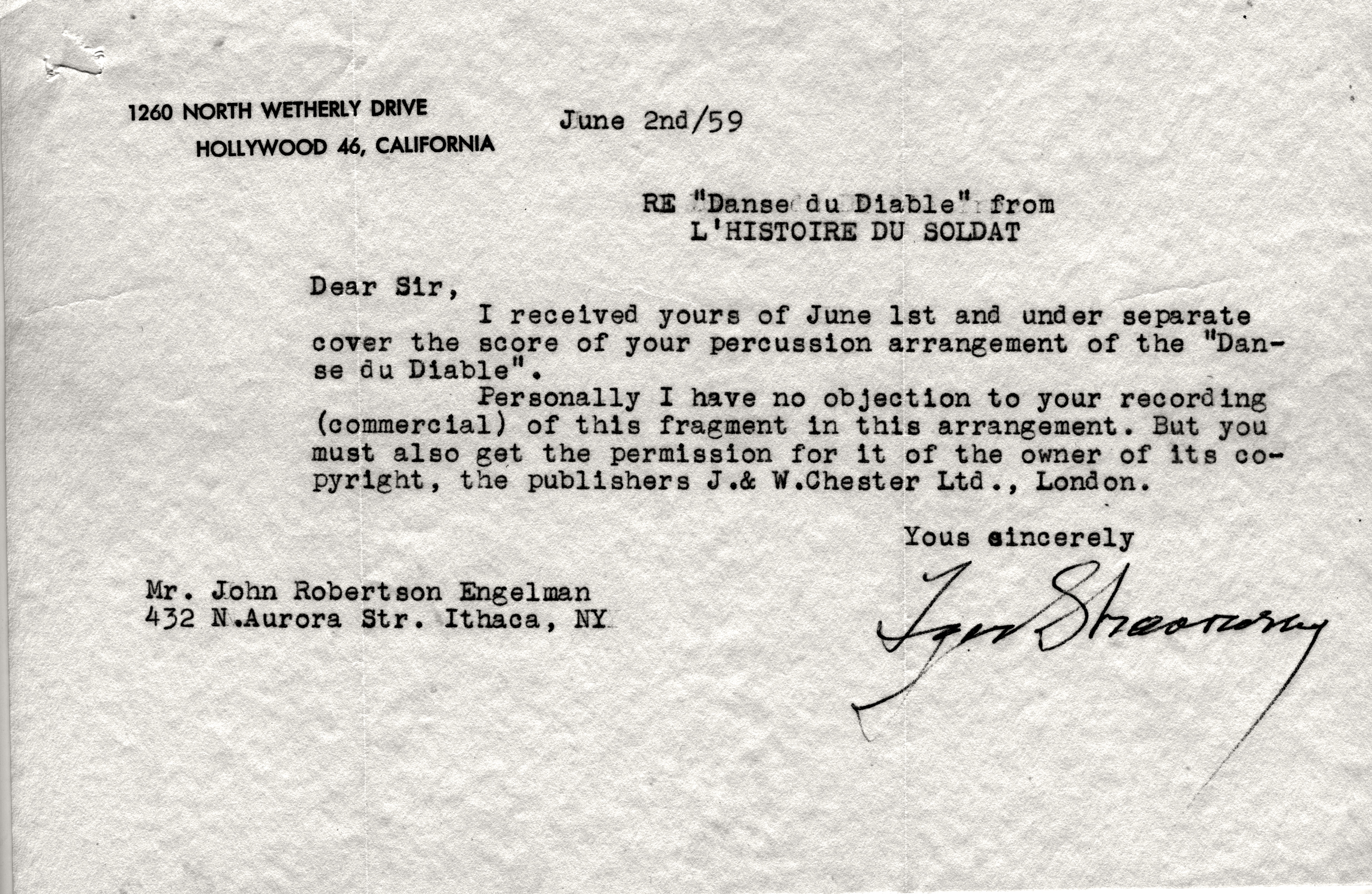
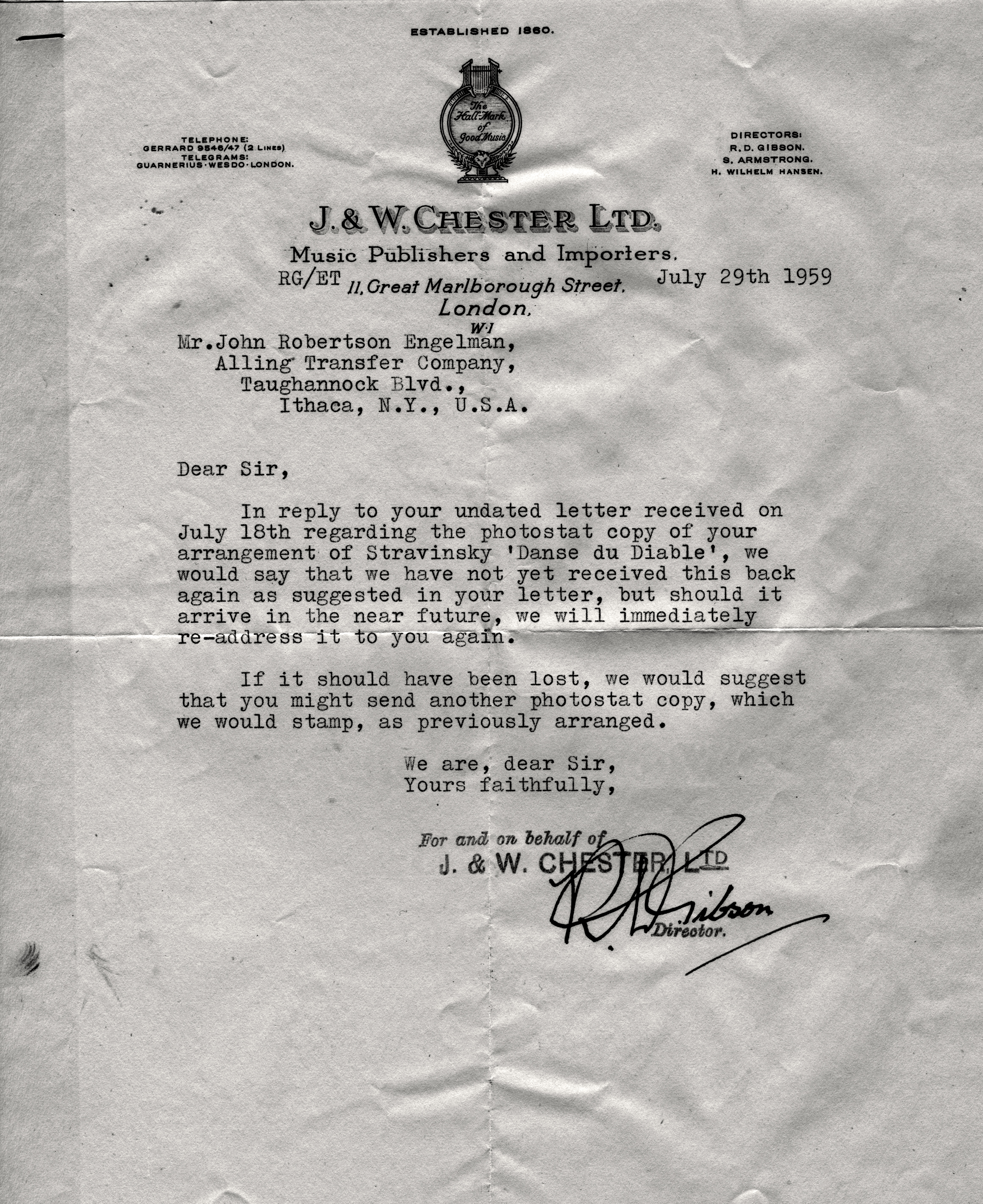
 Robin Engelman
Armstrong and Bechet, a Precise Freedom.
My brother was an avid collector of early Dixieland Jazz recordings and I grew up with the sounds of great singers, the likes of Ma Rainey, Bessie Smith and Lizzy Miles and King Oliver’s band, Louis Armstrong’s Hot Five and Hot Seven, and the Original Dixeland Jazz Band. [1.] With incomparable panache these artists wrote and recorded some of America’s most expressive music. Today, much of this legacy is available in digital format, though pureists may insist on listening to the original 78s and LPs.
In the 1950s Armstrong (1901-71) assembled his All Stars. Recently, I revisited two of my favourite Armstrong recordings from those years, Louis Armstrong Plays the Music of W. C. Handy and Ambassador Satch. The players were the same on both albums and long time Armstrong collaborators. The band was Barney Bigard, clarinet; Arvell Shaw, bass; Billy Kyle, piano; Trummy Young, trombone; Armstrong, trumpet; Barrett Deems, drums; and Velma Middleton, vocals. Edmond Hall, clarinet, replaced Bigard on Ambassador Satch. [2.]
Louis Armstrong Plays the Music of W. C. Handy was recorded in a studio under the supervision of the composer William Christopher Handy(1873-1958). The tunes on Ambassador Satch were recorded live during a European tour, with Edmond Hall’s lush clarinet tones and incomparably mellifluous lines, Arvel Shaw’s rock solid bass, Kyle’s tasty piano rhythms and sweet solos, Trummy Young’s rip saw Gut Bucket trombone, and Deems, “the Fastest Drummer in the World” tasty back ups and roisterous solos.
These guys played with a joy European fans had been waiting for years to experience. They were not disappointed. Within Europe’s music community, Armstrong and his All Stars were post World War II’s most appreciated ambassadors.
Note: To access audio files, go to my web site http://www.robinengelman.com
“Royal Garden Blues”, Ambassador Satch, Louis Armstrong and his All Stars, 1955. Columbia LP, CL840.
“Dardanella”, Edmond Hall, Clarinet on Ambassador Satch, Louis Armstrong and his All Stars, 1955.
“West End Blues”, Ambassador Satch, Louis Armstrong and his All Stars, 1955. Columbia LP, CL840.
In 1957, a high school teacher played me a recording of le Sacre du Printemps. Its fagotto castrato launched me into an adventure with Western Art Music that held my interest for Dixieland in abeyance for many years. I’ve since played le Sacre more than a few times and have about half a dozen LP and CD recordings by as many orchestras and conductors. During a conversation with Toru Takemitsu, I mentioned my love for early Dixieland. Toru replied, “Sidney Bechet”. Bechet (1897-1959) was familiar to me. Some years earlier I had purchased two recordings he’d made in France. [3.] Unfortunately, their quality was very poor and I vowed to revisit his music.
Recently I purchased 115 Bechet recordings. As I made my way through this lode, I struck gold on almost every track. I was delighted by Bechet’s mastery of the soprano saxophone and his endlessly brilliant improvisations. There was one tune I had to include here. According to one aficionado, Shag is not only a prime example of Bechet’s art, it contains perhaps the greatest Jazz vocal, ever. That aside, this masterful example of Scat singing by Ernest Meyers offers an enlightening contrast to Louis Armstrong’s style. Shag was written by Bechet and this recording was made in New York City in 1932 with his band, New Orleans Feetwarmers. The Bechet Quintet performance of Summertime is ineffably beautiful.[4.]
“Shag”, Sidney Bechet and his New Orleans Feetwarmers, Vic Dickenson, trombone; Sidney Bechet, soprano sax; Don Donaldson, piano; Wilson Myers, Bass; Wilbert Kirk , drums. New York, 1943.
“Summertime”, Sidney Bechet Quintet: Meade Lux Lewis, piano; Teddy Bunn, guitar; Johnny Williams, bass; Sid (Big Sid) Catlett, drums. New York, 1939.
“After You’ve Gone”, Sidney Bechet and his New Orleans Feetwarmers, Vic Dickenson, trombone; Sidney Bechet, soprano sax; Don Donaldson, piano; Wilson Myers, bass; Wilbert Kirk, drums. New York, 1943.
I wrote an article titled Music Appreciation 101. It’s a tribute to Janis Joplan and her album Pearl, one of the alltime great rock albums. Now, Armstrong and Bechet et al are providing me with further hours of pleasure. Their amazingly precise freedom gives me endless “What have I been missing” moments. After listening to a couple of cuts in this article, fellow drummer Rick Sacks said, “In this music you can hear all the voices.” So true. Next, I might check out Eddie Condon. Edmond Hall played with Condon as did drummers Cliff Leeman and George Wettling; trombonist Cutty Cutshall; and trumpet fireball Wild Bill Davidson, father of Toronto harpist Sarah Davidson.
NOTES:
[1.] Ironically, an all white band and the first to make a commercial Dixieland recording.
The band recorded two sides for the Victor Talking Machine Company, “Livery Stable Blues” and “Dixie Jass Band One Step”, on February 26, 1917, for the Victor label. These titles were released as the sides of a 78 record on March 7, the first issued jazz record. The band records, first marketed simply as a novelty, were a surprise hit, and gave many Americans their first taste of jazz. (from Wikipedia)
[2.] I recommend exploring the biographies of these great players. The band members dates: Barney Bigard, clarinet (1906-80); Emond Hall, clarinet (1901-67); Arvell Shaw, bass (1923-2002); Billy Kyle, piano (1914-66); Trummy Young, trombone (1912-84); Louis Armstrong, trumpet (1901-71); Barrett (the world’s fastest drummer) Deems (1914-98); and Velma Middleton, vocalist (1917-61). Velma died in Sierra Leone of a stroke or heart attack while touring with Armstrong. She can be heard on Louis Armstrong Plays the Music of W. C. Handy. Though some critics considered her voice average and suggested Armstrong replace her with someone better, Louis refused, stating “she was family”. On this tour, the All Stars were official representatives of the U.S. government, hence the album title Ambassador Satch.
[3.] Bechet was a Creole. He was born in New Orleans and died in Garches, France, the country where he made more than half his recordings. Both his birth and death occured on May 14, reminding me of Thomas Jefferson and John Adams who died on the same day, July 4, in the same year, 1826.
[4.] This reminds me of the late Eva Cassidy singing Autumn Leaves on her CD Live at Blues Alley.
Posted by robinengelman on April 22, 2015 in Articles, Commentaries & Critiques, Composers, History
Tags: Ambassador Satch, Louis Armstrong, New Orleans Feetwarmers, Sarah Davidson, Sidney Bechet, Toru Takemitsu, W. C. Handy, Wild Bill Davidson