
Phillips, Marjorie, Duncan Phillips with the Dogs C’est Tout, Ami and Babette, 1975,
As I’ve reported in other articles on this site, my wife and I consider a trip to Washington, DC one of our favorite vacations. Excepting the outrageous hotel prices and a city’s normal culinary expenses, it’s for us, all free. That’s because we rarely leave the National Mall.
If we stray from the freebies on the Mall, it’s usually to visit the Phillips Collection, 1600 21st St. SW. Mr. Duncan Phillips inherited a bundle of money from his Pittsburgh, glass window millionaire father. He didn’t care much for high society or politics, so he built his mansion a bit north of DC’s political hub and a bit east of the social whirl in Georgetown. He married an artist and with her advice began expanding his art collection. They were also life long season ticket holders to the Washington Senators baseball team.
In 1921, Mr. Phillips, a published art critic, and his wife, artist Marjorie Acker founded the Phillips Memorial Collection. They amassed a substantial and very significant collection, many by modern artists unrecognized by the general public. They arranged the collection chronologically to show a progression towards contemporary art from El Greco through Goya, Cézanne, Manet, and into mid 20th century. Phillips supported many painters before their works were recognized by the public, some for their entire careers. These personal attachments are the reasons behind us rarely failing to visit the Philips or for that matter other private collections such as the Freer Gallery on the Mall; the Clark Institute in Williamstown, Massachusetts; and Walters Art Gallery in Baltimore, Maryland.[1.]
Preliminary to an upcoming tour in the United States and abroad, the Phillips curators had mounted a special group of paintings by American artists, almost all of them unknown to us. We had just come from viewing the Andrew Wyeth exhibit in the National Gallery, so we had an American consciousness about us. In the last room we saw a portrait of a young man sitting in a chair facing the viewer.
This portrait had been painted by James Ormsbee Chapin (9 July, 1887, West Orange, New Jersey – 12 July, 1975, Toronto, Canada) [2.] Chapin was an important artist, famous in the world of art for his 1920’s portraits of the Marvin family. These portraits had a significant impact on the early history of Regionalists Thomas Hart Benton, John Steuart Curry, and Grant Wood. It was the portrait of Emmett Marvin, Farmer that had so enthralled us. Just a glance at Chapin’s renderings of Marvin is enough to understand Chapin’s style at the time and his influence.
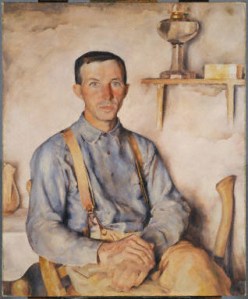
Chapin, James Ormsbee, Emmett Marvin, Farmer, 1925.
The Chapin’s had one child, James Forbes (Jim) Chapin (1919-2009). Jim became a famous drummer and authored two books, Advanced Techniques for the Modern Drummer. Jim had ten children, four of whom were musicians including folk singer Harry Chapin. [2.]
During our 1999 Capital foray, my wife found a drum, its strap, sticks and a photo of our friend Vince Batista, the principal percussionist of the U.S. 3d Army band,(d. 2010) in a Museum of American History display. Vince mentored Bill Platt, principal percussionist of the Cincinnati Symphony Orchestra (Ret.); publisher and educator Garwood Whaley and Bill Hinger, son of timpanist Dan Hinger and many others. Bill Platt said Vince had the finest pair of hands he’d ever seen.
There’s a bit of serendipity here. Both Vince Battista and Jim Chapin studied with ‘Gus’ Moeller(1886-1966) and both were devoted to his snare drum method. They spent a good deal of time advocating the Moeller method. Chapin made a DVD that is still available in which he demonstrates and extolls the Moeller method. Vince Battista filmed a workshop he gave on Moeller’s technique for the 3d Army Old Guard, Fort Meyer, Virginia. There may be some copies of this one still floating about, but I think they’ll be very difficult to find.
Although I’ve not been able to verify the subject of Chapin’s painting of the little boy shown below, James Ormsbee had only one child and I like to think this is a portrait of Jim. His hands look poised to assume a matched Moeller grip.

James Forbes “Jim” Chapin by James Ormsbee Chapin?

James Ormsbee Chapin.'(1887-1975) – Photograph.
Notes:
[1.] Another advantage to the Phillips location is its nearness to Hank’s Oyster Bar, 164 Q Street NW. Both are near Dupont Circle.
During the week of 16 June, 2014, the Phillips curators announced they’d discovered a portrait under their Picasso Blue Room.
[2.] James O. Chapin moved to Toronto in 1969, a protest against United States policies in South East Asia.
[3.] Please see on this site my article Vince Battista on the Mall etc.




 Robin Engelman
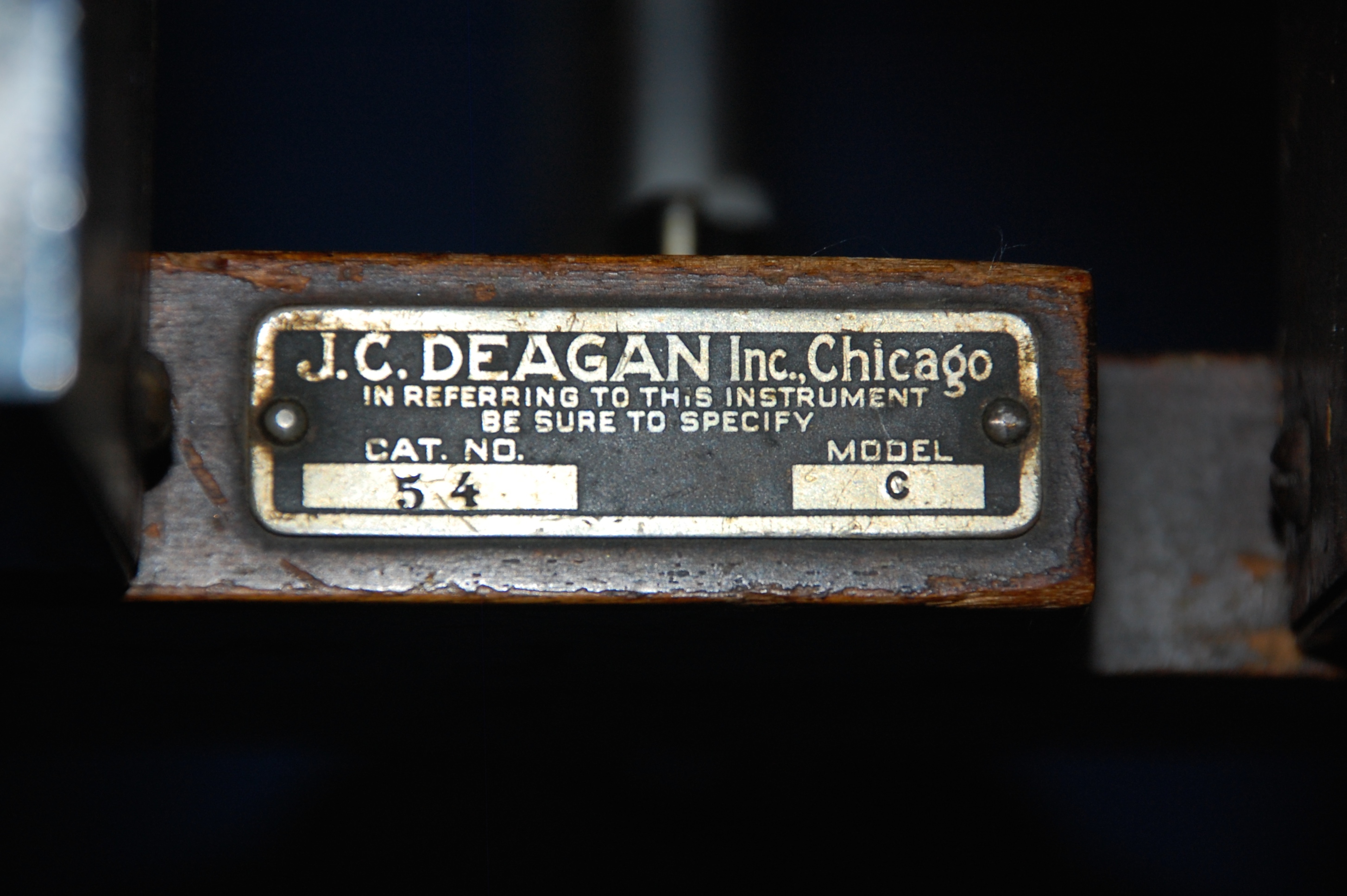
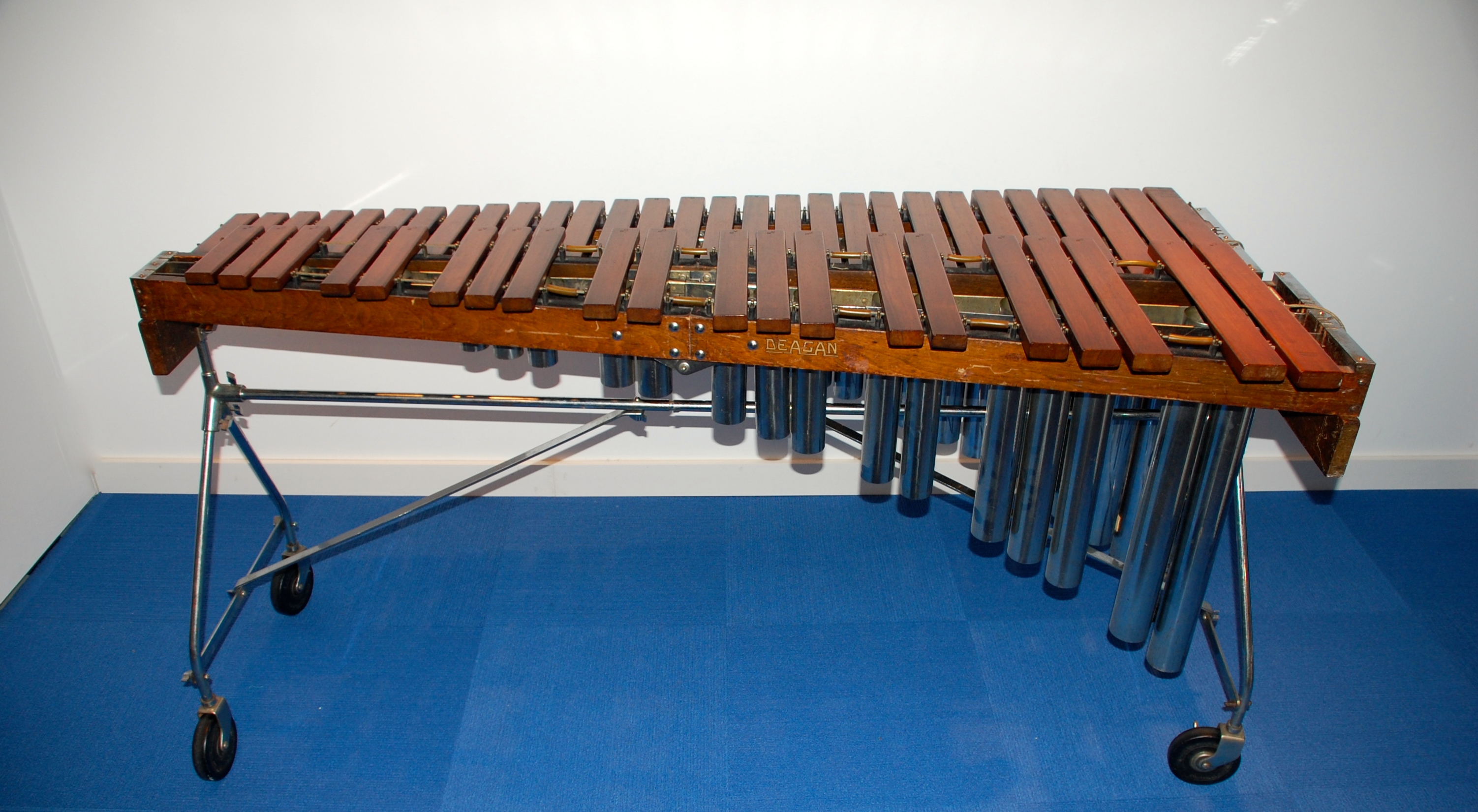
A Painter’s Drummer. Washington, DC, May 2014.
Phillips, Marjorie, Duncan Phillips with the Dogs C’est Tout, Ami and Babette, 1975,
As I’ve reported in other articles on this site, my wife and I consider a trip to Washington, DC one of our favorite vacations. Excepting the outrageous hotel prices and a city’s normal culinary expenses, it’s for us, all free. That’s because we rarely leave the National Mall.
If we stray from the freebies on the Mall, it’s usually to visit the Phillips Collection, 1600 21st St. SW. Mr. Duncan Phillips inherited a bundle of money from his Pittsburgh, glass window millionaire father. He didn’t care much for high society or politics, so he built his mansion a bit north of DC’s political hub and a bit east of the social whirl in Georgetown. He married an artist and with her advice began expanding his art collection. They were also life long season ticket holders to the Washington Senators baseball team.
In 1921, Mr. Phillips, a published art critic, and his wife, artist Marjorie Acker founded the Phillips Memorial Collection. They amassed a substantial and very significant collection, many by modern artists unrecognized by the general public. They arranged the collection chronologically to show a progression towards contemporary art from El Greco through Goya, Cézanne, Manet, and into mid 20th century. Phillips supported many painters before their works were recognized by the public, some for their entire careers. These personal attachments are the reasons behind us rarely failing to visit the Philips or for that matter other private collections such as the Freer Gallery on the Mall; the Clark Institute in Williamstown, Massachusetts; and Walters Art Gallery in Baltimore, Maryland.[1.]
Preliminary to an upcoming tour in the United States and abroad, the Phillips curators had mounted a special group of paintings by American artists, almost all of them unknown to us. We had just come from viewing the Andrew Wyeth exhibit in the National Gallery, so we had an American consciousness about us. In the last room we saw a portrait of a young man sitting in a chair facing the viewer.
This portrait had been painted by James Ormsbee Chapin (9 July, 1887, West Orange, New Jersey – 12 July, 1975, Toronto, Canada) [2.] Chapin was an important artist, famous in the world of art for his 1920’s portraits of the Marvin family. These portraits had a significant impact on the early history of Regionalists Thomas Hart Benton, John Steuart Curry, and Grant Wood. It was the portrait of Emmett Marvin, Farmer that had so enthralled us. Just a glance at Chapin’s renderings of Marvin is enough to understand Chapin’s style at the time and his influence.
Chapin, James Ormsbee, Emmett Marvin, Farmer, 1925.
The Chapin’s had one child, James Forbes (Jim) Chapin (1919-2009). Jim became a famous drummer and authored two books, Advanced Techniques for the Modern Drummer. Jim had ten children, four of whom were musicians including folk singer Harry Chapin. [2.]
During our 1999 Capital foray, my wife found a drum, its strap, sticks and a photo of our friend Vince Batista, the principal percussionist of the U.S. 3d Army band,(d. 2010) in a Museum of American History display. Vince mentored Bill Platt, principal percussionist of the Cincinnati Symphony Orchestra (Ret.); publisher and educator Garwood Whaley and Bill Hinger, son of timpanist Dan Hinger and many others. Bill Platt said Vince had the finest pair of hands he’d ever seen.
There’s a bit of serendipity here. Both Vince Battista and Jim Chapin studied with ‘Gus’ Moeller(1886-1966) and both were devoted to his snare drum method. They spent a good deal of time advocating the Moeller method. Chapin made a DVD that is still available in which he demonstrates and extolls the Moeller method. Vince Battista filmed a workshop he gave on Moeller’s technique for the 3d Army Old Guard, Fort Meyer, Virginia. There may be some copies of this one still floating about, but I think they’ll be very difficult to find.
Although I’ve not been able to verify the subject of Chapin’s painting of the little boy shown below, James Ormsbee had only one child and I like to think this is a portrait of Jim. His hands look poised to assume a matched Moeller grip.
James Forbes “Jim” Chapin by James Ormsbee Chapin?
James Ormsbee Chapin.'(1887-1975) – Photograph.
Notes:
[1.] Another advantage to the Phillips location is its nearness to Hank’s Oyster Bar, 164 Q Street NW. Both are near Dupont Circle.
During the week of 16 June, 2014, the Phillips curators announced they’d discovered a portrait under their Picasso Blue Room.
[2.] James O. Chapin moved to Toronto in 1969, a protest against United States policies in South East Asia.
[3.] Please see on this site my article Vince Battista on the Mall etc.
Posted by robinengelman on June 20, 2014 in Articles, Commentaries & Critiques, History, Unassigned
Tags: Bill Hinger, Bill Platt, Clark Institute, Garwood Whaley, Hank's Oyster Bar. Dupont Circle, James Forbes (Jim) Chapin, James Ormsbee Chapin, Robert Frost, The Philips Art Gallery, Vince Battista, Walters Art Gallery