
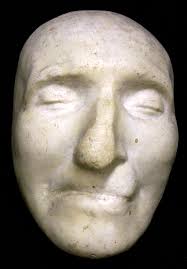
Thomas Paine.
Note: Recently I posted the entire text of Common Sense. This was a nistake. Some readers told me the article automatically went into spam. Therefore I am re-posting only Paine’s introduction to the original addition. My hope remains however, that people will read Common Sense, the book that more than anyother written material, emboldened the colonialists to think differently about their state of affairs and act. R.E.
Government even in its best state is but a necessary evil; in its worst state an intolerable one. Thomas Paine, Common Sense.
We can have democracy in this country, or we can have great wealth concentrated in the hands of a few, but we can’t have both. Chief Justice Louis Brandeis.
Introduction
Perhaps the sentiments contained in the following pages, are not yet sufficiently fashionable to procure them general favor; a long habit of not thinking a thing wrong, gives it a superficial appearance of being right, and raises at first a formidable outcry in defence of custom. But the tumult soon subsides. Time makes more converts than reason.
As a long and violent abuse of power, is generally the Means of calling the right of it in question (and in matters too which might never have been thought of, had not the Sufferers been aggravated into the inquiry) and as the King of England had undertaken in his own Right, to support the Parliament in what he calls Theirs, and as the good people of this country are grievously oppressed by the combination, they have an undoubted privilege to inquire into the pretensions of both, and equally to reject the usurpation of either.
In the following sheets, the author hath studiously avoided every thing which is personal among ourselves. Compliments as well as censure to individuals make no part thereof. The wise, and the worthy, need not the triumph of a pamphlet; and those whose sentiments are injudicious, or unfriendly, will cease of themselves unless too much pains are bestowed upon their conversion.
The cause of America is in a great measure the cause of all mankind. Many circumstances hath, and will arise, which are not local, but universal, and through which the principles of all Lovers of Mankind are affected, and in the Event of which, their Affections are interested. The laying of a Country desolate with Fire and Sword, declaring War against the natural rights of all Mankind, and extirpating the Defenders thereof from the Face of the Earth, is the Concern of every Man to whom Nature hath given the Power of feeling; of which Class, regardless of Party Censures, is the
THE AUTHOR.
Philadelphia, Feb. 14, 1776.
 Robin Engelman
the ART of DRAWING
Chesapeake Bay Oyster Schooner
In the 7th grade I was given a book filled with drawings by a medical artist. The mostly black and white drawings were of human body parts from big toe to brain, sliced to show every layer from epidermis through bone. Surgical procedures such as appendectomies, were drawn in step by step views from the initial incision to the final suturing. These drawings, a surgeon told me, were more clear and readable then photographs. I was fascinated and began to carefully copy the drawings page by page – all with the intention of becoming a medical artist.
When I entered high school I showed my copies to the art teacher who seemed impressed. Whether it was my skill or perseverance that caught her attention, she didn’t say and I didn’t ask. She did however, recommend I do some original work. I began sketching Chesapeake Bay schooners. Their lines fascinated me and I drew dozens of these beautiful boats, all pretty much the same, sails full blown, all heading in the same direction through formula waves. My teacher prodded ne to try somethig else and for inspiration, suggested I look at books of drawings by master artists.
When I first saw Ingres’ pencil sketches, I knew the game was up. Ingres had spent time in Italy and to make money he sketched tourists in situe, creating post card like mementos of their travels. I looked at other Ingres drawings and thought of him whipping them off. I wondered how many he could do on a good day. I tried copying Ingres work and my attempts to achieve his elegant, sure lines were frustrated.
The artist/percussionist Michael Craden (1941-82) told me to look at artist’s drawings to discover something about their working methods: the lines Michelangelo drew to create his neck and those peculiar eyes, the lack of reworking in the Ingres, Rubens precise rendering of the young woman’s face and the casual treatment of her collar and hair, the child’s innocent gaze, touch and his halo, as well as the horizon lines through the Madonna in the Raphael, the Bruegel bold lines, particularly in the artist’s cuff presage van Gogh and Durer’s hare, a watercolour no less!
Today I am an inveterate seeker of art. My idea of a great holiday is a trip to the Mall in Washington, DC with its 20 or so Smithsonian buildings, all free to the public. Megabus takes time, but its the least expensive way to go. The trip via NYC and Philly takes 13 hours, but at night. Round trip from Toronto is about $40.00 per person and includes Wi-Fi. The money my wife and I save by bussing and the for gratis Smithsonian, goes towards a decent hotel and, most important, frequent visits to Hank’s Oyster House.
Below is a random selection of a few of my favourite drawings. Collectively they continue to sooth my soul and I remain in awe of their artist’s abilities.
Ingres, Frau Ritter and daughters, 1805, graphite.
Raphael, Madonna with Pomegranate, 1502, crayon.
Pieter Bruegel, the elder,1520-69, pen drawing.
Albrecht Durer, Young hare, 1502, Watercolor
Chesapeake Bay Schooners in a bottle
Posted by robinengelman on March 12, 2014 in Articles, Commentaries & Critiques, History
Tags: Art, Bruegel, drawing, Durer, Ingres, Michelangelo, Raphael, Rubens