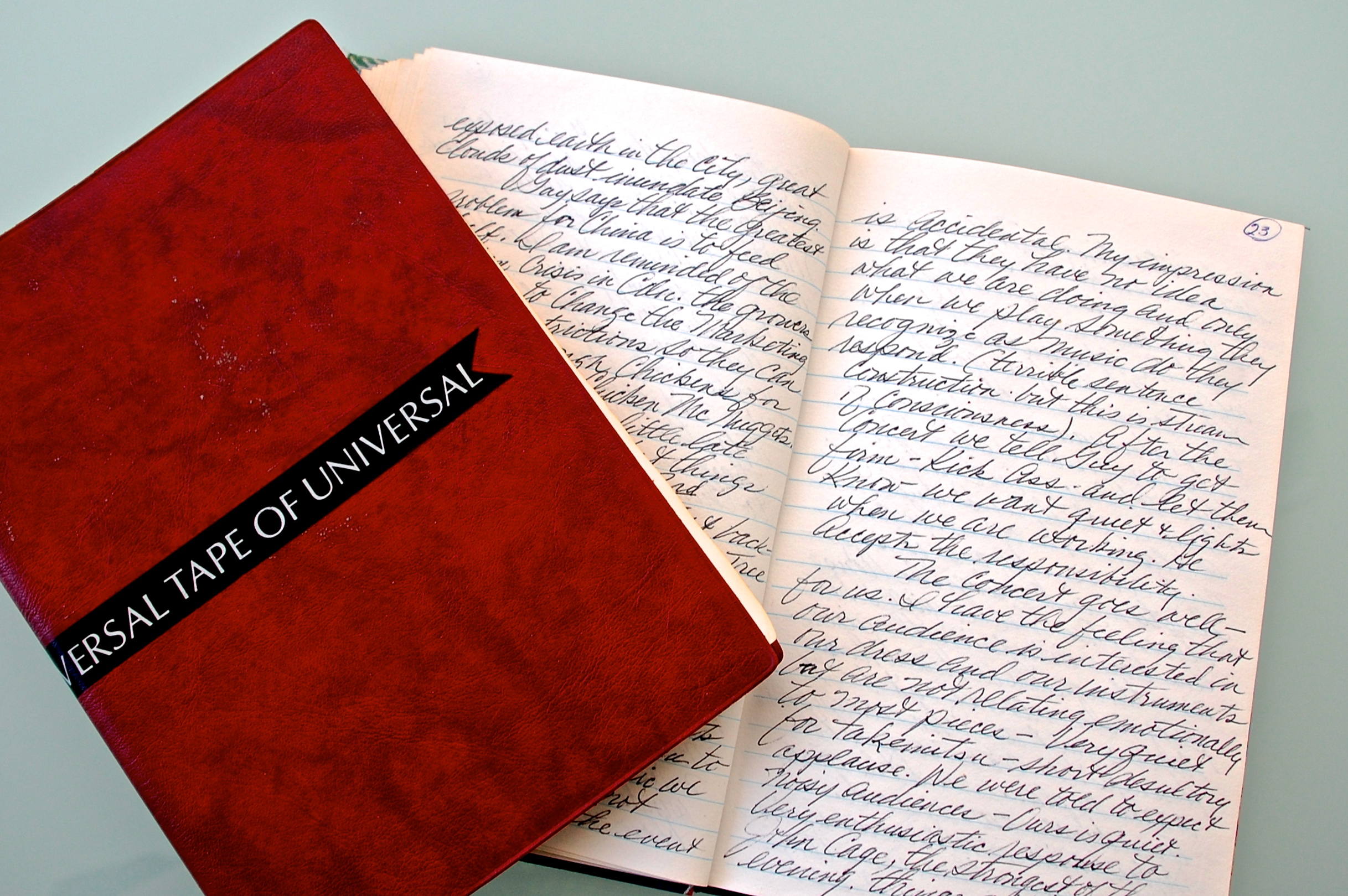
After the dental appointment.
On my trip to the Embassy I question Kwang Chao, our translator, about Mao suits. She explains that as a form of protest to feudalism, Dr. Sun Yat-sen adopted the Western suit rather than the traditional gown. Mao adopted this in his own design and many men still wear this. At one point in the Cultural Revolution only three colors were allowed: Army green, black and gray. Now the young people consider these men conservative and have adopted Western dress as a form of protest. Chao explains that it is young women who have started wearing the most colorful clothes. She says that men do not care about their appearance. There is no significance to grey or black in terms of rank. After the hospital Guy explains that the average wage in China is about 45-50 yuan a month. The political leaders make 500 yuan per month but they get many perks.
The forbidden city is so called because the common people in the days of the emperors were not allowed on the grounds. Today the Chinese leaders live here in compounds which are off limits to Chinese citizens.
I casually asked Guy (Guy St. Jacques, Canadian Embassy) why the Chinese don’t grow grass in the city. Years ago the government had all the grass destroyed in the war against insects. Now they are planting trees and grass as quickly as they can because the city is a dust bowl in the winter. The Gobi desert is about 500 miles north and when the winter winds come, huge dust storms blow in and added to the exposed earth in the city, great clouds of dust inundate Beijing.
Guy says that the greatest problem for China is to feed itself. I am reminded of the chicken crisis in Canada. The growers wanted to change the marketing boards restrictions so they can produce enough chickens for McDonald’s chicken McNuggets.
I arrived a little late for our rehearsal but things feel good – the Cage “Third Construction” comes right back – the Rags float along. “Raintree” is a little strange because of the great resonance in the hall.
We have some problems with getting the stagehands to give us enough light but interestingly enough the lights come on full when we began to rehearse the Chinese music we brought. It does not appear to us that the event is accidental. My impression is that they have no idea what we are doing and only when we play something they recognize as music do they respond. (Terrible sentence construction but this is Stream of consciousness.) After the concert we tell Guy to get firm – kick ass and let them know we want quiet and lights when we are working. He accepts the responsibility.
The concert goes well for us. I have the feeling that our audience is interested in our dress and our instruments but are not relating emotionally to most pieces – very quiet for Takemitsu – short desultory applause. We were told to expect noisy audiences–ours is quiet. Very enthusiastic response to John Cage, the strongest of the evening. Things get interestinger and interestinger. Not much enthusiasm for the Chinese piece. Um…we expected quite a bit of pleasure from that one.
The African charts go well. We all feel good and the concert is cooking -rather the performances are. Good response for the Rags. John tries to say something in Chinese at the end and has a blank. He opens his arms and looks upward in supplication and brings the house down. The Chinese girl who has been introducing the pieces–even though the audience have programs–comes out to the rescue just as John remembers. He says his sentence and to warm applause and the girl announces our encore. “Xylophonia” is not received with any more enthusiasm and we bow. A huge bouquet of flowers is brought out by 2 girls and the Canadian and Chinese officials, come on stage to congratulate us and have a photographic session. Only 50 or 60 of the audience stay in the hall as the officials come on stage. For the photos I stand between “Tom Monohan” and “the elf “with a great smile who sat next to Russ at the banquet. (Note-Tom Monohan, 1937-94, was for many years the principal contra bassist with the Toronto Symphony. He was very over weight, a terrific musician, teacher and good friend. The Chinese official reminded me in some ways of Tom.)
Our feeling is that the audience got off on what we were doing. We wonder if we are the 1st people to play Cage and Takemitsu in China. If this is indeed the 1st performance of any new music. We will get reviews but I wonder if we will ever know the significance of their responses. Are Chinese audiences subdued, normally, when confronted with totally new musical experiences? To what kind of music would they respond? I felt good–very good, and am not myself convinced, but the concert had some ambiguous moments. Our hosts from the banquet seemed generally very pleased. As we stood for pictures “the elf” was beaming and took my hand for a moment of genuine affection, respect and appreciation–”Monohan” I discovered, was well into his 70s seemed very moved and went out of his way to congratulate me more than once.
The bouquet was ours. We loaded it on the bus and presented it to the lobby of our hotel. Dinner was waiting and our stage manager, publicist and translator from the arts Bureau presented us with Chinese linen tablecloths and napkins. I had my 1st full nights sleep since leaving Toronto.
In one hour – 9 AM – we leave for the hall to rehearse for tonight’s concert. Tonight we will improvise for them and play Bruce’s “Clos de Vougeot”. The hall is very good–that’s a plus for Bruce’s piece–but I’m really concerned. In the West “Clos de Vougeot” is a difficult piece for audiences–very balanced but quiet generally and very strange structurally, with many silences. Western audiences have applauded after some of the sections and that tends to break the mood. Tonight, I think, we’ll have to work.
Postscript: a fellow traveler brought 2 large boxes of chocolates from Toronto. After lunch we had a binge. Chocolate never tasted so good.
 Robin Engelman
NEXUS WORLD TOUR – 1984 – A DIARY, Part 4. 2nd Beijing Concert
May 7–5:50 AM
An interesting change of mood at our rehearsal this morning. The lights stay on and there is quiet while we practice. During our set up and breaks, the stage crew and visitors ask us about our instruments and provide information about the Chinese instruments, details of which we were not aware.
After lunch, I slept until our 5:30 PM bus to the hall. Concerts are at 7:15 PM. During my siesta some of the group visited a music store. Bob bought some thin gongs and Bill purchased a keyboard string instrument. The keys are numbered 1 to 12 and you pluck the strings at one end. Very much like an autoharp but “twangier”. About 15 inches long it has a sopranino sound.
The concert begins with what is called Revolutionary Drumming. We now have four large rope field drums and bass drum. Because of the resonance of the hall the sound is huge and all the low partials come out. We play Palta and then in improv. It’s good to improvise again. The last time was Cardiff in Wales over a year ago? They are listening–polite applause but when we come back for the 2nd half a lot of people have left. Bob’s Tabla playing was good as was the performance. A lot of good things happened in the improv. Something beautifully strange and the communication in the group was good. I felt comfortable playing my C’hang or C’hung depending on dialect. (Note – My C’hang was purchased in Hong Kong. It is small, very light and has 19 wire strings, each supported by a movable bridge, the sound board is curved Koto like and the wire strings are tightened with a T shaped tuning key.)
A conservatory teacher was at our rehearsal with his son and I asked if it would be all right for me to play this ancient instrument my way. When I bowed the instrument he very seriously said, “this is a new way, a creation”. It is proper for you to play this way. I stressed again that I played no melodies but used it purely for sound purposes. He assured me that it was all right. Another man hearing the bow asked if my intention was to make the sound of wind.
At intermission, a stunning woman from Vienna came backstage to ask for literature on the group. She said she had never heard a Chinese audience so quiet, following a tone to its very end. She almost refused to come when a friend offered her a ticket. She said she would never have forgiven herself if she later heard what are concert was like.
Most of the people who stay for the 2nd half are young. The hall still looks full because the audience is everywhere but there are lots of empty seats scattered about. “Music for Pieces of Wood” is well received. I also believe the African double bell piece was appreciated. Mbira enthralls them and when Bob shows the instrument to the audience after the performance, there is extra applause. Now, “Clos de Vougeot”. We smile knowingly to each other. The rehearsal was very good a great Hall for the piece. Bill sent out front and said the piece never sounded better. All the voices can be heard clearly. One problem with the piece is the blend. Sometimes on stage it is difficult for me to hear the other marimba. It is a fantastic performance. There is almost absolute silence during the performance and we moved as one. The last cadenza is really a dream world. The piece is well received.
The Rags cook along and the joint is starting to jump, relatively speaking. When we play the Chinese piece the audience begins to clap after the 1st measure. Rhythmic applause, a lot of smiling faces that disperse quickly. All we can do is do what we do, Scooby-Doo.
(Today we have a workshop.) A large group of girls from Australia are staying on our hotel floor. It is 6:45 AM and their chaperone goes down our hall knocking on each door. Knock, knock, knock, knock, “Getting up time” unquote.” Knock, knock, knock, “Getting up time. Patty are you awake?”,
The ubiquitous Mr. Wa. Stage manager? His own 4 door Japanese sedan and driver. Nicely tailored Western sport jackets–leather attache case. Today he moved a music stand for us. Otherwise it is difficult to know his function. No doubts about his authority. Kwang Chao was born in Hong Kong.
In a couple of hours we go to the hall to meet about 60 professional drummers who have been gathered to play for us. Sixty? National radio taped our concert last night. So too a fellow traveler. Heard a little bit of the rudimental drumming. Strong and together!
Posted by robinengelman on October 29, 2013 in Articles, Commentaries & Critiques, History
Tags: Beijing, Clos de Vougeot, Music for Pices of Wood, Nexus, Novelty Ragtime, Palta, Rope Drumming