
Stage 19 of 21, The Tour de France in the Alps. A downhill stretch prior to the last ascent to 5,000 feet above sea level.

Landscape near Saint-Jean-de-Maurienne, south east France. End of Stage 19, The Tour de France, 2015.
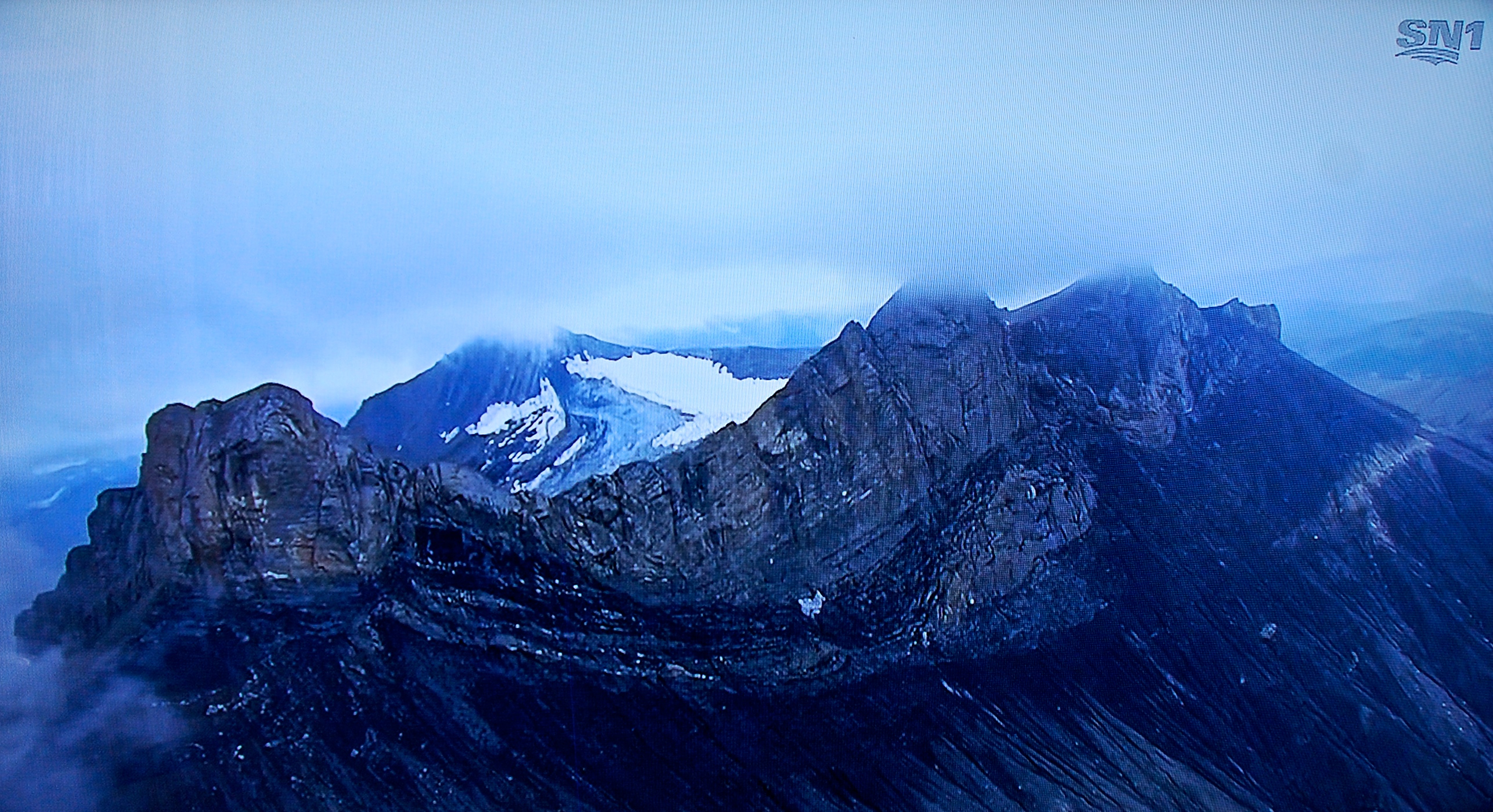
An Alpine scene near Saint-Jean-de-Maurienne, France.
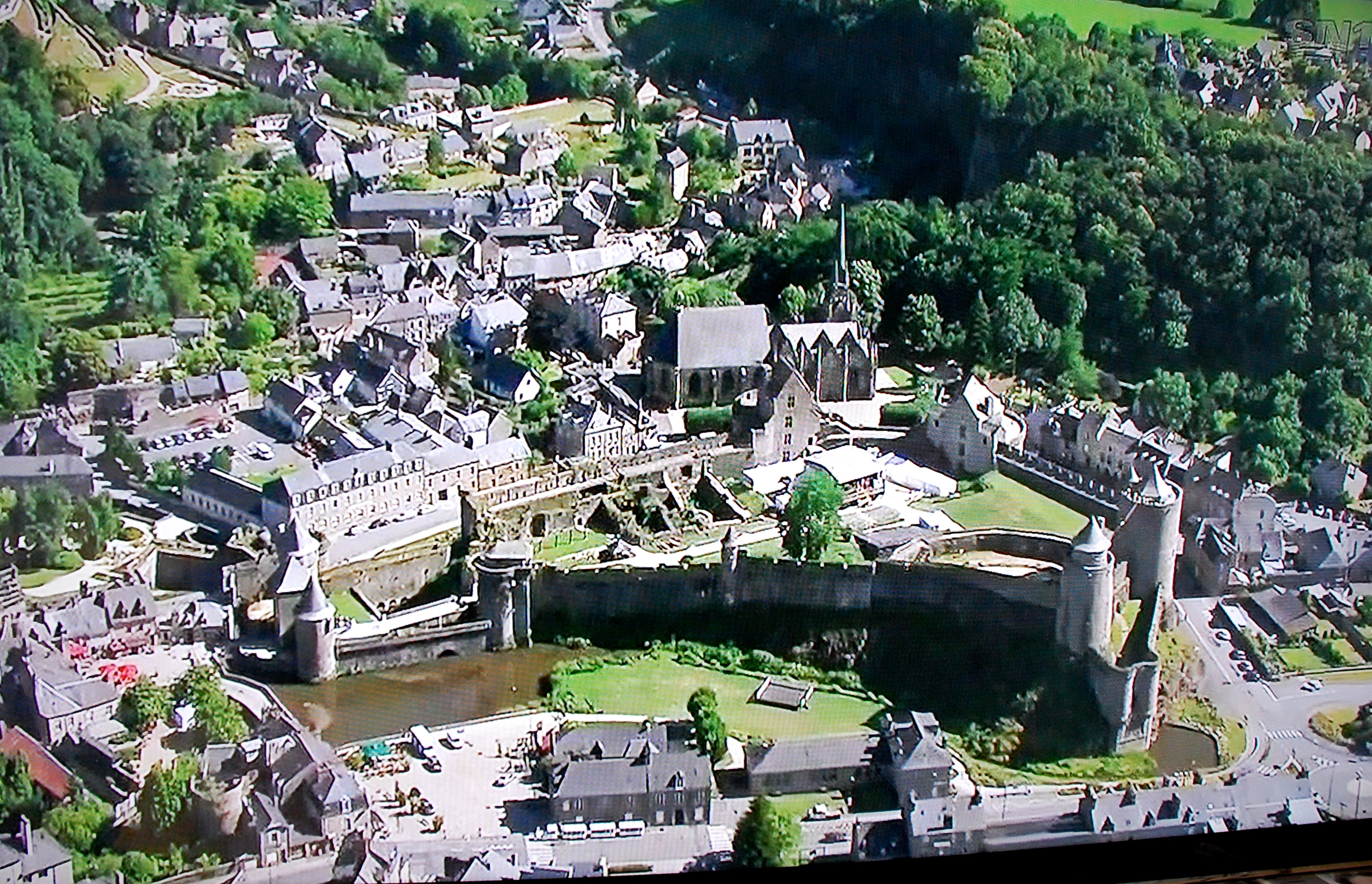
Every year beginning in early July, the great three week long bicycle race, the Tour de France is televised and I watch. Of course I marvel at the physical condition and endurance of the cyclists. They pedal continuously for hours a day at speeds ranging from 10 mph whilst ascending inclines of 10% or more, to speeds of 50 miles an hour and above as they soar downhill or sprint to the finish line. The incredible explosions towards the finish by the sprinters is breathtaking. As a dyed in the wine couch potato I simply cannot fathom how these young men do what they do. However, the real attraction for me is the scenery. The two fellows who have been broadcasting this event for years, have info about the various scenes appearing during the race, usually shown from a helicopter. They’ll tell the age of a church or cathedral, how long it was a building, the history of a castle, plenty of those in this year’s Pyrenees Mountain stage, and they’ll point out Château to whose owners they’ve spoken and who just might be the 15th generation occupants.
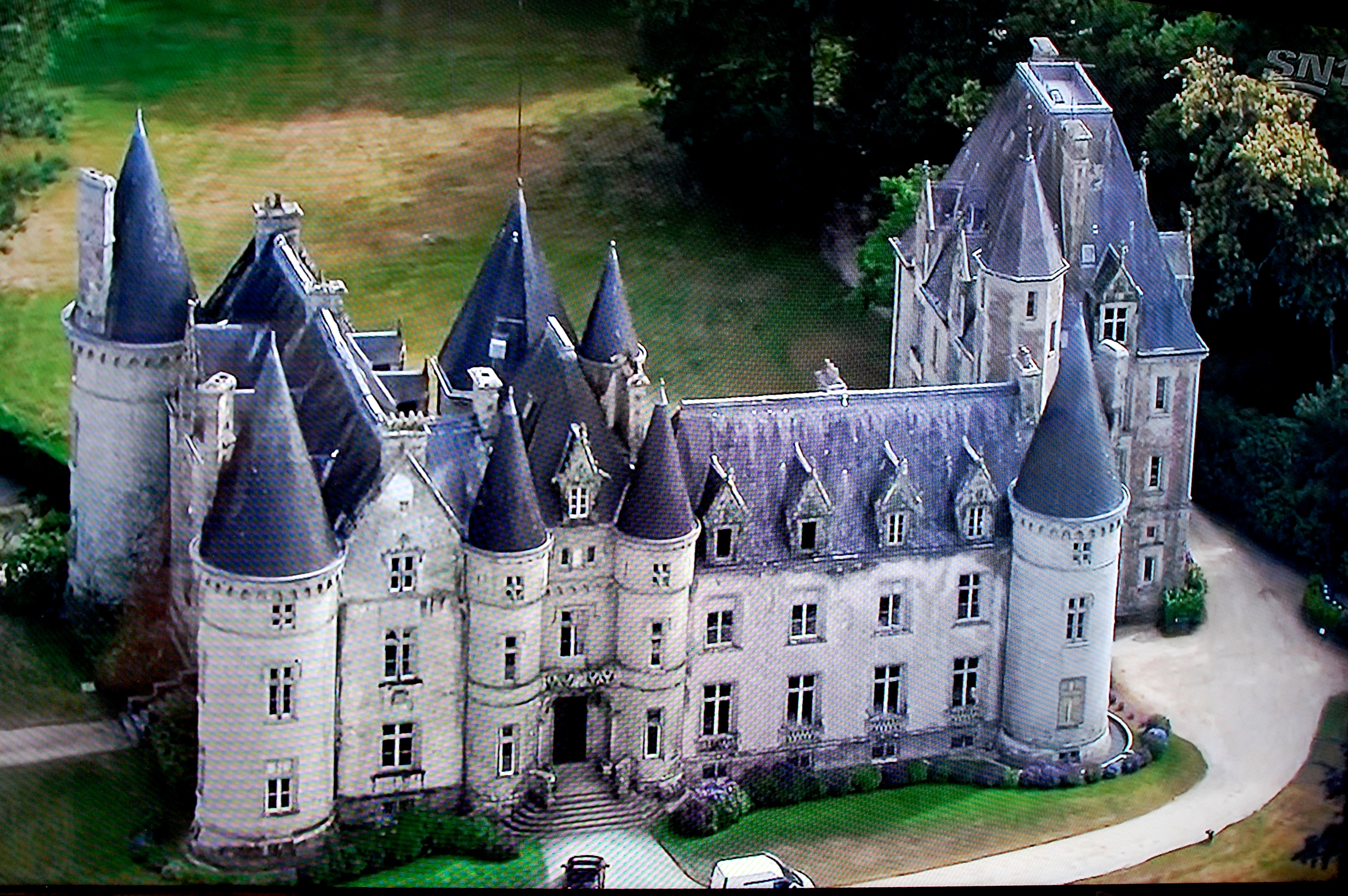
This year’s race covered a 1,464 mile circuit through various parts of France. The villages are delightful to see. As well, wineries, Château, farms, mountains, castles, canyons and the fields in impressionist colours, provide unforgettable scenes from this endlessly fascinating country. This year, the tour spent one day in the westen Ardeche, immediately beyond the Rhone River and its Chateauneuf du Pape vineyards among others. Below is a Chateau with eight cylindrical towers, one of the national treasures of France.

Every year the race ends in Paris on the Champs-Élysées route. The riders ride now a total of 8 laps (up towards the Arc de Triomphe, down the Champs-Élysées, round les Tuileries and the Louvre and across the Place de la Concorde back to the Champs-Élysées.) This is a rather slippery spoke as a great part of the route is on cobblestones. Usually the leader of the race is protected by his teammates and they are buried in the midst of the peleton, the majority of racers whose job it is to support and protect their star mountain climbers, sprinters, time trial specialists and road racers. A disaster can occur if any cyclist in the peleton loses his concentration for just a moment and crashes, particularly in front of the leader, thus making the efforts of three weeks come to naught. Around and around they go. And finally, if all goes as the teams planned, there is a winner, sometimes by just a minute or two.
To watch the tour live, you’ll need to have cable and rise very early in the morning. If that’s beyond the pale, there is an 8 PM summary. Monday’s are rest days.
 Robin Engelman
Aspects of Terror 1. Alerts To Threats In 2015 Europe From John Cleese.
ALERTS TO THREATS IN 2015 EUROPE
From JOHN CLEESE
The English are feeling the pinch in relation to recent events in Syria and have therefore raised their security level from “Miffed” to “Peeved.” Soon, though, security levels may be raised yet again to “Irritated” or even “A Bit Cross.” The English have not been “A Bit Cross” since the blitz in 1940 when tea supplies nearly ran out. Terrorists have been re-categorized from “Tiresome” to “A Bloody Nuisance.” The last time the British issued a “Bloody Nuisance” warning level was in 1588, when threatened by the Spanish Armada.
The Scots have raised their threat level from “Pissed Off” to “Let’s get the Bastards.” They don’t have any other levels. This is the reason they have been used on the front line of the British army for the last 300 years.
The French government announced yesterday that it has raised its terror alert level from “Run” to “Hide.” The only two higher levels in France are “Collaborate” and “Surrender.” The rise was precipitated by a recent fire that destroyed France ‘s white flag factory, effectively paralysing the country’s military capability.
Italy has increased the alert level from “Shout Loudly and Excitedly” to “Elaborate Military Posturing.” Two more levels remain: “Ineffective Combat Operations” and “Change Sides.”
The Germans have increased their alert state from “Disdainful Arrogance” to “Dress in Uniform and Sing Marching Songs.” They also have two higher levels: “Invade a Neighbour” and “Lose.”
Belgians, on the other hand, are all on holiday as usual; the only threat they are worried about is NATO pulling out of Brussels .
The Spanish are all excited to see their new submarines ready to deploy. These beautifully designed subs have glass bottoms so the new Spanish navy can get a really good look at the old Spanish navy.
Australia, meanwhile, has raised its security level from “No worries” to “She’ll be right, Mate.” Two more escalation levels remain: “Crikey! I think we’ll need to cancel the barbie this weekend!” and “The barbie is cancelled.” So far no situation has ever warranted use of the last final escalation level.
Regards,
John Cleese ,
British writer, actor and tall person
And as a final thought – Greece is collapsing, the Iranians are getting aggressive, and Rome is in disarray. Welcome back to 430 B.C.
Posted by robinengelman on July 27, 2015 in Articles, Commentaries & Critiques, History
Tags: 1588, 1940, 430 BC, Europe, John Cleese, Terror