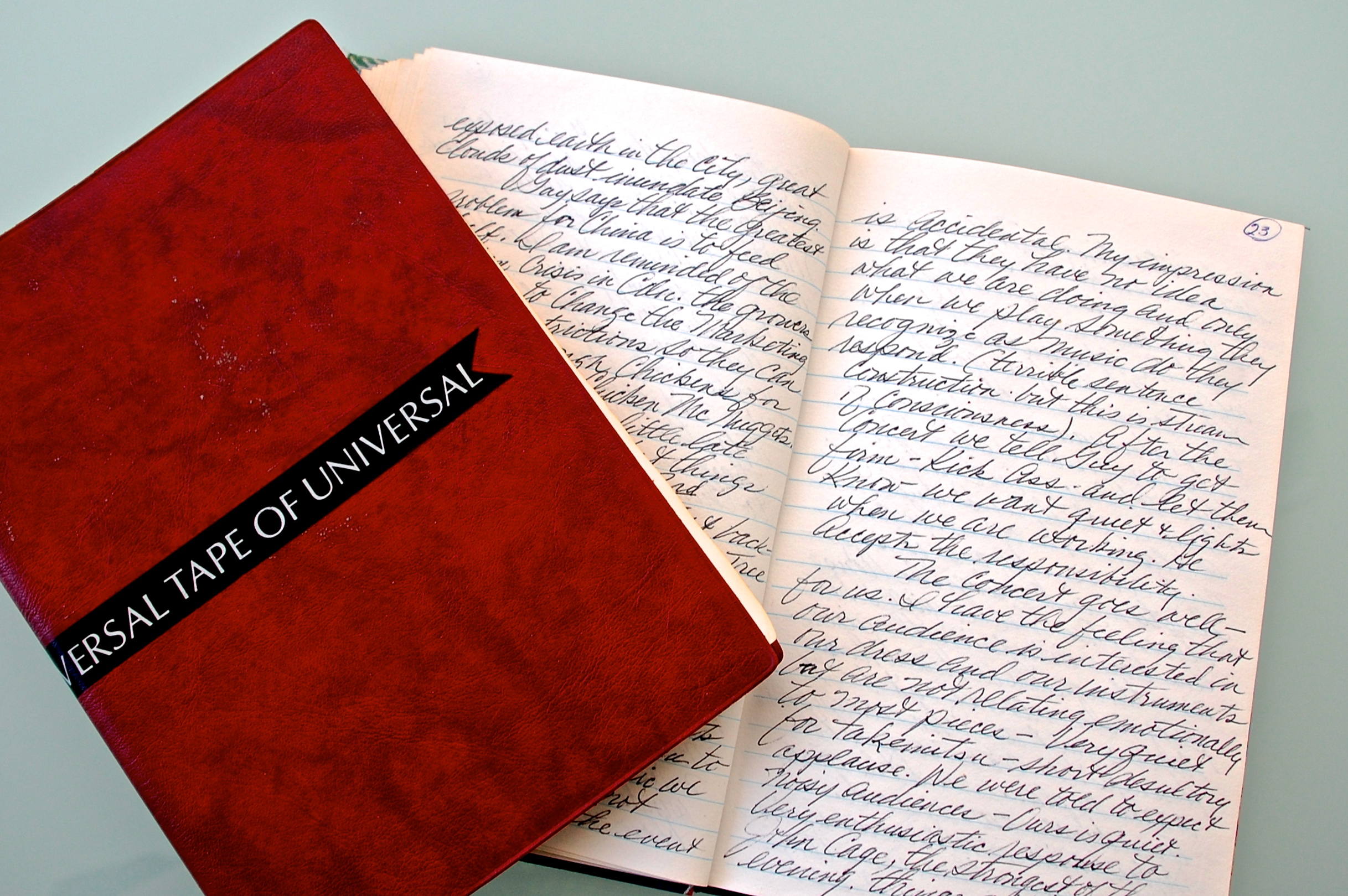
Nexus World 1984, Part 9
Shanghai, May 14 – 7:45 AM
I tried to call Eleanor yesterday morning at 10 PM Toronto time but the line was busy. This morning is cool and I put on one of the cotton tops for the first time. I cleaned off a few of our cats’ hairs and on the shoulder is a long strand of Eleanor’s hair.
Last night in the bar we all drank a toast to Earle Birney (Canadian poet) and his 80th birthday. I thought of calling, but staying out until 2 AM after two concerts was impossible. Wailan (his wife) was giving him a party from 2 o’clock to 5 o’clock that afternoon.
Joe Clark, Canadian Minister of External Affairs for the Mulroney government, is coming over on a peace mission. There will not be much for him to do. The Chinese policy on armament is summed up by them repeatedly in one paragraph. He will have a couple of meetings and spend the rest of his time at the Great Wall, the Temple of Heaven, the Ming Tomb, the Forbidden City and perhaps, with the panda. At least Joe does not smoke cigars.
The laundry situation in China is fantastic. For a dollar you can get a pair of pants, some underwear and a couple of shirts cleaned in one day. Fresh clean and soft. Until recently, arts groups’ laundry was done free of charge but since the Chinese groups must pay for laundry in the West, the Chinese make us pay. What they fail to mention is that Chinese get a fee for performances when they come to Canada.
After our concert last night, three of the stage crew are measuring the ratchet and making notes as to its construction. They also check out my lions roar. We conclude that within a week of our leaving they will be production and within a month they will be for sale in North America at half the price.
We’ve had some conversations about return engagements to China. The definitive word today issued at the bar last night by the Nexus Central committee is that we will travel with five Winnebagos if the Chinese want us to visit the Western frontier. Our drivers can stay in the available hotels. Jean says that way they can have some company and time to themselves.
10:45 PM
A day spent shopping. The concert was very good. “Shanghai Fantasy” was extraordinary. After the concert, Kwang Chao asks how the “Shanghai Fantasy” was arranged. I explained that it was an improvisation and no one knew what was going to happen when we went out on stage. She said that the cooperation among the group was so good and asked how we achieve that. I replied “friendship”. She paused for a moment and said that was too abstract. Hate, love and envy were not abstract but friendship was. I asked her to explain to me why friendship was abstract. Mrs. Chong, our Shanghai translator was obviously interested in and disturbed by this conversation. She and Kwang Chao began an animated conversation in Chinese but could not answer the question. Mrs. Chong has been an object of our suspicions since we arrived here. There have been numerous occasions when we have felt she is concerned about Kwang Chao. She seems to represent a more formal and conservative opine about foreigners and pollution of the Chinese spirit.
Because of this I turned to her as we are leaving the theatre and say that the subject is very interesting. I hope that my seriousness and interest in her will help to defuse any confusion or animosity she may have for me and the group. In the bus, Kwang Chao pursues the issue. Bill says that he wants to sit in the seat behind us so that he can hear the conversation.
I sense that everyone is listening and choose my words carefully. “There are things that one knows that go beyond questioning”. Wisdom and knowledge supplant questioning. Kwang Chao asks how this is achieved. I answer, “Through experience”. Bill injects that we did not decide this relationship, it just happened. Kwang Chao says it is then coincidence. I explained that the English word coincidence implies chance and that chance was not involved.+ I tell her that she is still trying to define reality and reality just is. She then says in a somewhat humorous tone “Then I can say that your group experience is one of the Seven Wonders of the World. I do not smile but say, looking her directly in the eye, “Yes, and perhaps the first of those Seven”. She holds my eyes but is the first to look away. Mrs. Chong remains silent.
We all go to our floor and meet in John’s room where we present Kwang Chao with some gifts of appreciation for the wonderful work she has done for us. We give her a round of heartfelt applause.
As we leave for dinner, Kwang Chao is questioned by the hall porters. They want to know what she is and why she is on our floor. Guy stops for a few moments to ascertain the general drift of the conversation and he joins us on the waiting elevator.
We go down to dinner and it is approximately 10 minutes before Kwang Chao appears and makes her way to the Chinese table. Guy explains that the hall porters are spies. I asked if he means that literally and he is quite firm in his affirmation. “Those people are not there to help us but to keep an eye on who comes and goes and report”. We wonder if Kwang Chao is in any trouble and Guy suggests that she is not. She has our gifts and was only in the room for a couple of minutes. Nevertheless, he arranges a meeting with her tomorrow is some neutral place where they can discuss the shipment of our instruments.
We turn our discussion to the concert and another incident which took place tonight. At one point someone dropped something or as Guy suggested “Bolted out of their seat” much to the amusement of the audience. I suggested the cause to be Peking Duck fart.
Bill came up with a long vocal farting sound ending on a duck quack – hilarious – and John suggested it would be towards the end of the European tour before Bill would tire of this new addition to his repertoire.
With a peculiar feeling of worldly invincibility and no small amount of self righteousness which comes from giving a good performance, I say good night to our hall porters when we reach our floor. They respond with a good night and Bob says “Yeah, good night spies”. By this time we are walking away from them and all of us are not doing a very good job of hiding our somewhat astounded chuckles.
As we left the hall, with the abstract friendship question silently hovering over us, the stagehands began to applaud us and continued the applause until we reached the back of the hall – some were waving to us we waved back. A very warm and moving experience.
During this morning’s set up one of the Chinese men looking at our instruments explains that he is an amateur musician and works at the number one music store. We began talking and he says he will bring me some bridges for my Chang and a small five note flute made of bamboo.
Before the concert we go back to our dressing room and he plays the flute for me accompanied by a friend who plays sho. A really incredible sound this flute. It requires a piccolo embouchure and I promise to practice. He also plays some of the hundred birds on Chinese oboe. He can rotary breathe and he is a marvelos player. First rate musicianship and really “cooking”. I am reluctant to play my bombard(e) (reed instrument) on the concert. A really great experience.
Our waitress from the hotel bar was in the audience tonight. Tomorrow morning the Minorities Orchestra – the Conservatory – afternoon off and then a farewell banquet by our Shanghai hosts.
+ Coincidence – a remarkable concurrence of events or circumstances without apparent causal connection:


 Robin Engelman
Swiss and Basel Drumming.
Bern, Burgerbibliothek, Mss.h.h.I.3
Parchment · 472 ff. · 38 x 27.5–28 cm · Bern 1478-1483,
Diebold Schilling, Amtliche Berner Chronik, vol. 3. Swiss Halberdiers and Pikemen approaching the Battle of Morat (Murten),1476. photo courtesy Markus Estermann, STPV.
Click on photo to enlarge.
Until recently I was unaware of the existence of more than one side drumming tradition in Switzerland. I had believed Dr. Fritz Berger to be the preerminent Swiss drummer who during the 1930’s consolidated disparate Swiss styles into one. The presence of his solo Rudimenter Good Luck (Basel-America Mixpickles), in the National Association of Rudimental Drummers book, America’s N.A.R.D. Drum Solos, a.k.a. The Green Book, precipitated this belief. Later, the fame of Basel , Switzerland’s Fastnacht Festival and its drummers became well known to me and many other North American drummers.
Alfons Grieder of Basel, Switzerland was reputed to be Dr. Berger’s best student and disciple. His early visits to North America and stunning performance with the American Basel ensemble Americlique during the Percussive Arts Society International Convention in 2002, further enforced my belief that Alfons’ drumming was the drumming of Switzerland. I may have subconsciously wanted its unsettling bar line hesitations to be a national trait, uniquely Swiss as Scots drumming to Scotland and our straight forward anglo style of military drumming to North America.
And then in July of 2014, an e-mail arrived from Mr. Markus Estermann of the Swiss Fife and Drum Association intended to convince me that Swiss and Basel drumming were different entities. Below I reprint a few pertinent correspondences between Mr. Estermann and myself, all edited for clarity and continuity. As well as providing a context for this article, they contain information that may well be of interest to the general public and drummers in particular.
Finally I enclose an e-mail sent to me by Mark Reilly after he read this article.
26 August, 2014
Hello Robin
I studied your homepage. Under the chapter “snare drum notation” you wrote about Swiss notation. It is the hieroglyphs are used only in a few Basel drum and fife groups. The Swiss notation has nothing to do with hieroglyphs. You got from me all known Swiss military music scores actually known.
Alphons (sic) Grieder is unknown in the Swiss drum and fife association. (Italics by R.E.)
I hope we stay in contact.
Kind regards
Markus Estermann
26 August, 2014
Dear Mr. Estermann,
Thank you for your e-mail and notation downloads. I believe you refer to my postings titled “Examples of Snare Drum Notation” from 1589 to 1869 arranged chronologically. The example is the early Swiss drum notation you mention in your mail.
1860 ca.- Swiss,with modern notation below.
This score appears in your downloads as well as the booklet I referenced for my article, a booklet accompanying the three CD collection titled Trommeln und Pfeifen in Basel.
This collection, as well as the LP recording 100 Joor VKB were presented to me by Alfons after his appearance in the 2002 Drummers Heritage Concert in Columbus, Ohio, USA.
I have not been able to find an article of mine that uses the word hieroglyphs in connection with Swiss drumming notation.
Kind regards,
Robin Engelman
Dear Mr. Engelman
Thank you very much for your e-mail.
Unfortunately Alfons Grieder is not known in Switzerland and he has no influence to the Swiss drumming.
He was talking in the USA about Basel drumming not Swiss drumming.
Basel drumming is an element of Swiss drumming. So he put a lot of mythos in his publication. Georg Duthaler was historian and he has a correct view of the matter.
Swiss drummers used more than 200 years music scores and not hieroglyphs. Dr. Fritz Berger adapted the Swiss drummers music scores to the Basel-/French style. All typical Basel rudiments came from France.
I hope to give you some input and we can stay in contact.
Kind regards
Markus Estermann
Comment: Alfons passed away in 2003 and I don’t know the publication to which Mr. Esstermann referred. Nevertheless, it was now clear that Swiss Drumming, in a nutshell, is an altogether different discipline from Basel Drumming and had been long before Dr. Berger’s work.
While preparing this article I contacted some of my North American drumming colleagues and found they too had assumed Basel drumming to be Switzerland’s only military style of Drumming.
27 August, 2014
Dear Mr. Estermann,
I am sorry to hear Alfons is unknown in Switzerland and among Swiss drummers. He was a gentleman of great dignity and an exceptionally gifted musician and performer.
Thank you for making the very important distinction between Basel and Swiss drumming, a distinction I was unaware of and misrepresented because of personal ignorance.
I appreciate you taking time to write me and I have begun searching my articles in order to correct any faults relating to this issue.
My sincere best wishes,
Robin Engelman
27 August, 2014
Dear Mr. Engelman
Thank you for your e-mail. I am sure that we have a lot to exchange.
Kind regards
Markus Estermann
Mark Reilly’s clear and informative response to this article is reprinted below with his permission and my sincere gratitude.
Hey Robin,
Thank you for the email. I hope you had a wonderful holiday and a fantastic New Year. It is an honor for me to read through this. Markus is a good friend. We met a few years ago and spent time together here in DC this summer. I will see him again next month in Basel for Fasnacht.
As for the article, I believe this to be a beautiful write up delineating the two divided but connected drumming worlds present in Switzerland. There was one spelling error (Nark instead of Mark). I am also not sure if you would like to include some of the realities of this event regarding the Swiss trip this summer. The STV, now called the STPV only brought 60 members over for their US tour. I am not sure what the entire reason was for the smaller numbers.
When it comes to the differences between the Basel style and the “Swiss” style there are many differences that may seem subtle to our “American” ears but to those immersed within these cultures the differences are not only found within the music but also their customs.
The Basel style certainly became extremely popular around the world when Dr. Berger connected with the NARD in the 1930s and even more so when Alfons came to the States. The Basel style as it stands today certainly contains several localized dialects that vary from clique to clique, similarly to that of the Ancient fife and drum corps in the Northeastern portion of the United States.
The Swiss style that Markus refers to is also new to me as well. The research that Markus has shared focuses on the other fife and drum traditions prevalent in cities like Zürich, and the Wallis (Swiss Alps region), and Geneva. The Wallis fife and drum tradition is a very old tradition and still uses 6 hole wooden fifes with rope tension drums unlike the piccolos used in Basel.
I am not sure how far you would like to dive into this topic. It is expansive due to the depth of the cultural divide between Basel and the “other” parts of Switzerland. To compare it to American sports… The Basel / Zürich rivalry is similar to New York / Boston. A great example of this is Ivan Kym who is a Swiss national champion that lives outside of Basel and has begun to really push the envelope when it comes to technical demand of Rudimental drumming in Switzerland. He blends Basel drumming techniques with a myriad of other influences to include snare drum ensemble pieces that include several layered parts, comparable to the feel of a percussion ensemble.
It is my opinion that the shear number of drummers in Basel and the size of the Basel Fasnacht is a large reason why most of us have only heard of Basel when it come(s) to Switzerland’s drumming history.
I hope that this helps… Please let me know if there is anything else I can help with.
Cheers and best regards
Mark
SFC J. Mark Reilly
Snare Drum Section Leader
3d U.S. Infantry Regiment “The Old Guard”
Fife & Drum Corps
Official Ceremonial Unit and
Escort to the President of the United States
http://www.army.mil/fifeanddrum/
Comment: Mr. Estermann kindly provided me with a recent example of Swiss drumming: Click on link to view:
Giubileo-USA14
Posted by robinengelman on February 5, 2015 in Articles, Commentaries & Critiques, Fifes & Drums, History
Tags: Alfons Grieder, Basel Drumming, Battle of Morat 1476, Bryan Stone photographer, Dennis DeLucia, Dr. Fritz Berger, Drummer's Heritage Concert 2002, Encyclopedia of Percussion, John H. Beck, Mark Reilly SFC, Markus Estermann, Swiss Drumming, The Old Guard, Top Secret Drum Corps