
The Halle Market and Marktkirche, (1529-54).
My wife and I visited Halle to renew our acquaintence with Dr. Rasmus Sennewald and his wife Julia and their two children, Emma and Caspar Hans Leopold. While a student, Rasmus had been a driver for Nexus during its engagement with the Schleswig-Holstein Music Festival in 2005. He introduced us to his parents, Rainer and Marlis and thus began for my wife and me, a regular voyage of travels.
Since Roman times Halle was a major producer of salt, a city of importance during the Thirty Years War (1618-48) and about 300 years later disappeared behind the Iron Curtain. After reunification, financial aid from former West Germany has begun to refurbish Halle’s infrastructure, helping it to catch up with the 20th century. Halle is also a city closely associated with historically important people, among them Martin Luther.
Luther was born and died in Eisleben, Saxony, then part of the Holy Roman Empire in 1546. His death mask was made the day after he died.1.) Martin Luther preached his last sermon in Marktkirche from the wooden pulpit shown below. The Marktkirche obtained the mask and is on display in a room at the back of the church.

Death Mask of Martin Luther. (1483-1546)

The pulpit from which Martin Luther last preached, 1546.
In 1713 Bach tested renovations of the Marktkirche organ and was offered the post of organist. He declined, but his son Wilhelm Friedemann, known as the Hallesian Bach, was organist from 1746 until 1764.

- The Marktkirche organ loft today.
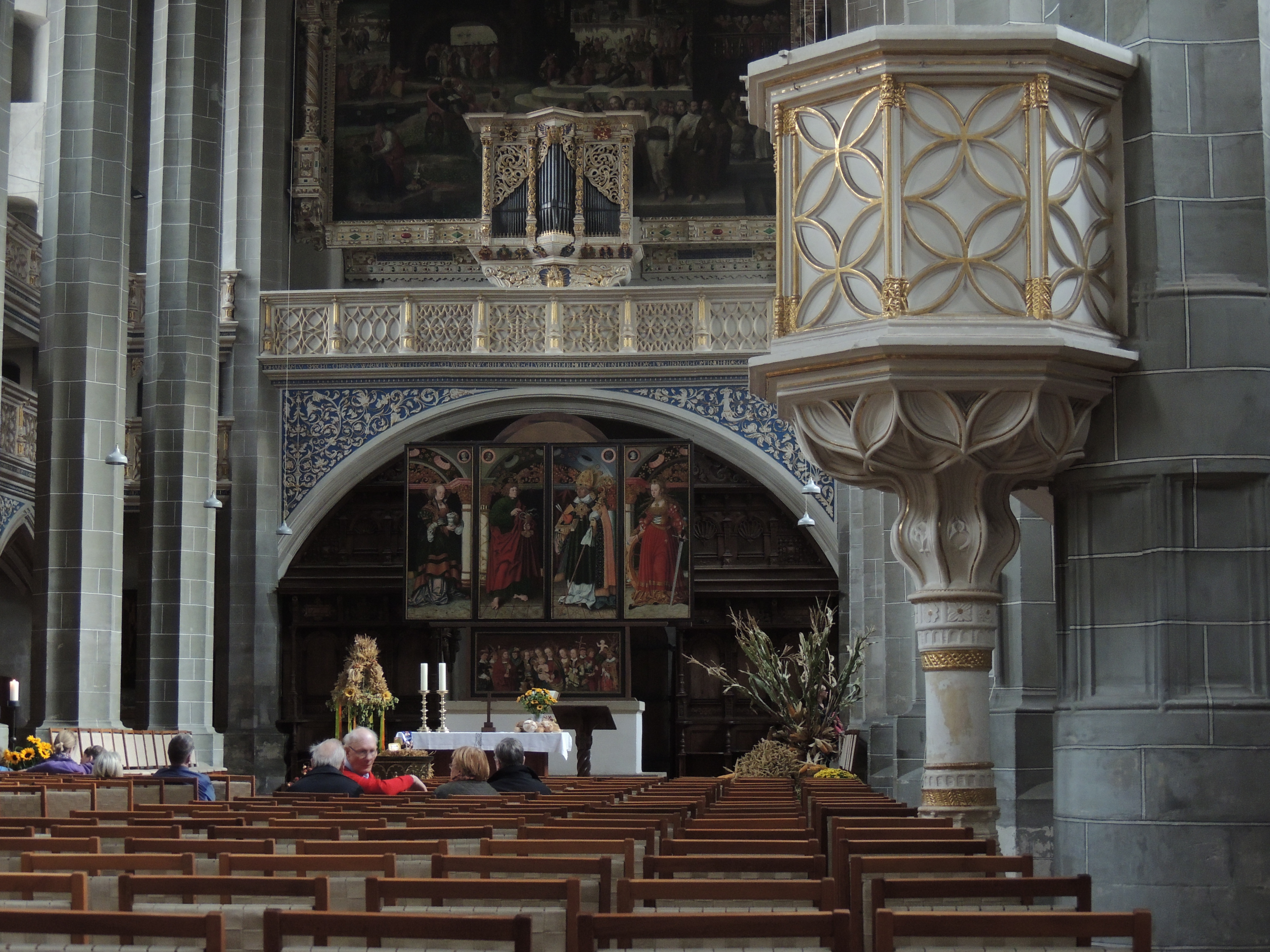
Original organ loft.
Handel spent his first 18 years in Halle. He was baptized 24 Feb,1685 and received his first organ lessons in the Marktkirche. His birthplace, just a short walk from the church, is now a museum. Except for one front room, its interior has been painted in hospital white. Nevertheless it contains portraits, reproductions of manuscripts and most interesting to me, music instruments played by Handel or in use during his lifetime. Please see the photo gallery attached to the end of this article.

Handel-Haus

Original interior room, Handel-Haus
The parents of Rasmus live in Ratjendorf about an hour’s drive northeast of Hamburg. Rainer is the art director for the German magazine DerSpiegel and besides being a teacher, once a year Marlis organizes an international PaperTheatre festival near Ratjendorf. 2.) They love to travel and compared to the US and Canada, German culture allows plenty of time for them to indulge. During our first meeting, we asked them to visit us and much to our surprise and delight, they arrived in Toronto two months later. They’ve now visited us twice here, the second time with their youngest son Tobias.
We’ve met in New York City and visited Tuscany. This year Rainer and Marlis suggested a tour of Germany that would introduce us to some of the places significant in their lives. After a week in Paris, my wife and I boarded an overnight train to Hamburg where the Sennewald’s met and drove us to their home in Ratjendorf. We spent two days enjoying each other’s company and discussing our upcoming trip.
This is part one of a three part posting. The second will concern Paris, Marie Antoinette and the Treaty of Ghent and the third will describe the John Cage As Slow As Possible project in Halberstadt.
1. http://itthing.com/life-and-death-masks-of-famous-people for Beethoven’s life mask.
2. www.papiertheater-preetz.de
All photos of snare drumd by Rainer Sennewald.

Glass Harmonica, Bohemia, ca. 1820.

Lacqured wood shelled Snare drum, 18th c.

Hand Screw Timpani

Rope tensioned field snare drrum.
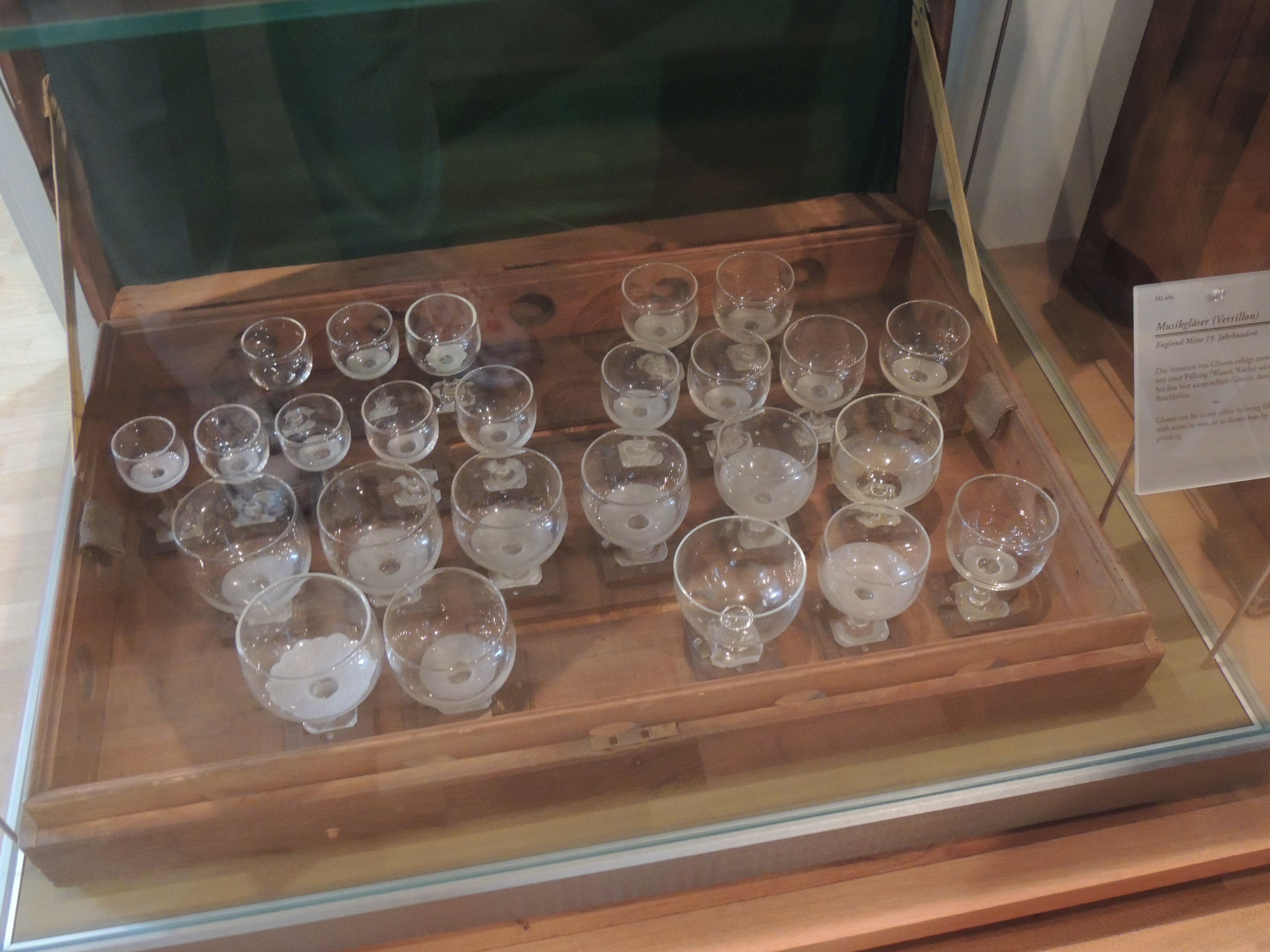
Glass Harmonica, England, 19th c.

Key tensioned, metal shelled Snare drum
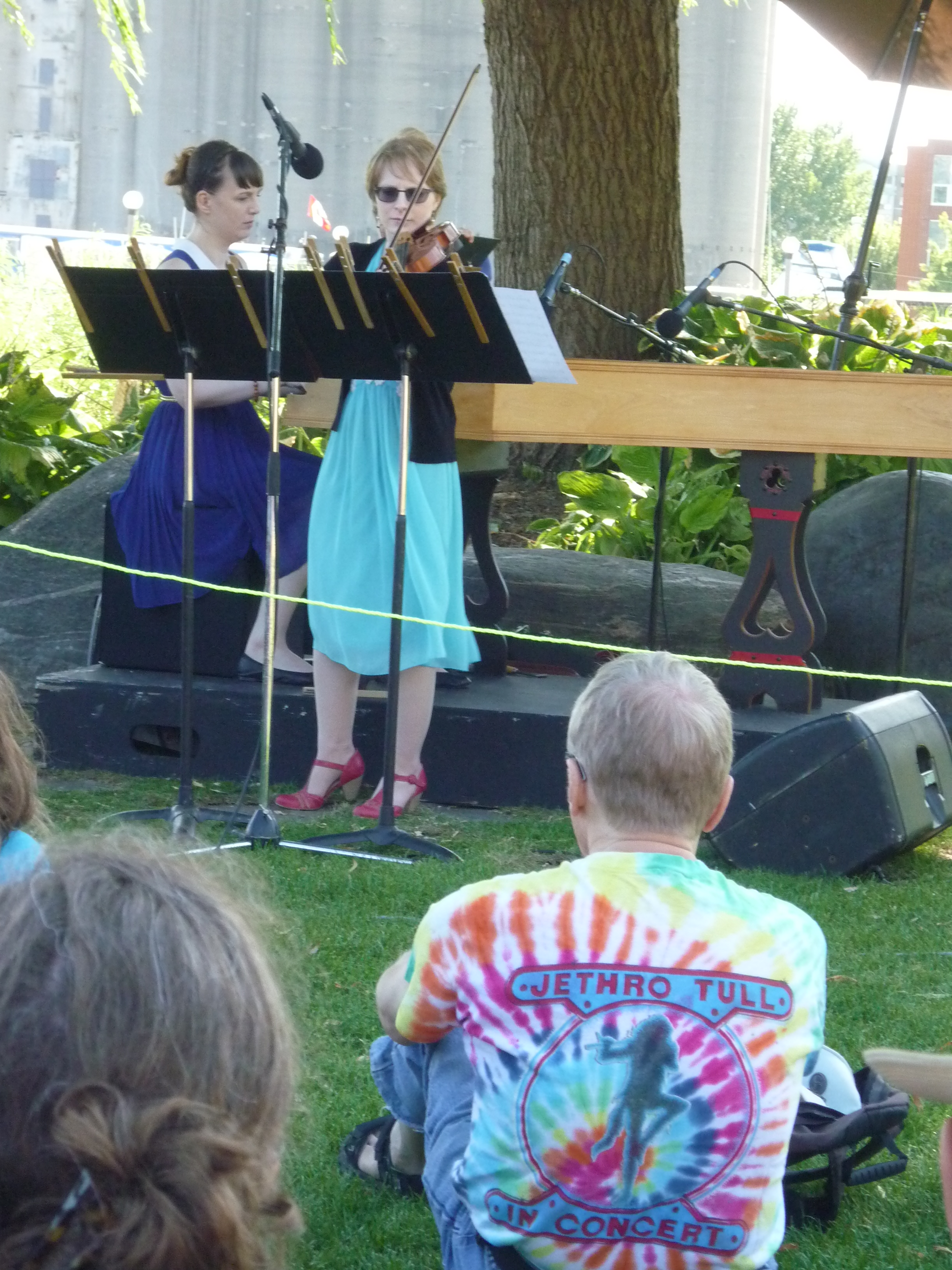
 Robin Engelman
MUSIC APPRECIATION 101
Janis Joplin
I purchased PEARL in 1971. When I heard drummer Clark Pierson’s opening kicks and Ms. Joplin sing, “You say that its over baby, you say that its over now” I gulped and was willingly dragged into the magic that was her voice. Today whenever I hear the opening cut to PEARL I begin the smile in anticipation of a listening experience of the first water. Of course the original recording was pressed on LP and once in a while I still listen to this vinyl version, but dammit, CDs are more convenient. I own the so-called Legacy Edition. CD or vinyl, be sure to turn your volume to 11.
11 was one notch above her contemporary rock rivals. That’s the way Joplin seems to have lived her life and that is the way she sang, even in the most tender moments of Cry Baby. I can’t think of another song with such a cry or in A Woman Left Lonely, or in the hot Half Moon. She did have a great band, thank heavens for Full Tilt Boogie: Clark Pierson, drums; Ken Pearson, organ; John Till, guitar and Richard Bell, piano. I challenge anyone to name a better rendition of Me and Bobby McGee. It doesn’t exist, It can’t exist. And listen to Get it While You Can. She did. Admittedly, it cost her dearly, but I’ll be forever thankful for her commitment to every note. Her ability to express what she felt. Sometimes I’ve tried, but I drew a line Janis Joplin did not. At least her testament to emotional honesty remains for others, singers or not.
Jacques Loussier
Today I would not think of myself as a big jazz fan. I once was. For the 1st fourteen years of my life I listened to the original Dixieland Jazz Band, Sydney Bechet, Lizzy Miles, Bessie Smith, and Louis Armstrong’s Hot 5 and 7. Armstrong’s recording of W.C. Handy’s music and the great recording Anbassador Satch were favourites. What a band. Trummy Young on trombone, Arvell Shaw on bass, Barney Bigard on clarinet, Billy Kyle on piano and Barrett (“the fastest drummer in the world”) Deems on drums .
I then became interested in music with less formal structure. After college I played 12 years in symphony orchestras and reveled in the sound. In the 60s I listened to the Beatles (how many did not?) and Ravi Shankar. But jazz didn’t come back into my life again with any kind of seriousness until I hooked up with clarinetist Phil Nimmons, purchased a new release of his amazing early big-band compositions and did some improvising with him while I was in Nexus.
And then on my most recent trip to Germany, a friend of mine played a Jacques Loussier (b.1934) Play Bach Trio recording, bassist Pierre Michelot, percussionist Christian Ganos. Formed in 1959, they were together for 15 years and sold more than 6,000,000 recordings of Jazz based on the music of Bach before disbanding in 1974. I felt old. I graduated from high school in 1957 and it took me 55 years to discover them.
I’ve never liked arrangements of Bach’s music. Especially arrangements for marimba, glass harmonica, synthesizers, pop vocal groups, cats and dogs and, well, you get the idea. But Mr. Loussier is an artist of great sensitivity and taste, as well, he is in possession of a great technique, fluid and precise. Loussier, himself a composer, obviously understands Bach’s music. He does not use it as a vehicle for self-indulgence. His escapades never fail to convince me of his or Bach’s artistry.
During the last few weeks I have listened to this recording many times and it continues to delight. Bach was known as an improviser in the classical style. I think a concert of Bach and Loussier would have been a sell-out.
Posted by robinengelman on October 25, 2012 in Articles, Commentaries & Critiques, Composers, History
Tags: Jacques Loussier, Janiis Joplin