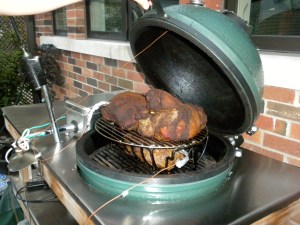
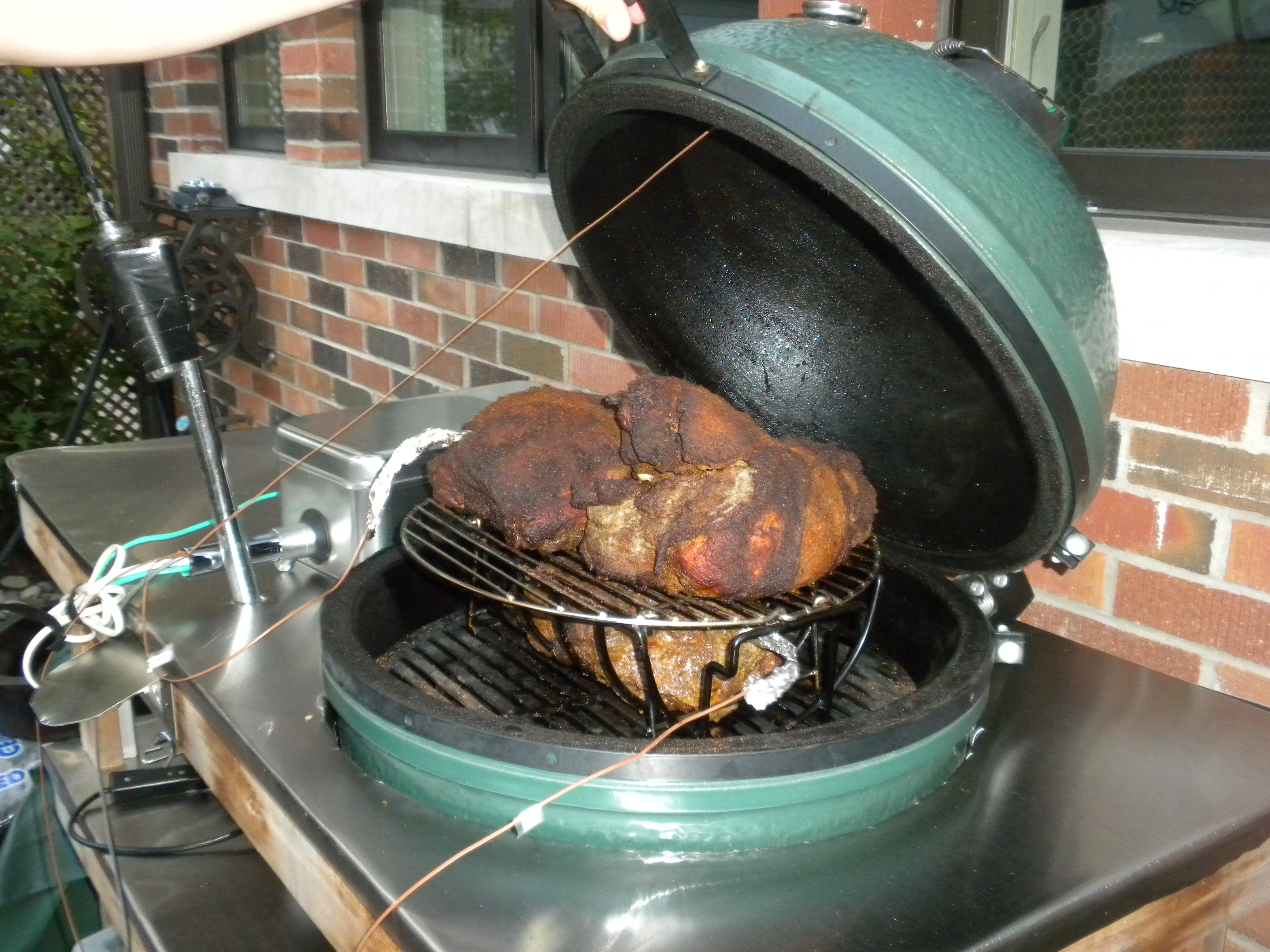
Voila!! Pulled Pork un-pulled.(click to enlarge images.
Are any of you old enough to remember the shallow red painted pans that sat on flimsy tripods of aluminum legs and along with 5 pounds of charcoal briquettes and a pint of starter fluid, sold for 15 or $20 just about anywhere and whose purchase signaled the beginning of spring and the barbecue season?
Through the years those relics have morphed, passing through various stages. First, someone got the idea to upgrade the metal pans to cast iron furnaces on wheels with space for propane tanks. Then they added kitchen counters to either side so the outdoor chef could keep his grabbing, flipping and skewering tools readily available. (Most of the outdoor gourmands were men.)
Cedar chips, chef hats, aprons, thermostats and expensive full-color coffee table barbecuing books soon followed. All of this was meant to improve the image if not the food of the middle class captain of backyard Barbies. But alas, the world has turned once more and things ain’t as simple as they used to be.
Welcome the Green Egg. A 145 pound behemoth whose lid requires a forklift to raise and whose temperature tops out at 800°F .
The large size Green Egg, there’s an extra large, will set you back over $1000 and that’s before you find a way to hold it upright and accessible. And you can no longer burn charcoal briquettes, they are carcinogenic, you must purchase lump charcoal.. But if joining the latest culinary queue is your bag, some very special treats await.
I know whereof I speak. My son Bryce has a Green Egg (large size) and he knows how to use it to advantage. I have tasted his Green Egg steaks, prime ribs and his crème de la crème pulled pork. Even without the Green Egg he’s a terrific cook and much to the delight of family, and friends, the Egg has provided him with experimental opportunities that satisfy his natural inquisitiveness for things technological as well as culinary.
First, a little background. A few years ago Bryce and his wife Jill bought the house next door, gutted it and extended it by adding a huge kitchen, with an eight burner gas stove, a large living room and upstairs, a master bed room en suite with hot tub. Bryce built a sound system capable of providing each room with its own music and individualized ambience. Also, the entire house is on the network and this point is crucial to his Green Egg pièce de résistance, pulled pork.
A properly cooked pulled pork requires up to 30 hours of cooking with variable temperatures. My son is a busy executive and without modern technology, his pulled pork recipe would be beyond him.
So send in the Internet, computers, Wi-Fi and Twitter.
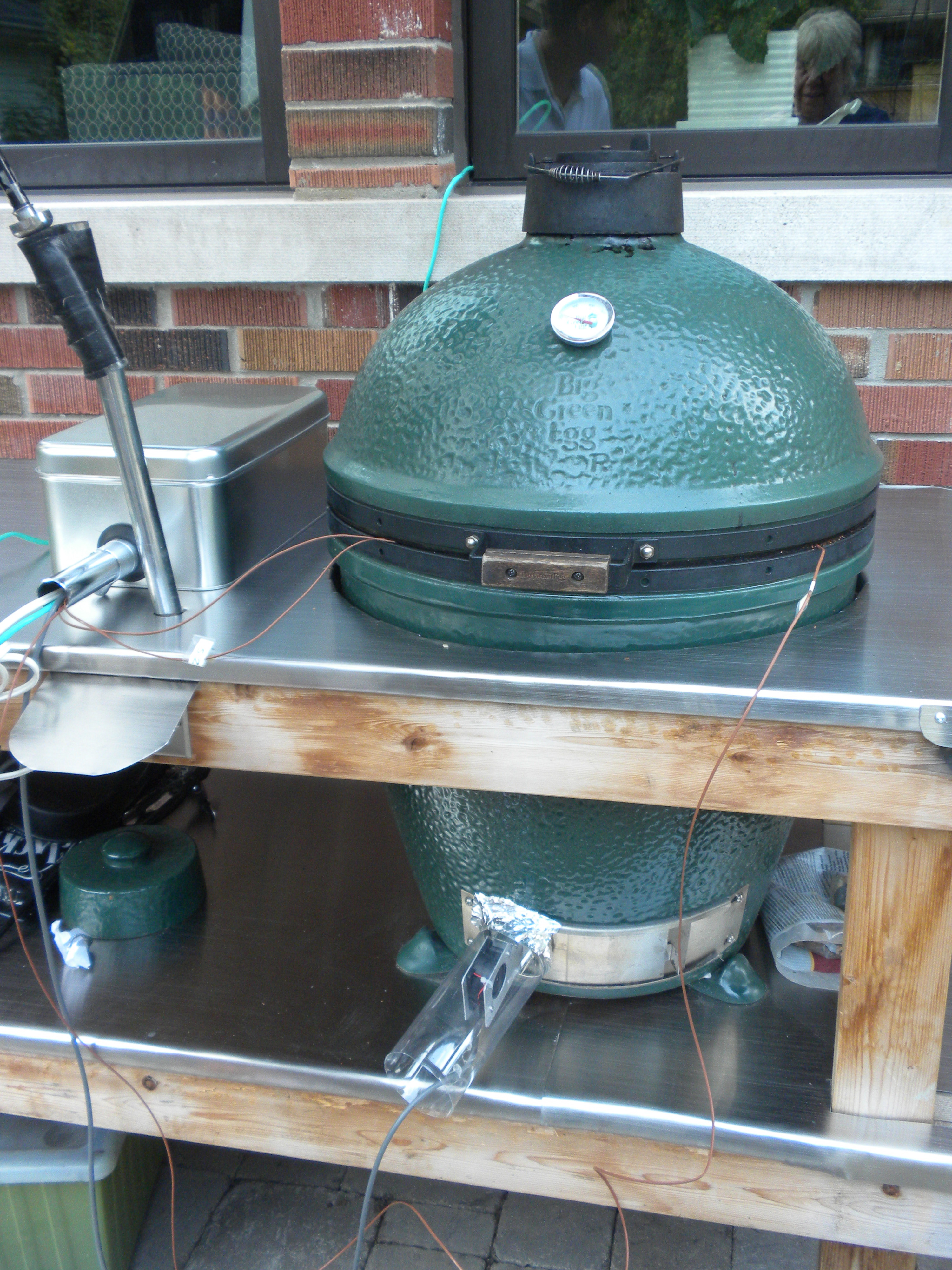
First Bryce purchased a Stoker. The Stoker controls the Egg’s internal temperature by pumping air into the vents of the Egg. The more air, the higher the temperature. The Stoker measures the internal temperature of the Egg and sends a signal back to the control unit in the stoker which then signals the fan to increase or decrease its speed. There are also probes that measure the internal temperature of the meat.

The Stoker
Bryce then connected his stoker to his home network. This allows him to monitor and control his BBQ remotely. He also set his unit to send him Twits to his Twitter account so he is able to monitor the cooking situation from anywhere.
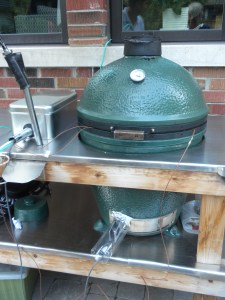
The Green Egg. w: Fan at base.
Thus he can begin a pulled pork weekend on Thursday evening. At work on Friday he can Monitor the temperature, making necessary and sometimes minute adjustments from his office to maintain a constant cooking temperature of 200 F.
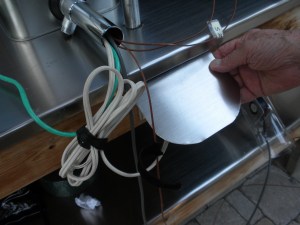
Wired up and rain guard
When my wife Eleanor, a particularly rabid fan of pulled pork, tasted Bryces’s completed confection, there was silence. Then followed an Ohhh of ecstatic dimensions only a Mother and pulled pork aficionado could produce. As a product of the rotary phone era, I appreciate having my son nearby.


 Robin Engelman
Joseph Schwantner Concerto No. 2 for Percussion Section, Timpani and Orchestra.
During his tenure as Percussive Arts Society president, (2003-04) Mark Ford decided to commission a second percussion concerto from composer Joseph Schwantner.
1. Mark was thinking about the 50th anniversary of PAS in 2011 and the idea from any perspective was a good one.The Thursday evening premier was set aside exclusively for PASIC and though not full, the Hilbert Circle Theater audience was large and of course enthusiastic. There was electricity in the air. I doubt the percussionists of the Indianapolis Symphony, Braham Dembar, Paul Berns, Craig Hetrick and Jack Brennan will ever again play before a more supportive, friendly and appreciative group of concert goers.
The soloists did not disappoint. Nor did their colleagues conducted by Hans Graf 2. who gave what to my ears was a very clear reading of Schwantner’s work.
Schwanter is an impressive orchestrator. His concerto requires virtuosity of scope: subtle, nuanced touches combined with moments of power and complexity.
Until the end of the third movement all of Schwantner’s sounds were meticulously formed and set within skillfully made structures. Then for whatever reason, he decided to give the piece over to improvisation.
What happened at that moment was disastrous. The soloists sat behind plastic buckets and began a Stomp including hoots and hollers. Craftsmanship had morphed into salesmanship and the pitch was much too long and grossly at variance with its context.
On a signal, the orchestra entered once more with Schwanter’s music and the concerto came to an end. Though the audience gave a long standing ovation, their celebratory occasion had been given a double whammy of whimsy and self indulgence.
The Schwantner concerto would have been fine as written, without the improvisation. A revision would be simple and would save the work.
1. Schwantner’s first Concerto for Percussion was written for Christopher Lamb and premiered 6 January 1995 in New York City with the New York Philharmonic conducted by Leonard Slatkin.
2. Hans Graf, (b.1949) Is currently the conductor of the Houston Orchestra.
Posted by robinengelman on November 28, 2011 in Articles, Commentaries & Critiques, Contemporary Music
Tags: Indianapolis Symphony Orchestra, Joseph Schwantner, Percussive Arts Society