
Seiji Ozawa, Toronto, 1969
During the fall of 1968 Toru Takemitsu and I met for the first time on the stage of Massey Hall in Toronto. The Toronto Symphony Orchestra, conducted by Seiji Ozawa, was recording Green, Asterisms, Requiem for Strings, and Dorian Horizon, all works by Takemitsu. John Wyre was timpanist and I was principal percussionist. These recordings are on Japan RCA Victor Gold Seal CD 90-2-21.
Green needed 4 or 5 small bells of different pitches and I found old telephone bells and suspended them. During a break in the rehearsal, Toru approached John and me and we began to speak. I do not remember what we talked about. We liked each other and he visited our homes. I gave him the little bells as a going away present.
In the spring of 1969 we met again in Osaka, Kyoto and Tokyo during the Toronto Symphony tour. In Kyoto, Toru and Asaka met my wife and me at our Ryokan, took us to lunch, to temples and a traditional cemetery on a hill overlooking the city. In Tokyo, Toru and Asaka took us dining and shopping.
Toru asked me, John and the Lyric Arts Trio to perform in the Space Theatre of Expo 70 in Osaka. I went to Toru’s apartment and it was there I heard his hilarious version of I Left My Heart in San Francisco for tape and for the first time saw his colored paper book Munari by Munari (1967-72). Toru explained the cut out designs and how they were to be played. This was all rather heady stuff for a symphony musician, but it would not be long before events brought the revelations to fruition. After our performances, Toru invited me, John and Yuji Takahashi to stay with him and his wife Asaka for a few days in their summer home in Karuizawa.

Yuji Takahashi, Space Theater, 1970
On the trip north from Tokyo our train stopped briefly at a station and Yuji suddenly motioned for us to follow him. We left our car and hurried to a vendor where we bought hot soba noodles and quickly returned to our train. When we were all on board, Yuji explained our haste, “These are the best noodles between Tokyo and Karuizawa”.
Toru wanted to show us a waterfall. An automobile arrived at his home and we drove into the mountains. Stopping along the road, we followed a small stream through a forest. It was a short walk to a cliff about 20 feet high. There was a lovely shallow pool of water at its base. Two feet above the pool was a tiny crack running horizontally for about forty feet across the face of the cliff. From out of that crack came a thin sliver of water. The flow was so gentle, the water never left the rock face as it made its way down to the pool. There was no sound. This was Toru’s “Waterfall”.
(“Shiraito-no-taki” water fall down like a “shiro[shira]”=white “ito”=thread”. Taki means fall. Trranslation by Yuji Takahashi sent to me via e-mail from Mitsuo Ono.)
The year was 1971 when Bill Cahn, John Wyre and I drove to Chicago to hear Stomu Yamashta play the North American premier of Cassiopeia (1971) at Ravinia with the Chicago Symphony Orchestra directed by Seiji Ozawa. The day after this performance Toru joined us for the trip back to Toronto with a stop in Ann Arbor to meet the senior musicologist William P. Malm whose analysis of traditional Japanese music were in opposition to those of Takemitsu. Malm believed the traditional music of Japan such as Gagaku was governed by logical formulas. After a very pleasant visit with Malm and his wife, we resumed our journey. A brief time passed and Toru quietly said. “He’s wrong.”
Soon after our arrival Toru visited my home north of Toronto where he met our son Bryce. Their greeting was formal and quiet. Later Toru asked me, “What is the meaning of Bryce?” I told him my wife Eleanor and I had chosen the name simply because we liked it.
Early next morning I picked Toru up for a rehearsal. When he got in the car he said, “Bryce means the centre of feeling. I will write a piece for him.” How he came to this information in such a short time, I’ll never know and I was too surprised to ask. During the next two days Toru gave presentations of Munari by Munari for composition classes in the Faculty of Music University of Toronto and the Eastman School of Music in Rochester, New York. Bill, John and I accompanied him and played what was essentially an improvisation presented as Munari by Munari. I came to understand the work was at that time not finished.
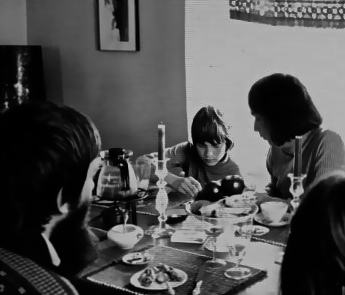
Bryce and Takemitsu playing. John Wyre on the left, 1971. Photo, R.E.
Four years later Bryce was completed (1976) and premiered in Toronto on 20 March by myself playing marimba, John Wyre bells and gongs, Bob Aitken flute, Judy Loman and Erica Goodman, harps. The title page reads, “Bryce, for flute, two harps, marimba and percussion. This work was commissioned by the Canada Council and dedicated to Bryce Engelman.” A couple of years later, after playing Bryce In Germany, I met Heinz Holliger who had heard the performance. He said, “Now I understand.” After a pause Holliger continued, “I think Bryce is Toru’s best work.”
Toru invited Nexus to tour Japan in June-July of 1976. I will always remember this first tour with fondness because Toru’s manager had arranged for venues, advertising, our hotels and transportation – luxuries Nexus rarely savored. However most memorably, Toru traveled with us, sharing “the road.” He acted as our Master of Ceremonies, introducing us to our audiences.
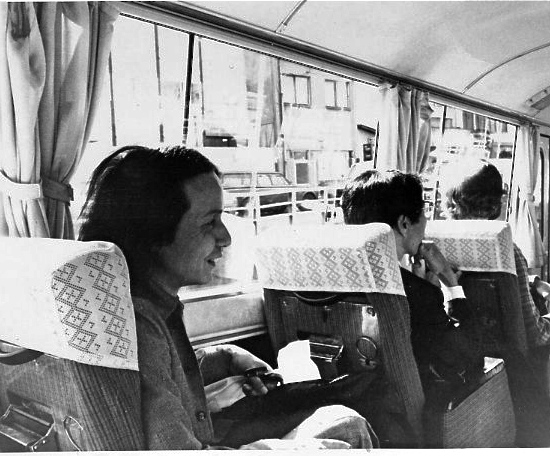
Toru on the Nexus tour bus, 1976. Photo, R.E.
Also in 1976 Jo Kondo wrote Under the Umbrella, commissioned by Toru for Nexus and written for 25 cowbells. Nexus premiered this in Toronto 8 November, 1976. We made a superb recording of this work for Paul Zukofsky, available on CP2, 123.
Toru felt Toronto was a special city. He enjoyed the musicians, the way they played and their attitudes. During the years before his death, he made many visits to Toronto. In 1982 he introduced Jo Kondo to New Music Concerts audiences. I heard again Jo’s predilection for cowbells. This time the work was Knots (1977) scored for two guitars, electric piano and cowbells. Jo recently said that Toru had encouraged him and had been “a big help to my career”.
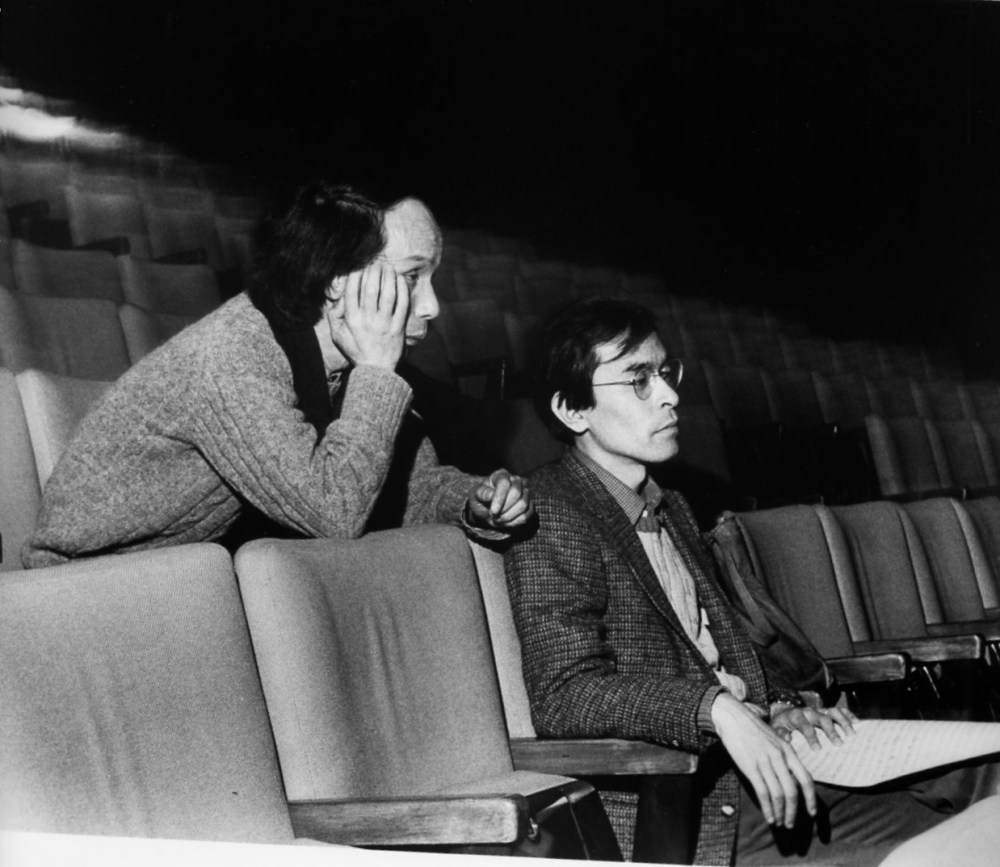
Takemitsu seated behind Jo Kondo in Toronto, 1982
Toru assembled a group of Japan’s most dedicated and proficient players of new music for his ensemble Sound Space Arc. (1.) In July 1988 he brought this group to New York City for a series of concerts sponsored by the Japan Society. The concerts consisted almost exclusively of Japanese music chosen chronologically by Takemitsu as a history of Japanese music. My wife and I booked tickets early as we not only knew Toru, but many of the players such as pianist Aki Takahashi, flutist Hiroshi Koizumi, Ayako Shinozaki, harp (with whom I had played Bryce in Japan), and my friend, the percussionist Yasunori Yamaguchi. Sound Space Ark gave five concerts in as many evenings. The longest and most fullsome applause followed Yamaguchi’s performance of his solo work Time of Celestial. Yamaguchi premiered most of Toru’s works with percussion. He is a very special musician and can make time stand still.
Just days before my wife and I left Toronto for New York, Nexus learned that in honor of its 100 anniversary, Carnegie Hall had commissioned Toru to write a work for Seiji Ozawa, The Boston Symphony Orchestra and Nexus. The work, premiered 19 October 1990, was titled From me flows what you call Time (capitalizations correct). The man behind the scenes whose idea it was to bring everyone together was Costa Pilavachi. At the time Costa was Ozawa’s liason with the management of the Boston Symphony Orchestra. Costa would go on to become head of Decca and EMI Classics and later senior vice president, classical artists and repertoire for Universal Music Group International. His name is not on the score, nor is it in any reviews I’ve read, but Costa’s foresight and efforts would prove to be responsible for the creation of the most profitable piece of music in the history of Nexus and perhaps, among the most influential works for percussion and orchestra.
In my opinion, the best performance of Bryce was given twenty years after its premier on 25 September 1996. The original players were assembled in honor of Takemitsu being posthumously awarded the Glenn Gould Prize. Toru had died the previous February. His wife Asaka and daughter Maki had flown in for the presentation. Toru had many friends in Toronto and the theater was full. The performance was spellbinding. Unfortunately, the recording, though captured beautifully by the Canadian Broadcasting Corporation, will probably never be released to the public.
I last spoke with Toru while he was hospitalized. Bob Aitken called him from Toronto around Christmas time 1995 and we talked casually about every day things because we soon expected to hear of his release from the hospital. Nexus learned of Toru’s death the morning of its 25th anniversary concert in Kilbourn Hall, the Eastman School of Music. We were shocked by the news. Toru’s immune system had been weakened by his cancer treatments. His doctors had not prepared for this exigency and though free of cancer, Toru developed pneumonia and died. Seiji said Toru’s death was a “scandal”.
In December 2010 my wife and I flew to New York City for the Japan Festival organized by Seiji Ozawa. In Carnegie Hall Seiji conducted the Saito Kinen Orchestra in performances of the Benjamin Britten War Requiem and the Berlioz Symphony Fantastique. Maki had organized another concert in Zankel Hall with Japanese jazz musicians who improvised on themes by Toru. The accordionist had played on the Seri recording Toru Takemitsu pop songs. (Denon, COCY-78624
I sat with Maki, Asaka, the wife of the accordionist and the poet Shuntara Tanikawa who had provided Toru inspiration for many of his songs. It was a good concert, as were they all, but Maki was now a grown woman, Asaka and I were growing old, and Toru who had always been our nexus, was missing.

Toronto,1990-Takemitsu next to a picture of himself in traditional Japanese dress taken in Tokyo,1969. Photo, R.E.
These vignettes,, reminiscences were written at the request of Mitsuko Ono who is writing a book about Takemitsu.
NOTE:
(1.) Ryan Scott, Artistic Director of Continuum Contemporary Music, interviewed composer Jo Kondo in the Fall of 2014. During that interview the origin of Soun Space Ark was broached. Ryan may have been referring to this article when he mentioned that “Takemitsu had assembled a group”, ” for his ensemble Sound Space Arc”. Kondo strongly objected to this portrayal by declaring Sound Space Arc to be an independent group, not Takemitsu’s group. They “got together spontaneously” and made recordings of concerts and commissioned composers. “Toru was not behind it”.
Indeed, Kondo is correct. Soun Space Ark was founded in 1972 by pianist Aki Takahashi, flutist Hiroshi Koizumi, Ayako Shinozaki, harp, and percussionist Yasunori Yamaguchi. Takemitsu invited them to New York for the first New York International Festival of the Arts in 1988. It was at that time my information unwittingly became skewed. I apologize to everyone who may have been negatively affected by my mistake.

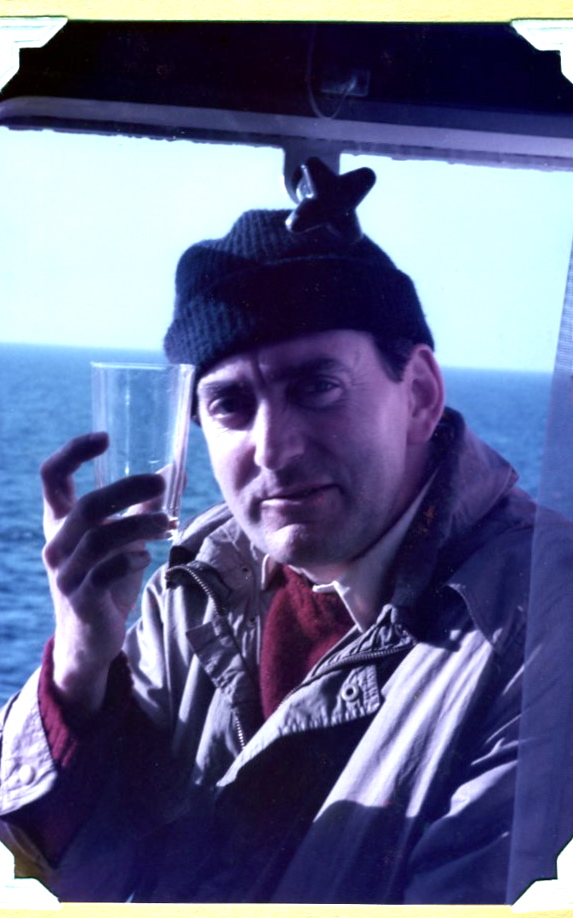
 Robin Engelman
Treaty of Paris, 1783
Plaque commemorating Treaty of Pari, 1783.
The Treaty of Paris was signed in the Hotel d’York, 56 rue Jacob. Serendipitously our Hotel du Danube was immediately adjacent to the building in which John Adams, John Jay and Benjamin Franklin negotiated and signed the treaty officially ending America’s War for Independence. Adams son, John Quincy, attended the signing. His duty was to daily secure the papers of the American contingent. Only 16 years old at the time, John Quincy, a graduate of Harvard University, fluent in his native tongue as well as Latin and French, was reading the classics and learning the subtleties of diplomacy which would soon make him America’s premier diplomat, serving as Ambassador Plenipotentiary to Russia, France and Britain.1.)
After morning café, my wife and I walked past this plaque and tried to imagine Franklin, Jay, and the Adamses in 18th century Paris.They were men of consequence who had dedicated themselves to guiding the development of their new country and securing its future.
After our arrival in Paris it became clear why hotel rooms had been so difficult to come by – it was Fashion Week, think Devil Wears Prada. Occasionally tall babes in expensive clothing would appear in our hotel lobby. Otherwise our boutique Hotel du Danube seemed disinterested in fashion and was paparazzi free. Quiet and conveniently situated, du Danube made most places on our itinerary a relatively short walk.
The Louvre was a bust for me. Its dim, endless hallways seemed filled with works of unattractive art, poorly displayed. However, the Louvre was our first excursion and my vexation was probably due in part to me being out of shape. My wife is a champion walker. How could I not soldier on? The Louvre’s one highlight was its pyramid. When first revealed to the French public, they were outraged. The Pyramid at the Louvre was an affront to French culture. But as one wag put it, “Parisians seem to hate what they come to love.”
The Pyramid
The Musée d’Orsay proved next day to be a masterpiece of planning for museum goers. I was snapping pictures when a polite uniformed lady told me photography was not allowed anywhere in the museum. Well, okay. I didn’t need photographs of the Impressionists which were on the 5th floor, but I may have disobeyed her by taking photographs in the dining room where we had a passable lunch in an opulent setting.
Then, a casual stroll past endlessly fascinating shops towards our hotel where once more, I lingered for a moment and try to visualize rue Jacob in 1783. I was a casual by-stander as a carriage made its way towards me, stopping in front of the Hotel d’York. Ben Franklin, John Adams and John Jay, followed by John Quincy Adams, alighted to sign the Treaty of Paris. I tried to imagine an 18th century equivalent to armoured stretch limos, black SUVs, Secret Servicemen with ear buds and shades and an international press corps. Nothing like that came to mind.
Dr. Franklin had to momentarily step aside to allow an arm in arm couple to pass whilst a few steps away a large dog relieved itself on the sidewalk.
Foot notes:
[1.] See Unger, Harlow: John Quincy Adams, Da Capo Press, 2012.
All the photographsith the exception of John Q. Adams, were taken by R.E. I am also posting a photo gallery of Parisian street scenes .
Musée d’Orsay
Lunch in the Musée d’Orsay
Sculptures entrance to Musée d’Orsay
John Quincy Adams, 1843 Daguerreotype
Posted by robinengelman on October 29, 2012 in Articles, Commentaries & Critiques, History, Unassigned
Tags: Louvre, Musee d'Orsay