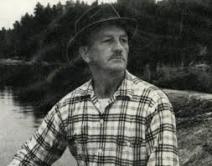
Calvin Rustrum
I grew up in Baltimore, Maryland, one of the hot, humid arm pits of North America’s east coast. As I write, I’m in Toronto, in the midst of a polar vortex and it’s cold and dry. When the dark months of Canadian winters arrive, I always think of Calvin Rustrum (1895 –1982), an American writer who championed our northern wilderness and its preservation.[1.]
Rustrum, who learned how to write by reading books, wrote with passion and clarity about the rigors and rewards of wilderness living. The New Way of the Wilderness (1958), The Wilderness Cabin (1961) and Paradise Below Zero (1968) inspired John Wyre and me, both relative newcomers to Canada, to plan a winter camping trip in the far north.
I sought advice from a forest ranger who had finished his tour of duty in the Canadian wilderness and was now ensconced behind a desk. I told him John and I envisioned camping for a week or two near the southern tip of Hudson’s Bay.
The Ranger looked at me in utter disbelief. No public service training had prepared him for a shnook like me. His eyes told me just how clueless I was. He began reciting the dangers of winter camping 550 miles north of Toronto and quickly disabused me of our plan and suggested we move our venue further south to Killarney Park just 250 miles north of Toronto. This relocation would enhance our camping adventure by cutting night time temperatures in half to a tolerable Fahrenheit 40° below zero.[2.]
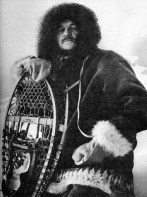
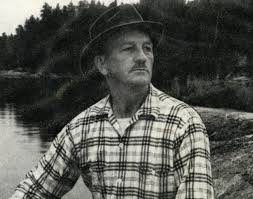
Calvin Rustrum in Winter garb, Paradise below zero.
Following Rustrum’s advice we purchased cold weather clothing: down filled parkas, pants, booties, mummy sleeping bags and scratchy wool longjohns. We had deer skin shooter’s mitts and canvas knee high boots with felt inserts, perfect for snow shoes and warmth. Our heavy utilitarian canvas tent was a rental whose entrance flaps were closed with buttons. A catalytic heater which threw off enough BTUs to heat a small room, was also rented. It would be lit with matches whose heads had been dipped in wax and stored in waterproof containers. We had sun goggles, toilet paper and a week of frozen meals in tin foil containers courtesy of my wife – our drinking water would be made by melting snow.
Our accoutrements in place, we drove north in mid February,1972. Our destination was the southern end of Lake George in Killarney Provincial Park. We arrived and pulled in next to a small wooden Park Service garage and John parked his Land Rover facing the county road. [3.] We put on our Himalayan rated parkas and filled the toboggan with all our gear. Immediately we encountered our first obstacle, a pile of snow, the residue of a plow that had cleaned the garage parking area.
The toboggan must have weighed a couple hundred pounds and we were trying to manhandle it over a bank of snow about 3 feet high, while wearing snow shoes. This was not the beginning I had envisioned. I fervently hoped no Park Rangers would appear to witness our struggles. Finally John and I made off towards the lake. Hauling our toboggan through dense forest was strenuous and we gave up our plan to camp lakeside. We stopped and agreed to pitch our tent where we stood.
Lake George was only about 100 yards away and we were anxious to get onto it. At this time of year we knew the lake would be safely frozen, besides which, we could see fresh ski plane tracks. We stepped out, leaving the forest for its glaring, sun lit open surface. Snowshoeing is ungainly for beginners. The muscles and tendons of neophytes are susceptible to mal de raquette, an inflamation that can be painful, even debilitating. John and I both lived in the country and had experience on snowshoes. In deep snow and large spaces, snowshoeing imparts an unique sense of freedom.
Lake George is neither the largest or smallest of Killarney’s lakes. Directly to the east is a small lake named after the Canadian wilderness painter and member of the iconic Group of Seven, A.Y. Jackson. Killarney topography includes large granite outcroppings, small mountains, deep forests and mile after mile of great canoeing on its numerous lakes. For city folk, places like Killarney can be awe inspiring, imparting a sense of smallness upon its human visitors that can be disconcerting, even discomfiting. Wilderness, even when managed by goverment, imposes a gravitas of its own.
One of Rustrum’s rules was to dress in layers and carefully monitor body temperature. The problem for winter campers is not in keeping warm, but getting too warm. Perspiration will freeze and kill. Thus, as we warmed up, we opened our parkas, eventually removing them all together. Still warm, we stripped down to our boots. Naked, we faced the warmth of a northern sun. The sound of shuffling snowshoes had ceased. Our breathing had slowed. We didn’t talk. We stood motionless in a kind of rapture, transfixed by Killarney’s vast silence. Too soon the sun began to set and the cold came, fast and penetrating.
Being too warm is especially critical at bedtime. To prevent this, we’d sleep nude except for a cap and down filled booties. All our clothes were tucked inside the sleeping bag. The catalytic heater made preparing for bed and dressing in the morning, bearable.
The first night in my sleeping bag I awoke, urgently needing to pee. In dread,I rehearsed all the moves I’d have to make to get outside. Wearing only my booties and cap, I unzipped the bag and crawled in blackness to the tent door and began unbuttoning the flaps. I realized I hadn’t enough time to enlarge the opening further. Careful not to pull our tent down, I scrambled outside, already colder than I’d ever been. So, this is how 40° below zero feels. I made it to the base of a tree and started to relieve myself. I was already shivering too much to control my aim and come morning I thought, John would find me frozen, attached to the tree by spindly bridges of urine.
With frantic, mincing toe taps, I hastened to the tent, but once inside I couldn’t button the flaps. My fingers were numb and useless. In my sleeping bag, it took five minutes for me to stop shaking. I’ve attempted to calculate just how long I had been exposd to the night air and my best guess is about two minutes. To this day I believe I’d had less then a minute left before succumbing to the cold.
That same night there was a rifle shot just outside our tent. Rustrum had warned us about this, but we were taken off guard none the less. At temperatures such as these, freezing sap expands and finally explodes, sounding much like a 22 rifle going off.
Birds may chirp and loons cry, but the unspeakably mournful song of wolves is beyond a human’s power to express. From an incalculable distance, their atavistic voices carried In the blackness of night over our frozen lake, recalling mysteries which silenced our conversations and gently took us back to the beginning of everything. Their sound and the crack of exploding sap were our nightly bedtime accompaniments.
As the end of our trip drew near, we decided to drive into Killarney for lunch. We put the catylitic heater under the Land Rover’s gear box while a ranger skinned a wolf in the garage. We timed our arrival perfectly. In the kitchen, a very large woman was bringing forth her latest batch of freshly baked butter tarts. I’ve eaten all over the world, but let me tell you, this was butter tart heaven. One might suggest that my week in a tent influenced my taste buds. They’d be wrong.
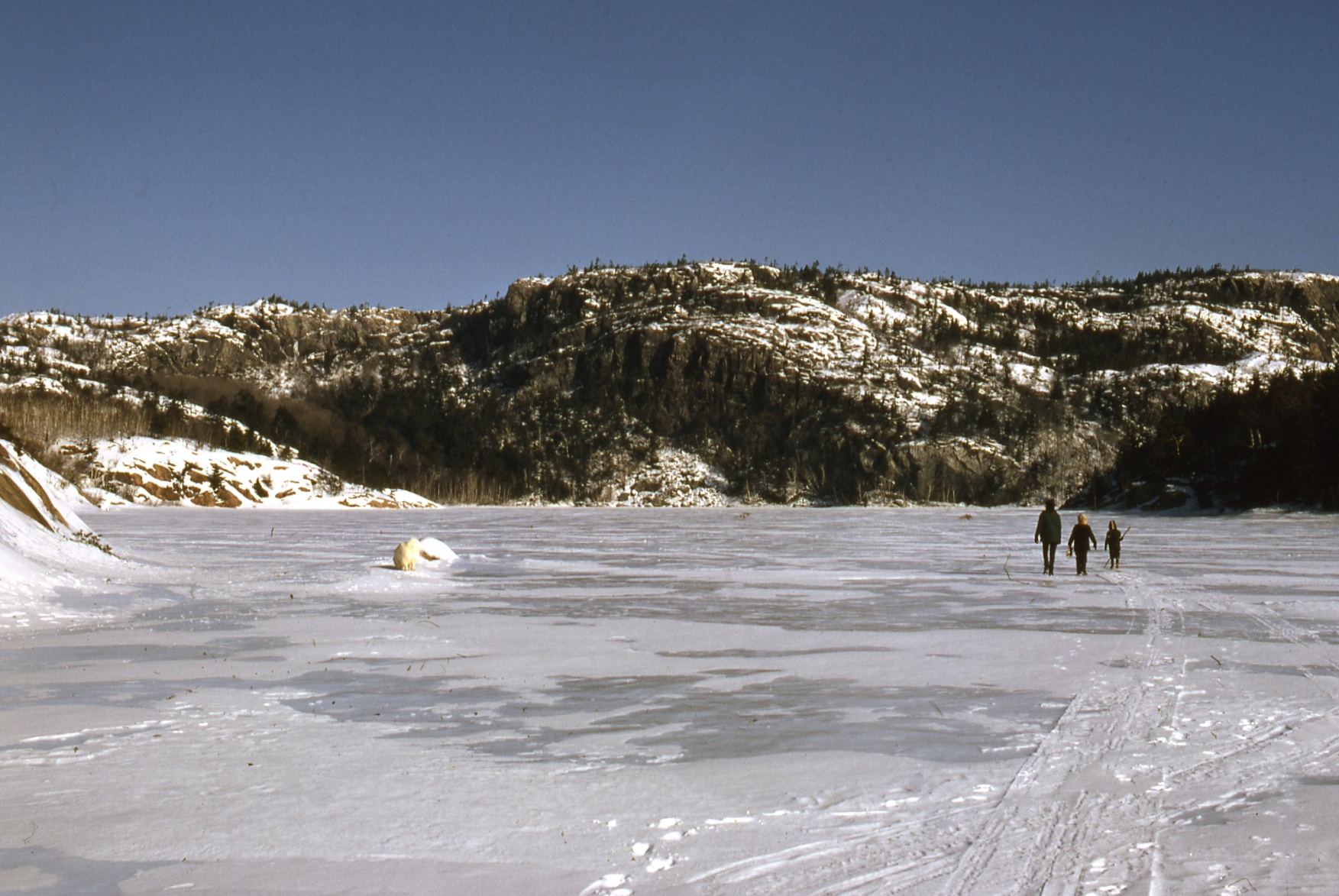
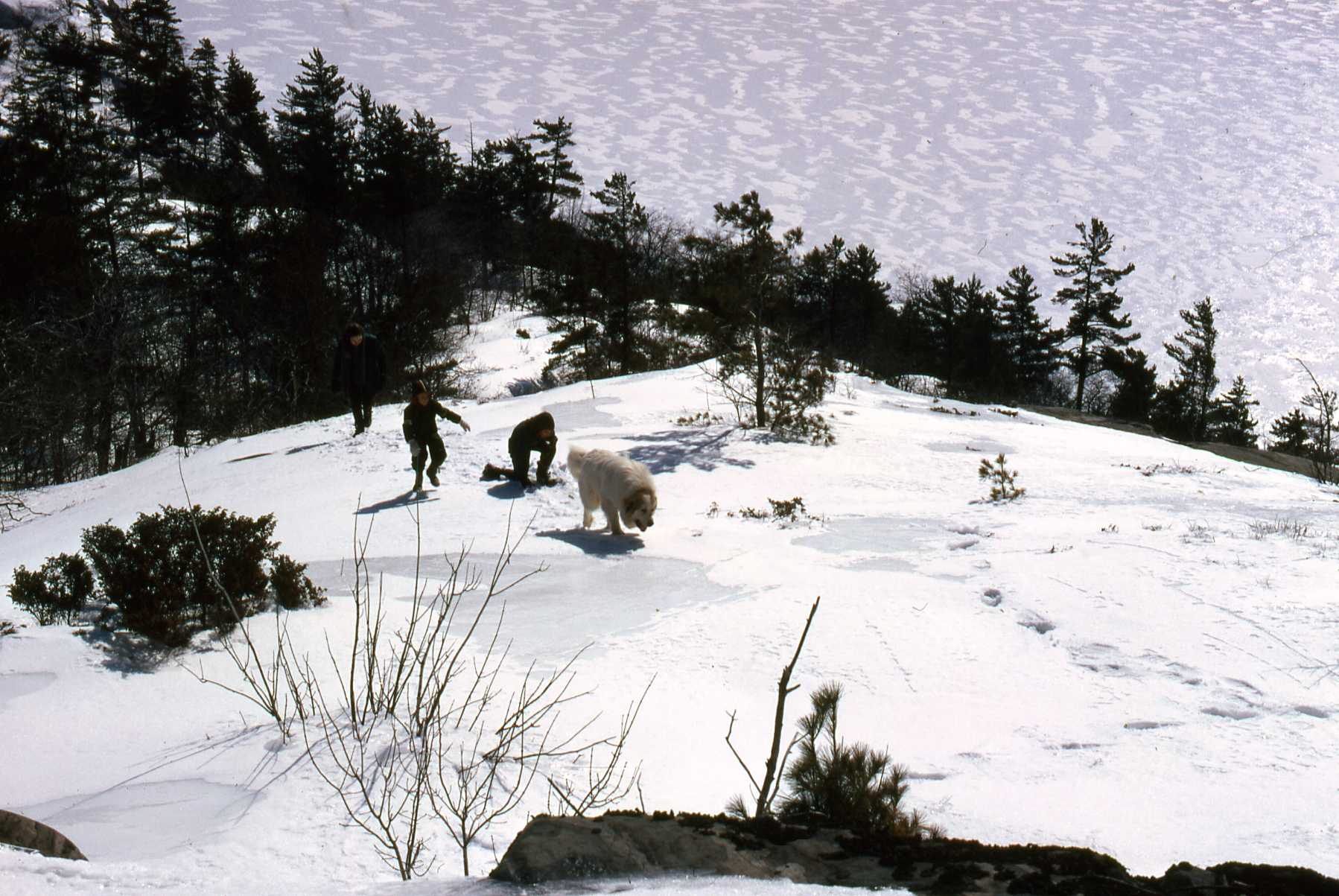
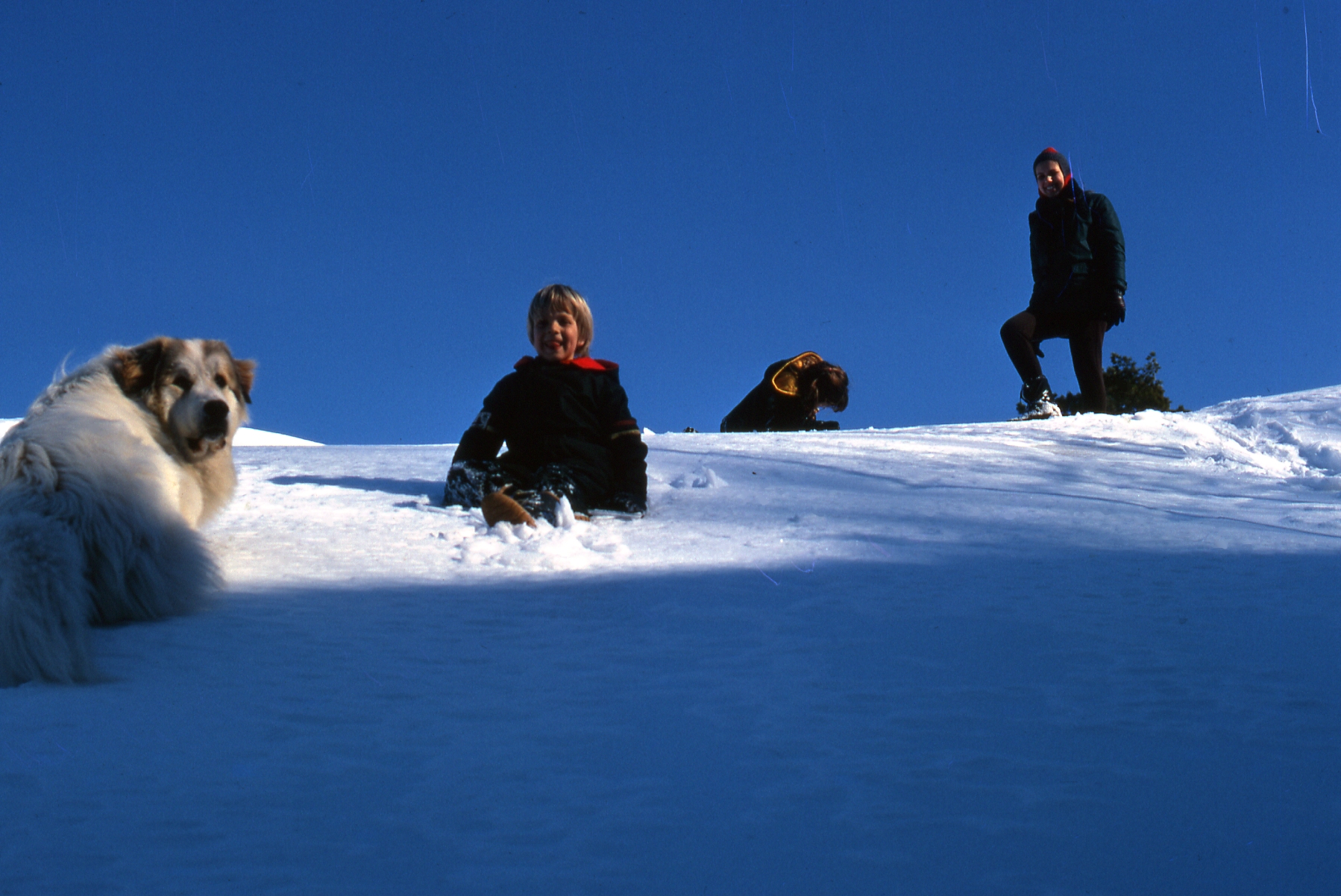
About two months later, I revisited Lake George with my wife, our young son and daughter and our Great Pyrenees dog Chibi.[4.] The days were warmer and longer. The snow was greatly diminished, but the lake was still frozen solid. We spent a night in the Killarney Inn. The photos below are from that visit.
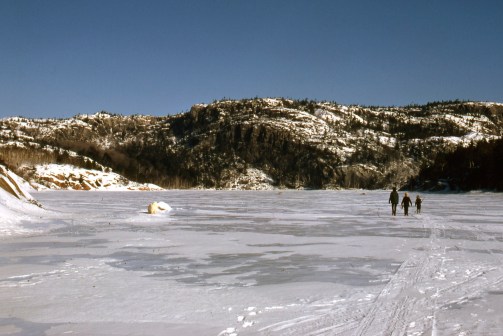
My family on Lake George with our destination ahead.
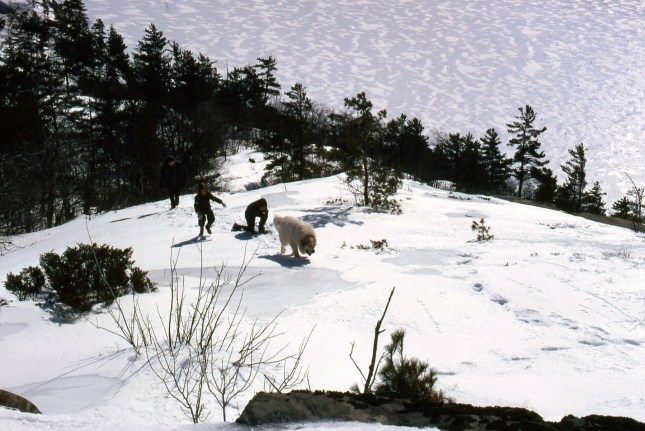
Almost at the top with Lake George below. Our Great Pyrenees dog Chibi was having the day of his life. Our daughter after all, would make it.
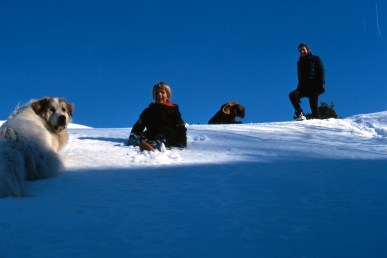
The Top.
[1.] Rutstrum died on February 5, 1982 in Osceola, Wisconsin. Four years before, in Chips from a Wilderness log Rutstrum wrote: “If you want to do something for me after I’m gone, live so as to not defile the precious earth”.
[2.] During the week I was gone, my wife recorded night time temperatures of 25° below zero F. on our farm 30 miles north of Toronto.
[3] Today, a modern park service visitor centre stands on the former site of this garage and pathways meander through what is now Lake George Campground. The incredible beauty of Killarney Park and specifically Lake George can be seen in a large park service photo gallery on http://www.ontarioparks.com
[4.] Chibi was named by my daughter after Chibiabos of Longfellow’s poem The Song of Hiawatha which she had memorized.
The musician; the harmony of nature personified. He teaches the birds to sing and the brooks to warble as they flow. “All the many sounds of nature borrow sweetness from his singing.”
Very dear to Hiawatha
Was the gentle Chibiabos.
For his gentleness he loved him,
And the magic of his singing.
Longfellow: Hiawatha, vi.

 Robin Engelman
NEXUS WORLD TOUR – 1984 – A DIARY, Part 5. Meeting drummers, Concert, Temple of Heaven, Summer Palace, Garden of Bells.
May 8 6:15 AM
The weather has turned hot and humid, 33°C. Our interpreter’s name is Kwang Chao. Better late than never. Everyone loves to talk. A slight question or suggestion usually produces a rather lengthy discussion–an opportunity for everyone to join in
A couple of days ago Russell was sitting in front of our hotel and 2 young students from Hong Kong asked if they could practice their English with him. During their talk it came up that we were playing a concert that night and the girls wanted to know where we were playing and how they could get there by bus. Russ pulled out his English map and found the Cultural Palace and the hotel. Next he had to get the name of the Cultural Palace in Mandarin. The girls spoke only Cantonese. I joined the scene about this time and then our publicist’s, Mr. Harr came out of the hotel. We signaled him to come over but he could not converse with the girls nor us and our fingers pointing at the Cultural Palace were no help. Kwang Chao joined us and soon one of the hotel doorman. Now we were 7. Russ started laughing. I felt glad for him. He needs one of these at least every day. Finally Kwang Chao turned to me and asked ” Why do you want to take a public bus to the hotel?” Russell fell out at that line and explained the situation. Kwang Chao called over the cab driver and a couple of his buddies came along. Our bus driver came out of the hotel and joined in and I think a couple of passersby attracted by the crowd. By this time we had been pushed aside, Russell’s map was confiscated and 6 or 8 conversations were going on at once. The girls from Hong Kong were giggling. Russ was wiping his eyes and John came over to ask, “What’s going on?” Russ said, ” I was just sitting here minding my own business.” It took about 15 min. to clear up and then Kwang Chao gave the girls some tickets to our concert and we all dispersed – everyone in good spirits. None of the Chinese could figure out which bus the girls should take. They came to the concert. Front row seats.
The meeting with the drummers was a lot of fun. There were perhaps 30 players there. The event was videotaped by Beijing TV. First a welcoming speech by the conductor of the Central Beijing Symphony. We were seated on stage. Chairs were arranged on either side of the stage facing each other towards the center. Each drummer was introduced to us and we shook hands and took our seats. First a player, whom I took to be a student, played Morris Goldberg’s Simple Simon March on snare drum. Very tight in the arms -grace notes for flams too loud and tight. Before he played we were asked to give suggestions but when he finished he simply left and a man in his 50s or 60s played a solo he had written for a large tunable rotary Chinese tom-tom. The drum was tuned by rotating the entire drum on the central rod running up the center. He was accompanied by an elderly man playing a small temple block held on his lap and a pair of bones in the other hand. A nice piece.
Next, a student xylophone player with tremendous technique and very expressive. He played a Hungarian fantasy and a piece by his teacher called Rondo. A young drummer playing 5 tom-toms with timpani hoops and tuning screws. Very fluid technique, impressive stroke-a real drummer. An older man played the ancient Chinese bells- a piece called The Stream – evidently just a fragment of a longer piece, the rest of which has been lost. Not much happened. It only lasted for a minute and the Chinese people started talking almost as soon as he began to play. (note: No respect for the ancient music. It was too abstract, lacked the crash, bang up-tempo of dragon dances. I wish there’ been a discussion of the work.) Four percussionists from the opera played a couple of pieces that really cooked. A small drum, small gong, cymbals and a larger gong.
We played the rope drums, a couple of rags and an African piece. Questions were asked about the xylophone and marimba and I spoke briefly about rudiments. We got a nice buzz from a number of the musicians and the morning was a great experience.
The student snare drummer asked me to critique his playing and soon his teacher and 20 others were crowded around us. I explained how I thought flams should be played and how a more relaxed arm and wrist could help achieve the proper sound without binding his drum head. I felt his teacher was somewhat upset over my critique but I had stepped in so far that returning would be as difficult as go oer. When I demonstrated his sound and mine there was an immediate response of understanding from the bystanders. The student improved but he has a natural tightness which inhibits him. The tom-tom soloist suddenly picked up a pair of sticks and simply wedged the student away from the drum and played a series of perfect flams. I nodded my approval and felt an embarrassment from the student and his teacher. The student turned out to be a professional-a percussionist for the Beijing Symphony. Still a worthwhile experience. We set up for the concert and came back to the hotel for lunch.
I have a different feeling backstage before the concert. I’ve had enough of the worrying about our audience and their response to our programs. The concert feels different, I feel different from the beginning. A very loose, strong performance of Birds. Raintree is in a groove from the 1st note and I get pissed off at a couple of people coming in late and making noise like they’re shuffling into a subway. I glare at them and the change is palpable. The first 2 or 3 rows of people clam up like a blanket has been thrown over them. I’ve made my point but I keep glaring just because I feel good doing it. The rest of the program just cooks along and there are bravos at the end. In the front row are some of the drummers from the morning session and the lady from Guyana with a tape recorder and a friend. I feel good packing up. I feel like I’ve won a game – pulled it out in the 3rd frame. Everyone is in a good mood and in the morning we began our sightseeing.
May 9 – 6:45AM
A very tiring day- hot weather and a lot of walking. Temple of Heaven and Summer Palace. Buddhas, Tantric Art, drums, green, blue, purple, gold painted buildings and throngs – hordes of tourists. Wang Chao, unable to allow us to linger over some point of interest for fear of losing us and not keeping up with the schedule. Smilingly, she tells us at the Temple of Heaven that the 2 structures on either side of the square are craft shops and we can have 10 minutes to visit. Not long after, Bob and I linger over a tree from the Ming dynasty – an incredible pine with the most grotesquely beautiful trunk and limbs. We have just begun to check it out when John comes back to admonish us for holding things up. Kwang Chao doing her job is giving a running narrative while we dodge bodies–try to hear and end up seeing very little. I would love to stop and check out the tile-brick and lacquer work but the group is already moving forward. There are pockets of resistance but eventually we are going to be reduced to the flock of sheep being inexorably led through pens, our noses for ever forward, our minds on hold and we know it. My legs get heavier.
At the Taoist monastery Kwang says we have one hour. Now I can roam. After entering the grounds, I see a circle of people surrounding a large bronze pot filled with water. If you can float a 1 or 2 fen coin on the water supposedly you will have good luck and a long life. There are 1 or 2 coins bobbing on the surface and 100 or so coins at the bottom. Some people float their coins and immediately push them below the surface with their finger. A lady standing next to me begins to blow the surface behind my coin. I look at her and we smile. I’ve seen others do that to their own coin and I wonder if they are trying to float the coins to the center of the bowl. If the coin falls in the center is luck compounded? I wait my turn and my coin floats – floats for so long that I eventually leave before seeing it drop. Did it ever drop?
We had lunch at the Summer Palace in “The listening to Orioles” pavilion. A quiet elegance refuge for moneyed people. Just outside are two dummies made up as Emperor and Empress. They have 2 chairs between them and nearby a clothes rack with Imperial gowns and headdresses for rent. For a few yuan you can have your picture taken between the dummies. A large group of French and German tourists with camera overkill are hooting and waiting their turn. We thought about having a Nexus portrait taken but we have to wait too long. Some of us are dreading the climb to the pavilions on the hill above the lake. Couldn’t we go home now? Russell’s bored, Bill has taken 48 pictures, I’m clomping along trying to get 1 foot in front of the other. Incredible: we’ve all been aware of the fact that we have been moving farther and farther away from the bus and suddenly we see it waiting for us around the curve. We “Shawn-lay Bah” – a catch phrase we have come to use more and more.
As we are leaving, the bus driver asks if we would like to see the largest bell in China. Now we’re getting somewhere! It doesn’t begin auspiciously. The bus turns into a tiny road between low China housing but we turn a corner and there is a temple. When we pass through the gate there are 30 or 40 bells resting on concrete blocks in a courtyard-all sizes some, beautifully inscribed, one huge about 16 feet tall. We pass through another gate and The Bell awaits us in a pavilion. It is huge and hanging. Perhaps 40 feet tall? But as interesting are the characters -tiny Chinese characters cast over the entire surface. We go through a little gate, down a few steps and stand under the bell- our whole group can easily stand within its circumference. Law decrees ringing the bell once a year at Spring Festival. Rumor has it that all of Beijing can hear it.
In a small building near the Temple is a bronze bowl filled with water-about the size of the wash basin. It has a handle on either side of the top rim. By wetting your hands and rubbing hard enough the bowl begins to vibrate and produces a beautiful low bell-like tone. This vibration makes the water in the bowl throw up showers and tiny droplets. Everyone has a go at it and only our bus driver is unable to make it work.
Garden of Bells, Beijing. l to r: Robin, Bill, Russell, Bob and John.
Outside again in the bell yard we have another picture taken. We make it back to the hotel and have about 40 min. before leaving for David Rose’s home and his reception. Most of the people we’ve met in Beijing are there and it is a typical standup–rap time–throw a few drinks down. Some young guys in military uniforms are obviously pumping me for info that leans towards the political. The Chinese leave and Mr. and Mrs. Rose treat us to a light buffet dinner. It is so nice to sit in comfortable couches and chairs. Rugs on the floor and a pasta dinner with a Thorins 1979 Moulin a Vent. Coffee with cream and Drambuie. Mr. Rose brings out his rugs. He had taken them up for the reception and we have a lovely, comfortable, spirit rejuvenating 2 hours of conversation. His children are the same age as mine ( Dorothy and Bryce), so we discuss those problems and pleasures.
We discuss China, its people and philosophies and touch briefly on Russia. Every winter the winds from the Gobi howl southward, depositing dirt everywhere. Even damp cloths around windows and doors cannot protect homes and cleaning must take place inside every day. I was told Mao considered grass yards decadent and ordered their removal. Someone else said the denuding killed disease bearing bugs.
Cultural exchanges–why? Words are bandied about. We are all blown in the wind–different shades of pale. We wouldn’t be here except for a political decision. Nexus gets to play a series of concerts–try new music–get the juices flowing again. Out of 1 billion Chinese 8000 hear us play. Smoothing the way for the high rollers? David Rose agrees with Michael’s (Craden) statement from Tokyo 6 or so years ago, “It’s a living” and adds “It’s fun.”
Posted by robinengelman on February 7, 2014 in Articles, Commentaries & Critiques, History
Tags: Beijing, Garden of Bells, Summer Palace, Temple of Heaven