







Plaque commemorating Treaty of Pari, 1783.
The Treaty of Paris was signed in the Hotel d’York, 56 rue Jacob. Serendipitously our Hotel du Danube was immediately adjacent to the building in which John Adams, John Jay and Benjamin Franklin negotiated and signed the treaty officially ending America’s War for Independence. Adams son, John Quincy, attended the signing. His duty was to daily secure the papers of the American contingent. Only 16 years old at the time, John Quincy, a graduate of Harvard University, fluent in his native tongue as well as Latin and French, was reading the classics and learning the subtleties of diplomacy which would soon make him America’s premier diplomat, serving as Ambassador Plenipotentiary to Russia, France and Britain.1.)
After morning café, my wife and I walked past this plaque and tried to imagine Franklin, Jay, and the Adamses in 18th century Paris.They were men of consequence who had dedicated themselves to guiding the development of their new country and securing its future.
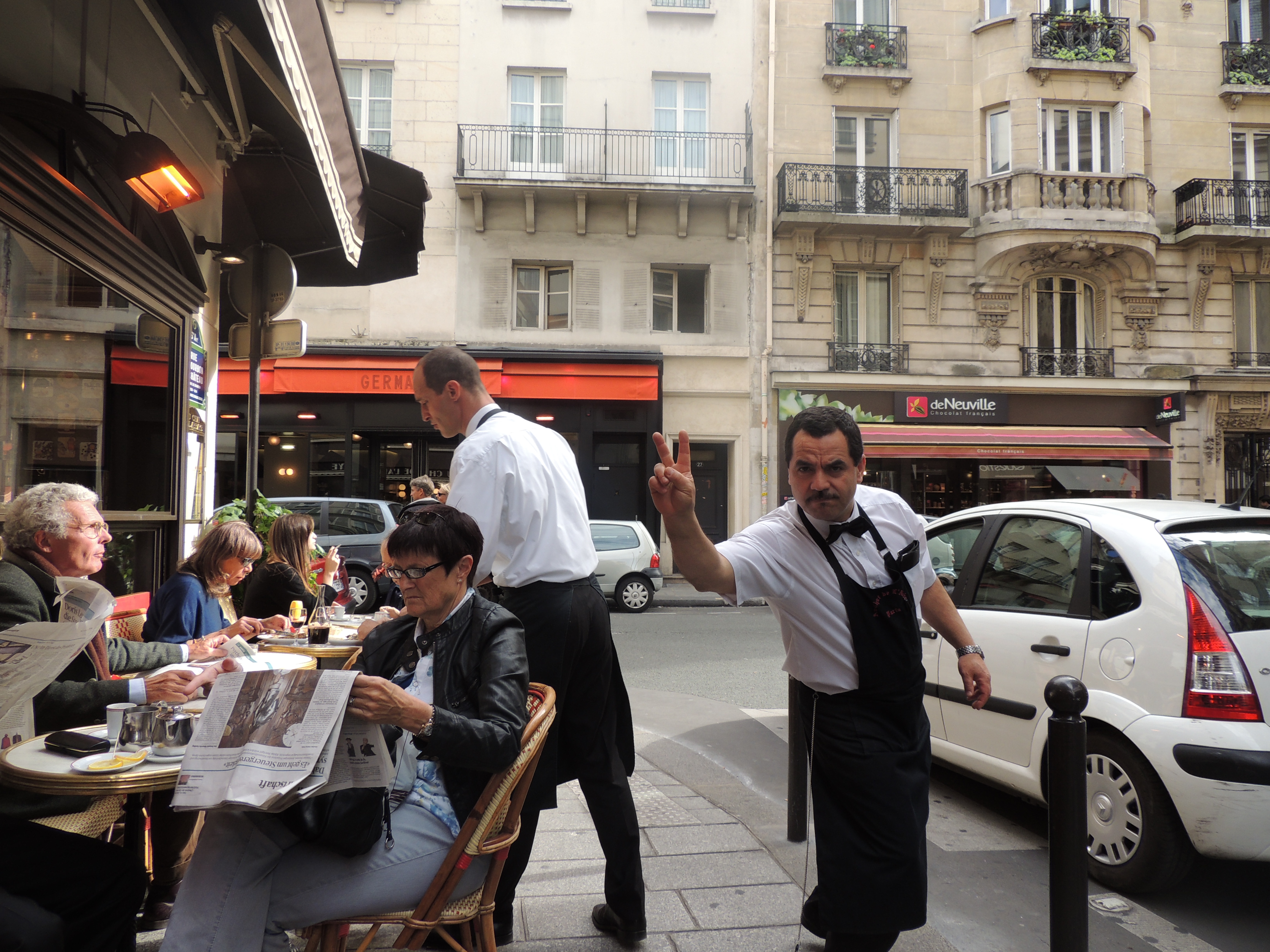
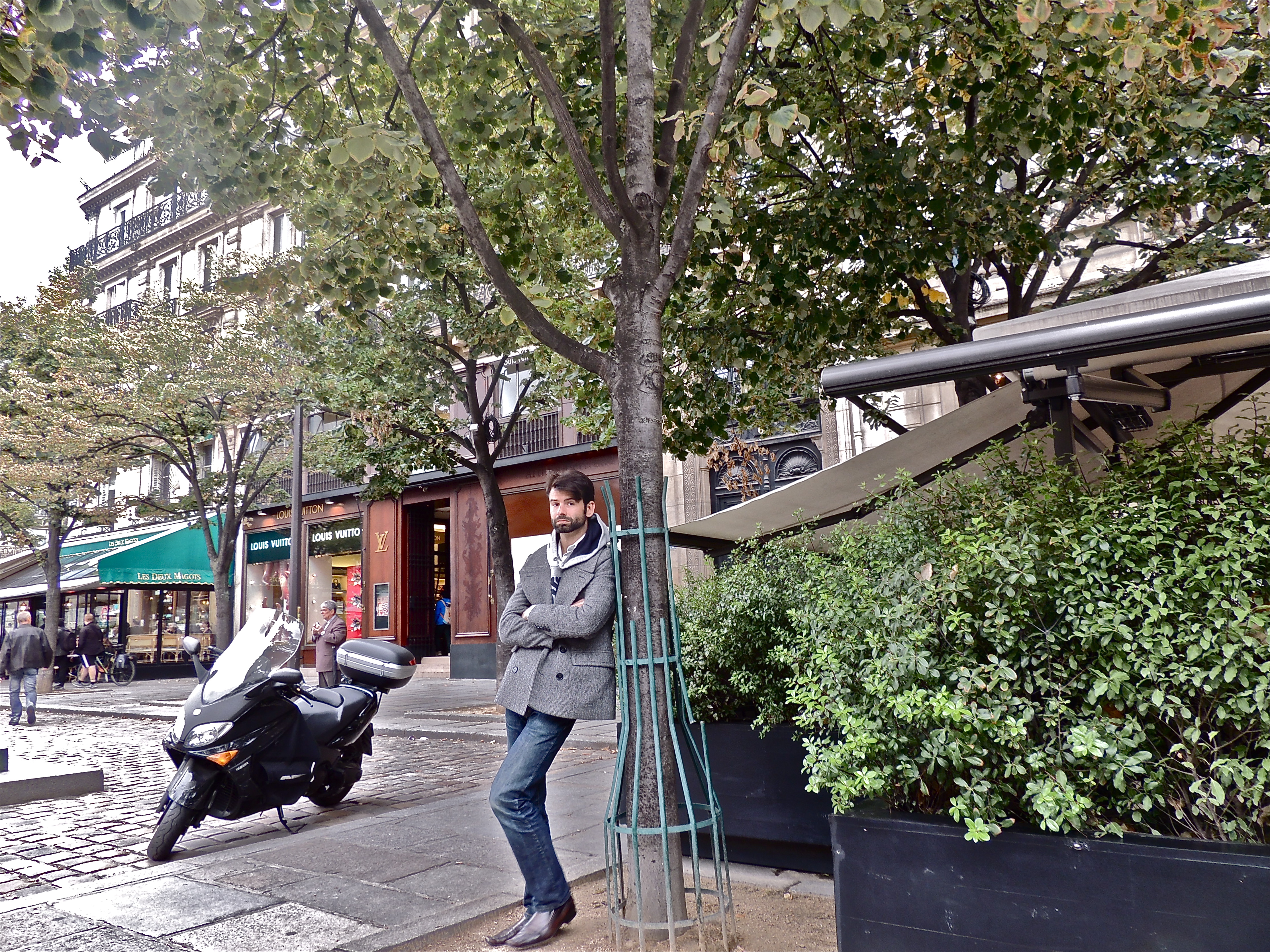
After our arrival in Paris it became clear why hotel rooms had been so difficult to come by – it was Fashion Week, think Devil Wears Prada. Occasionally tall babes in expensive clothing would appear in our hotel lobby. Otherwise our boutique Hotel du Danube seemed disinterested in fashion and was paparazzi free. Quiet and conveniently situated, du Danube made most places on our itinerary a relatively short walk.
The Louvre was a bust for me. Its dim, endless hallways seemed filled with works of unattractive art, poorly displayed. However, the Louvre was our first excursion and my vexation was probably due in part to me being out of shape. My wife is a champion walker. How could I not soldier on? The Louvre’s one highlight was its pyramid. When first revealed to the French public, they were outraged. The Pyramid at the Louvre was an affront to French culture. But as one wag put it, “Parisians seem to hate what they come to love.”

The Pyramid
The Musée d’Orsay proved next day to be a masterpiece of planning for museum goers. I was snapping pictures when a polite uniformed lady told me photography was not allowed anywhere in the museum. Well, okay. I didn’t need photographs of the Impressionists which were on the 5th floor, but I may have disobeyed her by taking photographs in the dining room where we had a passable lunch in an opulent setting.
Then, a casual stroll past endlessly fascinating shops towards our hotel where once more, I lingered for a moment and try to visualize rue Jacob in 1783. I was a casual by-stander as a carriage made its way towards me, stopping in front of the Hotel d’York. Ben Franklin, John Adams and John Jay, followed by John Quincy Adams, alighted to sign the Treaty of Paris. I tried to imagine an 18th century equivalent to armoured stretch limos, black SUVs, Secret Servicemen with ear buds and shades and an international press corps. Nothing like that came to mind.
Dr. Franklin had to momentarily step aside to allow an arm in arm couple to pass whilst a few steps away a large dog relieved itself on the sidewalk.
Foot notes:
[1.] See Unger, Harlow: John Quincy Adams, Da Capo Press, 2012.
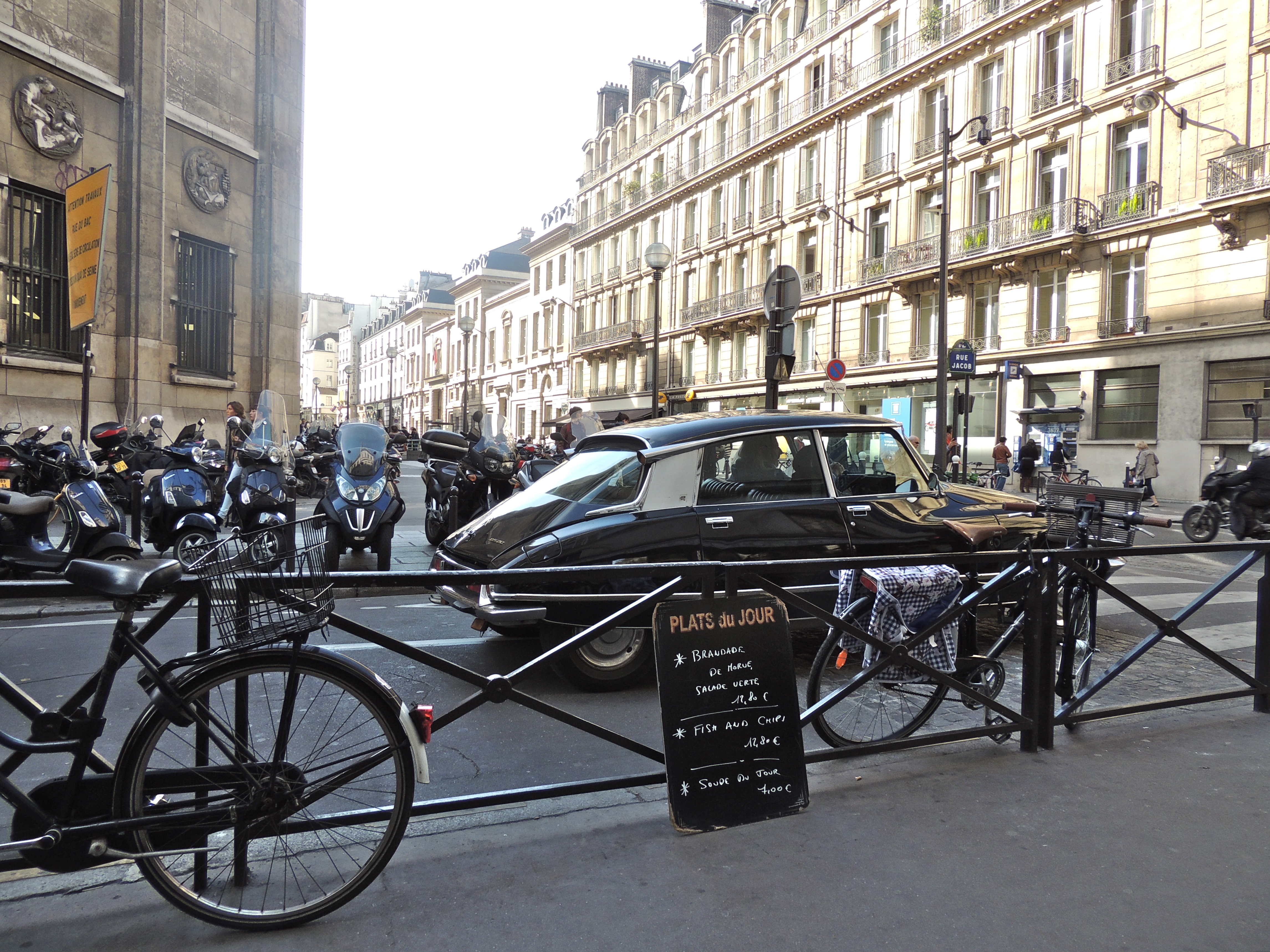
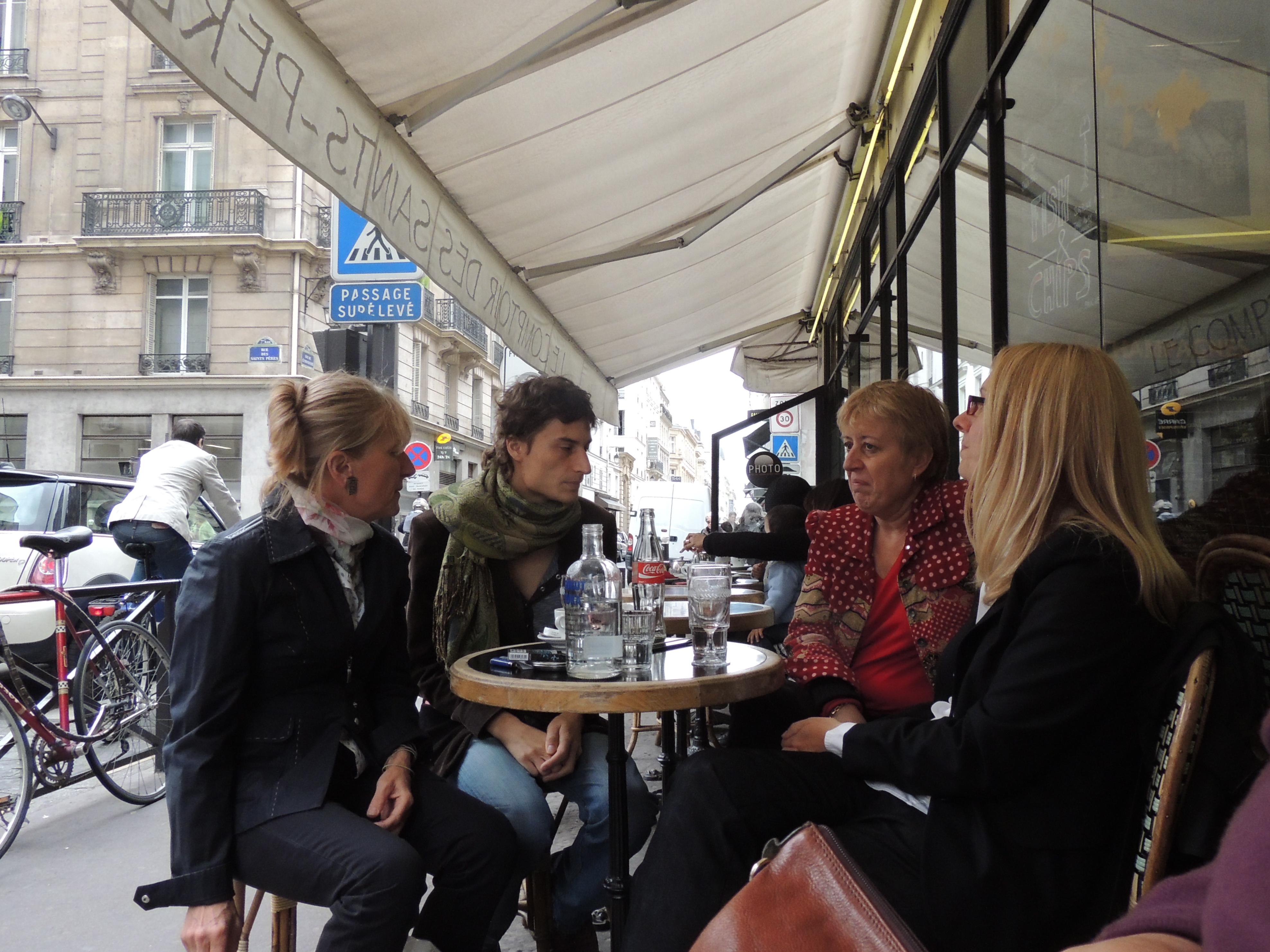
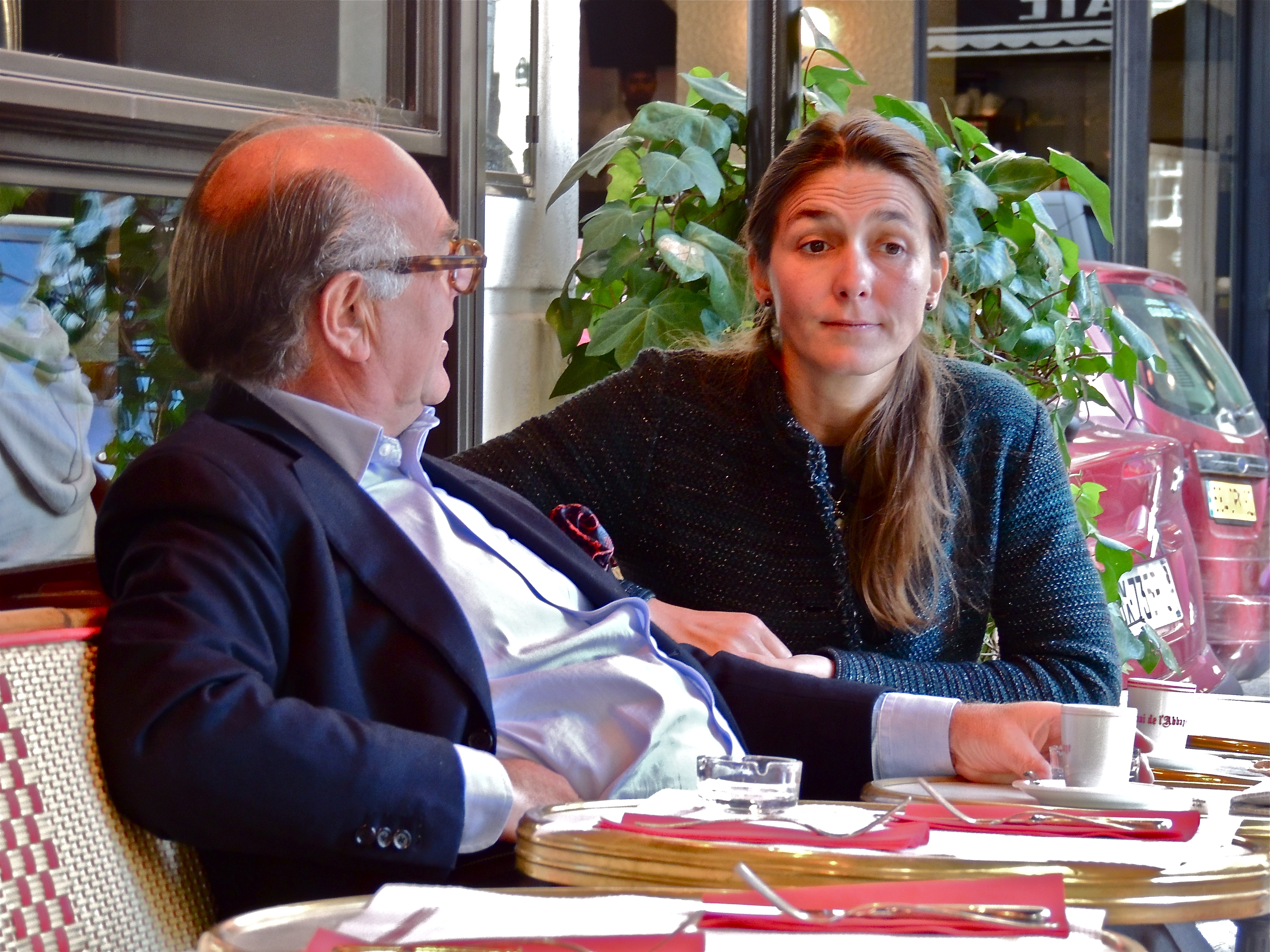
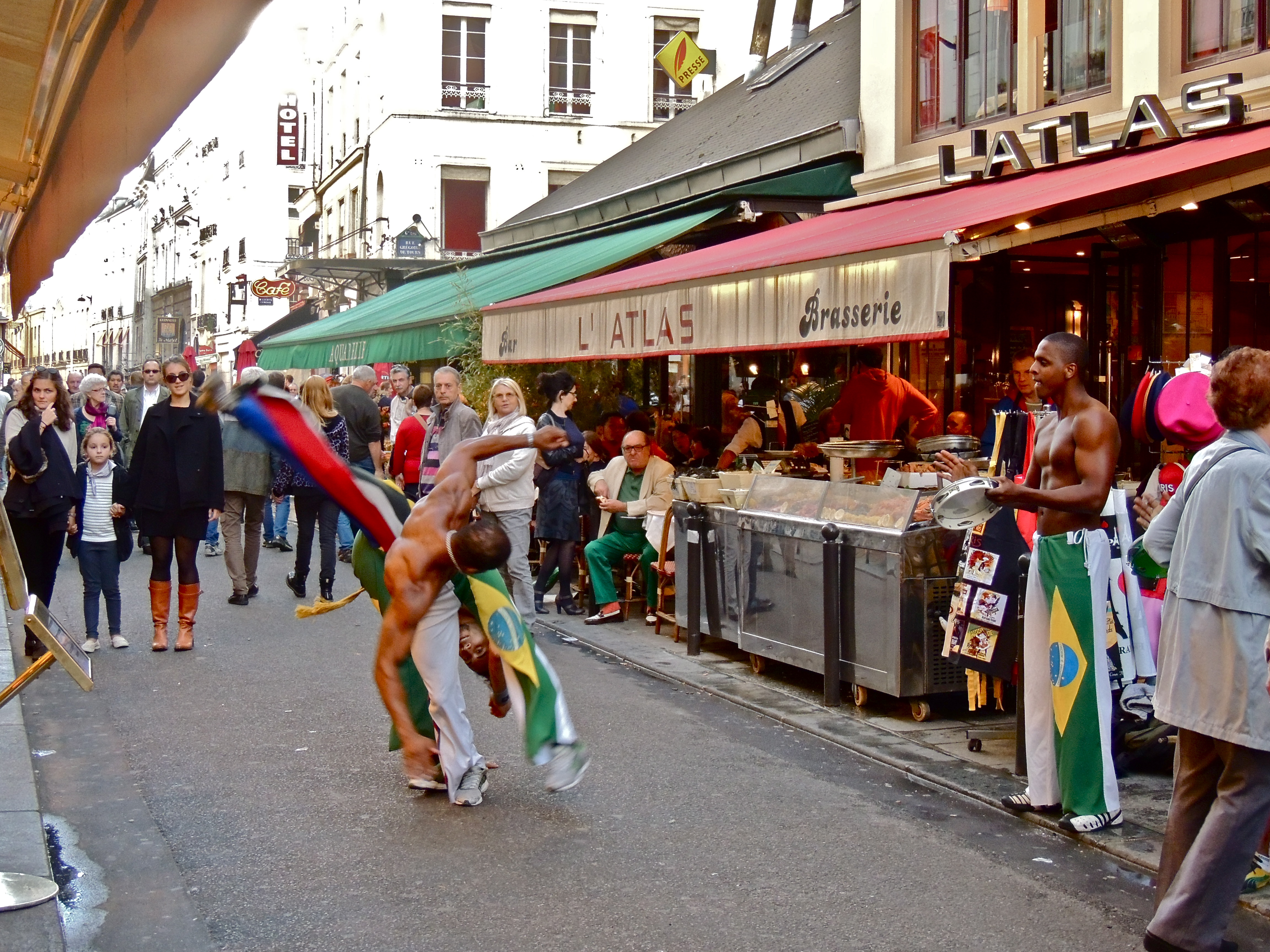
All the photographsith the exception of John Q. Adams, were taken by R.E. I am also posting a photo gallery of Parisian street scenes .

Musée d’Orsay
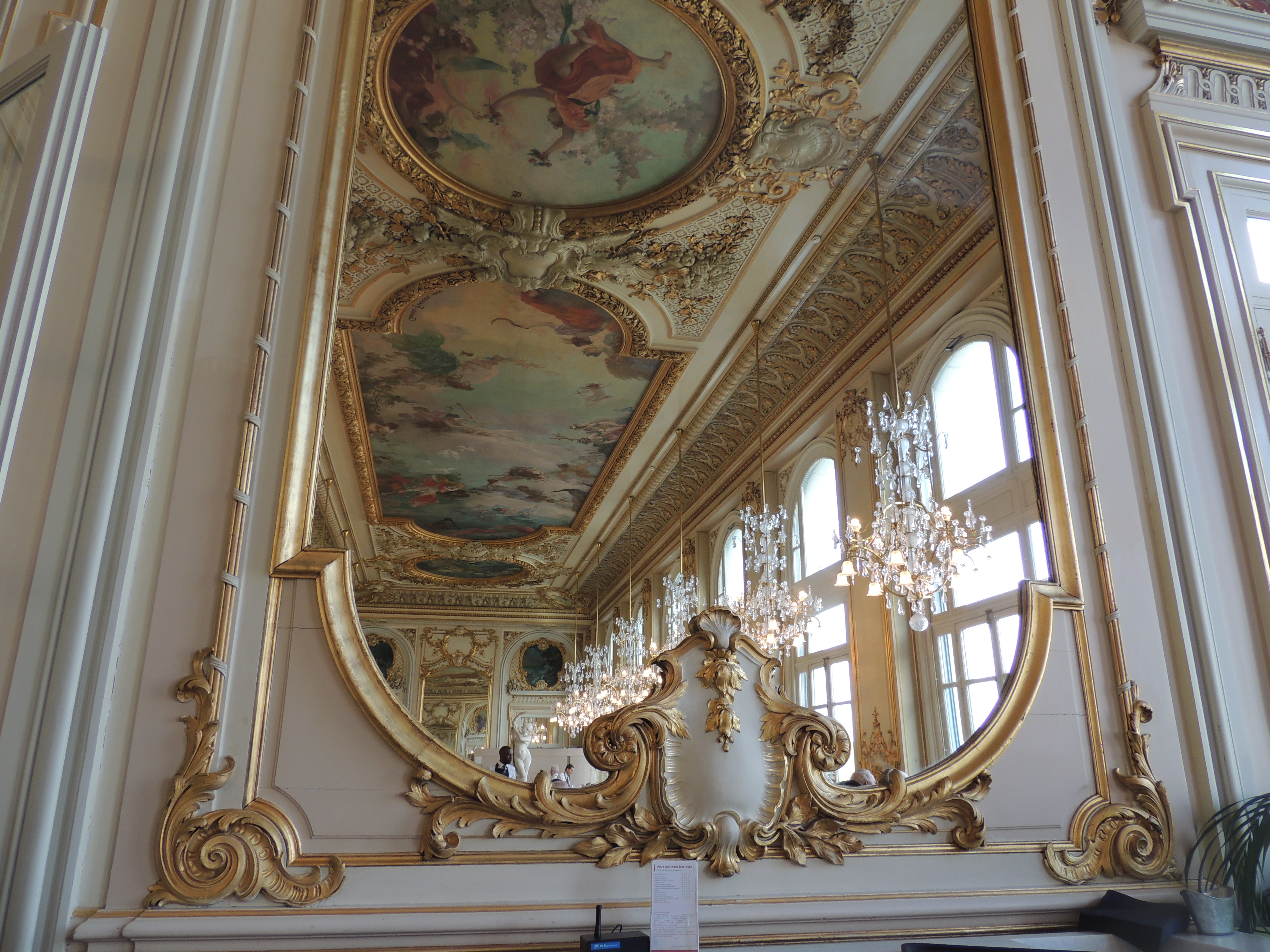
Lunch in the Musée d’Orsay

Sculptures entrance to Musée d’Orsay

John Quincy Adams, 1843 Daguerreotype
 Robin Engelman
JOHN CAGE GOES AS SLOW AS POSSIBLE in HALBERSTADT, GERMANY.
St. Burchardi Church. Halberstadt. photo, R.E.
The drive to Quedlinburg had been long and tiring, much of it on the autobahn at night and in rain. As our hotel loomed beyond the car’s windshield wipers, we decided to reduce our travels by one destination. However, after visiting this medieval city in Germany, a World Cultural Heritage site, we changed our minds and drove back towards the city of Halberstadt. Besides a collection of 18,000 stuffed birds and being known as the town where canned sausage was invented in 1896, Halberstadt had also spent years behind the Iron Curtain, thus missing much of the achievements and benefits of its West German compatriots.
Neither stuffed birds or canned sausage had brought us to Halberstadt. Michael Praetorius (1571-1621) had proclaimed Halberstadt the city where in 1361 an organ with the first modern 12 note keyboard in Europe was built and played. Harry Partch (1901-74) declared this a “Fateful day” as that keyboard is considered the beginning of modern music. Halberstadt’s St. Burchardi church is also the home of the John Cage project (1912-92 ) ORGAN2 As Slow As Possible (ASLSP).
ASLSP was written in 1985 as the required piano work for a Maryland State contemporary music competition. In 1987 the German composer and organist Gerd Zacher (b. 1929-), asked Cage to make a version for organ which Cage named ORGAN2/ASLSP. During a discussion of Cage’s music in 1993, a German musicologist made an offhand comment about an organ being capable of sustaining tones indefinitely. From that comment came the idea for an ORGAN2/ASLSP project. A committee, a board of directors and a fund were established and the Halberstadt’s city fathers donated St. Burchardi’s Church as a home for the project.
As we approached the entrance to St. Burchardi, I was free of preconceptions. We walked through the front door into a ruin. After political secularization, St. Burchardi’s was used as a pig sty. Today, rubble removed, and a new roof and floor of gravel, St. Burchardi casts a spell. It evokes an archaic temple neither removed from, nor a part of this world. Through pane-less windows, light revealed scarred timber beans, dusty walls and a general impression of the building’s original shape, created 1,000 years ago. We were spellbound by the sound of two soft notes hanging in space. It was magic.
The ORGAN2ASLSP time span of 639 years was determined by subtracting the invention date of the 12 note keyboard from the millennium year 2000. Various difficulties, however, delayed the project opening by one year.
Just beyond the entrance of St. Burchardi, photo R.E.
Lest readers think I have an inordinate love of Cage’s music, I do discriminate. I prefer the music he wrote between 1933 and 1952, the dates encompassing his incomparable works for percussion -the core repertoire of modern percussion ensembles, the works for Prepared Piano and his 4′ 33″ the work he declared unto death to be his best.
Photo by E.E.
The Cage Projekt has not been without its critics. Zacher for instance said Cage never intended such a lengthy performance. The most recent sound changes to ORGAN2/ASLAP, occurred on 5 July 2012. The next will occur on 5 October 2013. All score changes take place on the 5th day of the month in honour of Cage’s birthday. Organ pipes are added and or sbtracted to realize note changes and small bags of sand are hung on appropriate keyes to keep the tones audible. The organ will gradually be built as the work progresses. A generator buried under replicas of the original church organ bellows, sends a constant source of air to the organ pipes located across the trancept.
Replica of original bellows with ASLSP organ in the distance. photo, Rainer Sennewald
1,000 Euros will allow a donor to have a message inscribed on a metal plaque which will be mounted below a year of their choice if available. The church guardian, a Polish man who came to Halberstadt some years ago and found himself unemployed, vetted a number of job advertisements and chose the ORGAN2/ASLAP job because “it sounded interesting”. He is a delightful individual who loves the project under his care and has an understanding of Cage and his music that took me back a few paces. He knew the contents of the books for sale and was happy to answer questions. He said there were line ups on the weekends and a rather steady, but smaller flow on weekdays. When a change of notes takes place, St. Burchardi is packed.
Tourists are its congregation and as its organist, Cage plays a concert for the ages.
Donor plaques, Halberstadt, photo R.E.
Posted by robinengelman on November 3, 2012 in Articles, Commentaries & Critiques, Contemporary Music
Tags: Cage, Halberstadt, John Cage, ORGAN2/ASLSP