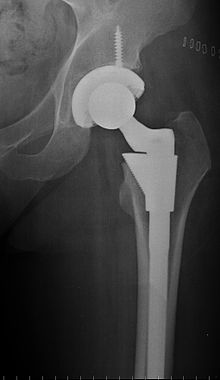
Twelve years ago my wife and I purchased a 2000 Nissan Maxima 4 door sedan to replace our Toyota hatchback whose low profile and bucket seats I could no longer access due to a right full hip replacement.
I mention this because I’m recovering from my second hip replacement. (Yes, I have osteo arthritis.) In early March 2012, I had my left hip replaced. Though the operation today is pretty much the same, twelve years ago patients with full hip replacements were required to walk with crutches for 6 weeks, never allowing the foot of the operated leg to touch the ground. Within a few days of my most recent operation, I was walking with the aid of a cane.
* ( I spoke about this change in procedure with my surgeon Hugh Cameron. He told me getting patients up and walking immediately came about because of new medical practices in the United States. The States wanted to empty hospital beds more rapidly. “We were holding our breaths” Cameron told me.)
Just outside the operating room while I was waiting for my anesthetic, I overheard a critique of my surgeon crediting him with regularly performing 7 hip replacements in one day. From the tone of their voices, I took this to be high praise, but wasn’t sure if it was for speed, competency or both. As I understand it, the surgical process goes something like this. A deep 12 inch incision is made on the outside of the patients thigh, the surgeon reaches in, dislocates the hip, saws off the ball joint, hammers a metal spike into the femur, pops in the new ball joint and plastic liner and voila!
Twelve years ago I was administered a general anesthetic and I could hardly get myself out of bed the next day, or the next or the next. Getting up is mandatory therapy to prevent the formation of blood clots. This time around my wife and the hospital staff convinced me to undergo a spinal anesthetic and the results were considerably different. There was a smooth, almost unnoticeable transition from sleep to wake, pain to no pain and getting out of bed the next morning was done without assistance. With the aid of a walker I took my first steps almost effortlessly into the hallway outside my room and back. As before, pain was managed with a morphine drip and oxycodone.
* (Oxycodobe/Oxycocet ((Percocet)) was outlawed in Canada while I was in my hospital. People were grinding them into powder to make them sniffable. Now drug manufacturers have added an ingredient that makes this impossible. Still, I received a considerable number of them upon my release.)
Twelve years ago I played a round of golf about 2 weeks after coming off the crutches – getting around using an electric golf cart. This time I don’t know what to expect. A few months ago I gave my grandson my golf clubs, bag, shoes, rain gear, gloves and balls. He’s an athletic guy – hockey, basketball, soccer and baseball. If I can play golf, I’ll rent a few clubs and play with him.
* (Golf is now a no-no. My physical therapist said I could still Putt. Thanks!)
So, four weeks into my six week recovery period, how am I doing ? There are good days and bad. Well, I shouldn’t say bad. The pain is quite manageable so I’m hoarding my oxycodone for some expected but unknown future pain. I’m listening to audiobooks and watching golf contests in preparation for the Masters tournament in Augusta, GA. Tiger won last week and that plus limited ads, puts a bit more interest into the Masters tournament.
Besides, my grand children gave me a new LED, HD, 55″ Samsung Smart Television. I can now see all the putts and follow all the flights of the balls.
* (I’m now into my ninth week of rehab. Though Tiger didn’t win, the Masters was fun.)
Hip notes:
1. You’ll need a bath tub seat and a screw on handle to assist you getting in and out of the tub.
2. Also helpful is a “grabber”. This long light weight implement allows you to pick up socks, towels, even tooth picks without bending over and breaking the 90 degree rule – the angle between your torso and hip.
3. A seat that raises the height of your normal toilet seat. This also maintains the 90 degree rule.
5. A plastic device which allows you to put on socks without breaking the 90 degree rule. If needed you can find elastic shoelaces for laced shoes.
6. And finally, therapy aids. A rolled up towel, a long band of rubber and a set of physical exercises. DO THESE! They improve recovery time and quality,
7. Twelve years ago I participated in a blind test of new orthopedic technology from Germany. At the time it was simply called “metal on metal” and the hip replacement patients were not told if they were receiving traditional replacements or the German “metal on metal”. I got the he German hip. If memory serves, my femoral stem was titanium and the rest, stainless steel. This time the stem was titanium, but unlike my first, it had holes which fostered more rapid bone adherence and growth.
* (Actually, the entire prosthesis is made of titanium which promotes bone adherence, and there are no wholes. The Femoral stern is fluted to prevent lateral twisting. Also, I have no screw in either replacement.)
Have fun.

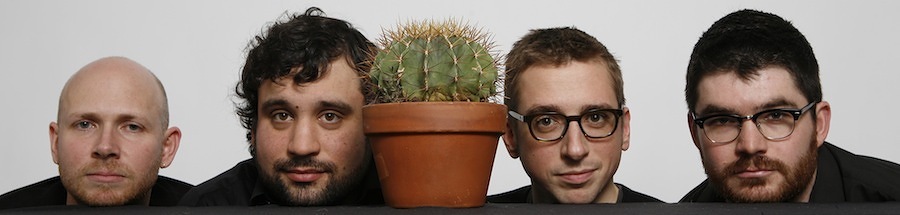
P.S. While Working on this article I was reminded of the rock group the “Tragically Hip” and I found on You Tube what appears to me to be a country-western band called the “Hip Replacements”. The guys in the band looked to be middle-aged, salt-and-pepper beard’s and cowboy hats.
Oh, one more thing for my friends and relatives in the United States. All of the expenses for both my hip replacements including a semiprivate room and 150 oxycodone, were covered by tax contributions made by me and the 30 million Canadians who believe in Canada’s universal health care system whose premise holds the primary purpose of government to be the welfare of its citizens.


 Robin Engelman
Horowitz and Tchaikovsky’s First Piano Concerto, 1941.
Vladimir Horowitz (1903-89), Arturo Toscanini (1867-1957)
Pristine Classical is a company devoted to the restoration of 78 and LP recordings whose qualities were impaired by early recording technologies, the vagaries of electrical currents which often fluctuated during the recording process, inadequate storage of tapes and metal masters or scratchy surfaces. Andrew Rose, Pristine’s founder and chief restorer, refrains from going too far in his clean ups yet manages to bring to life nuances which, though recorded, were not clearly audible on masters or commercial 78s or vinyl pressings. His and other views on restoration and its techniques are contained in an interesting article by Alex Ross titled Infinite Playlist in Musical Events, The New Yorker, August 10, 2009.
I joined Pristine Classical online and every week a news letter arrives featuring the latest restorations, some selections from past issues and a lengthy article by Ross about some part of the recording business of particular interest to him. It’s his blog. His articles are well written and very interesting, particularly to this neophyte. What I go for are the full length audio clips, an entire movement of a piano sonata for instance, demonstrating the final results of his work. There are usually two or three of these in every newsletter along with various sound formats available priced according to quality. The artists are “giants” from the past – Furtwangler, Philharmonia Orchestra, Beethoven’s 9th Symphony recorded live at the Luzerne Festival with Elizabeth Schwarzkopf etal. There is an extensive archive organized by composer, and perusing the gems therein, each with an audio sample, could keep one occupied for many hours. Orders are filled promptly.
A recent purchase of mine from Pristine Classical was the iconic Vladimir Horowitz, Toscanini, NBC Symphony Orchestra collaboration on Tchaikovsky’s 1st Piano Concerto recorded (not live) in Carnegie Hall in 1941. I chose this restoration because of its reputation. I owned a full score and a number of recent recordings of the concerto on CD, and the famous RCA Victor LP version with Van Cliburn and Kiril Kondrashin (1914-81). These sources provided a solid base upon which to compare.
As a college freshman I became caught up in the Cold War fervor surrounding Harvey Lavan (Van) Cliburn, Jr’s (b.1934 -) winning of the 1st quadrennial Tchaikovsky Competition in 1958 in Moscow and was given the LP recording as a Christmas present the same year. But truth be told, I never enjoyed the work. The opening horn calls and piano chords seemed ponderous and most of the piano flourishes seemed unanchored to the whole. Time had not assuaged my opinions. Then the Horowitz recording arrived.
I was stunned. My first thought was, “Can this intensity last?” “Yes”, was the answer. True, even with the help of Andrew Rose and Pristine Classical’s sophisticated technologies, the sound quality was inferior in some ways to modern recordings and many inner voices were barely audible. But the superb pianistic and musical accomplishments and the frisson of excitement I felt are nowhere replicated in more modern recordings.
In preparation for this article I listened to my 1958 LP and a few other CD recordings of the Tchaikovsky concerto. I was once again stunned. For recording quality, clarity of orchestral voices and balance throughout, the 1958 vinyl LP wins running away. I had not listened to this recording in over forty years and only a “pop” or two marred its’ surface. Van Cliburn’s tempo is very slow or as one friend said, “majestic”. [1.]
Many of the performances of this work feel in some way tired or predictable. The concerto is a warhorse and that’s one of its problems, and perhaps one of mine. (A 1980 CD live performance by a favorite pianist of mine, also conducted by Kondrashin, made me wonder why I’d spent the money.) The Horowitz performance however is a revelation in interpretation and should be heard by anyone interested in hearing a work transformed by a great artist. His command of form and structure is total. His blazing forays through the aforementioned pianistic flourishes give them meaning and bind the work together. The 1st movement cadenza alone is an astounding work of artful understanding.
The virtuosity is overwhelming and may be first to capture one’s attention. Horowitz’s interpretation of the work is 7 to 10 minutes shorter then other recordings and for me this brevity helps to make the work more compact and palatable. At the time of this recording Toscanini was 74 years old and Horowitz, then 39, had been married to Wanda, Toscanini’s daughter, for eight years. Younger generations of pianists dubbed Horowitz “TheMaster of Octaves” and there are plenty enough in this recording to second their motion, but listening to Horowitz play the delicate floating tones which contrast with technical passages, proves his complete mastery. There is much much more at work here then fingers.
Another Horowitz, Toscanini, Tchaikovsky recording dating from the early 1940s is the 1943 Carnegie Hall live recording. This version is considered by many to be superior to 1941 and was elected to the Grammy Hall of Fame. Toscanini, Horowitz and the NBC Symphony Orchestra made this recording “live” before an invited audience which purchased War Bonds for their seats. It was the hottest ticket in the history of New York City. At the end of the concert, Toscanini’s personally annotated conductor’s score was put to auction. The evening raised $11,000,000.
We may all have experienced the cloud of questioning which descends upon us as we are about to compare an old favorite with something new. Can we be objective? There is no doubt about the superior sound of the 1943 commercial recording when compared to Andrew Rose’s reconstruction of the 1941. Some orchestral voices not immediately apparent on the Van Cliburn LP are clearly audible here and the piano sound is more present. Still the frisson mentioned above is missing and, though I’m definitely in the minority, it sounds careful to me. Get both the Rose ’41 reconstruction and the live ’43 War Bonds concert on RCA. The bonus on RCA Victor is Beethoven’s Fifth Piano Concerto recorded nine years later with Reiner conducting the RCA Victor Symphony. There are moments so sublime, they defy comment. The only recording I have that reaches some of the heights Horowitz ascends in the Beethoven, is a bootleg with Arturo Benedetto Michelangeli, Celibidache conducting the Swedish Radio Orchestra, 1969(?).
Harold C. Schonberg, long the senior music critic for The New York Times and the author of “The Great Pianists,” wrote: “As a technician Horowitz was one of the most honest in the history of modern pianism. He achieved his dazzling effects by fingers alone, using the pedal sparingly. Notes of scales could not be more evenly matched (his Scarlatti was technically fabulous); chords could not be attacked more precisely; octaves could not be sharper or more exciting; leaps could not be hit more accurately.
A Horowitz performance of Rachmaninoff’s 3rd Concerto awed the composer, himself a piano virtuoso of awesome ability, to proclaim “He swallowed it whole. He had the courage, the intensity, the daring.”. (Wikipedia) Frisson indeed!
Foot Notes:
[1.] The RCA Victor LP 2252 Red Seal with Van Cliburn and Kondrashin was recorded in Carnegie Hall in 1958. Though Van Cliburn was accompanied during the Tchaikovsky Competition by the Moscow Radio Orchestra, the Carnegie Hall recording was made with the RCA Victor Symphony Orchestra. This orchestra had been founded in 1940 by RCA in response to Columbia Records contract with the Philadelphia Orchestra and other commercial pressures stemming from the ever burgeoning recording industry. Headquartered in Camden, New Jersey, it was made up of New York City’s finest players.
Victor’s NYC players came from the Philharmonic, the Met, the City Center and NBC Orchestras and radio staff musicians. When Fritz Reiner entered the picture in1950, contractors of his choosing engaged the requisite number of players thereby guaranteeing performance consistency.
Posted by robinengelman on April 29, 2012 in Articles, Commentaries & Critiques